Important Details
IJCRT - International Peer Reviewed, Open Access Journal, Multidisciplinary, Monthly, Nominal(Low) Fees for Professional Research Services International Journal of Creative Research Thoughts - IJCRT Peer Review Journal, Refereed Journal, Peer Reviewed Journal , Referred Journal and Indexed Journal, Open access, Online and Print Journal,international Journal Open Access, Accepted by Indian and foreign university ,IJCRT Followed Norms, guidelines, requirement, listing criteria and methodology of score/point also applied from: Scopus , Web of Science , UGC Approved , UGC CARE, UGC-CARE .
UGC Approved Journal No: 49023 (18)
UGC approval Link
https://ijcrt.org/ugc%20approval.jpg
All Policy and Approval
Please Like Our Facebook Page | CrossRef DOI and Hard copy of Certificate Provide if required. | www.IJCRT.org | editor@IJCRT.org | IJCRT WhatsApp +91 94294 58311
Publication Details:
- Paper Submission : 31-Aug-2026. Call For Paper (Volume 14 | Issue 8 | Month- August 2026)
- Acceptance/Rejection Notification: Within 02-04 Days.
- Paper Publish: Within 02-04 Days after submitting all documents.
-
Submit Your Paper Any time There No deadline.
-
Publication fees : 1570 INR for Indian author & 59$ for foreign International author.
Please Like Our Facebook Page | CrossRef DOI and Hard copy of Certificate Provide if required.
Licence and Indexing
Indexing In Google Scholar, SSRN, ResearcherID-Publons, Semantic Scholar | AI-Powered Research Tool, Microsoft Academic, Academia.edu, arXiv.org, Research Gate, CiteSeerX, ResearcherID Thomson Reuters, Mendeley : reference manager, DocStoc, ISSUU, Scribd, and many more | High Impact Factor: 7.97 | Digital object identifier (DOI) and Hard Copy of certificate Provided.




























Licence
DOI
ISSN Approved impact factor: 7.97 
Creative Common 
Valid as per new UGC Gazette regulations 

INTERNATIONAL JOURNAL OF CREATIVE RESEARCH THOUGHTS - IJCRT (IJCRT.ORG)
International Peer Reviewed & Refereed Journals, Open Access Journal
IJCRT Peer-Reviewed (Refereed) Journal as Per New UGC Rules.
ISSN Approved Journal No: 2320-2882 | Impact factor: 7.97 | ESTD Year: 2013
Call For Paper - Volume 14 | Issue 8 | Month- August 2026
Scholarly open access journals, Peer-reviewed, and Refereed Journals, Impact factor 7.97 (Calculate by google scholar and Semantic Scholar | AI-Powered Research Tool) , Multidisciplinary, Monthly, Indexing in all major database & Metadata, Citation Generator, Digital Object Identifier(CrossRef DOI)
IJCRT WhatsApp Contact
IJCRT Search Xplore - Search all paper by Paper Name , Author Name, and Title
Volume 14 | Issue 6 |
Volume 14 | Issue 6 | Month
Downlaod After Publication 1) Table of content index in PDF
2) Table of content index in HTML 2)Table of content index in HTML
3) Front Page 3) Front Page
4) Back Page 4) Back Page
5) Editor Board Member 5)Editor Board Member
6) OLD Style Issue 6)OLD Style Issue
 |
 |
|---|---|
| IJCRT Journal front page | IJCRT Journal Back Page |
Paper Title: A Review on IoT-Driven Intelligent Waste Monitoring System with Raspberry Pi Integration
Author Name(s): Ishwari Narkhede, Dr. Nilesh Choudhary
Published Paper ID: - IJCRTBW02008
Register Paper ID - 309428
Publisher Journal Name: IJPUBLICATION, IJCRT
DOI Member ID: 10.6084/m9.doi.one.IJCRTBW02008 and DOI :
Author Country : Indian Author, India, - , -, - , | Research Area: Science and Technology Published Paper URL: http://ijcrt.org/viewfull.php?&p_id=IJCRTBW02008 Published Paper PDF: download.php?file=IJCRTBW02008 Published Paper PDF: http://www.ijcrt.org/papers/IJCRTBW02008.pdf
Your Paper Publication Details:
Title: A REVIEW ON IOT-DRIVEN INTELLIGENT WASTE MONITORING SYSTEM WITH RASPBERRY PI INTEGRATION
DOI (Digital Object Identifier) :
Pubished in Volume: 14 | Issue: 6 | Year: June 2026
Publisher Name : IJCRT | www.ijcrt.org | ISSN : 2320-2882
Subject Area: Science and Technology
Author type: Indian Author
Pubished in Volume: 14
Issue: 6
Pages: 37-42
Year: June 2026
Downloads: 60
E-ISSN Number: 2320-2882
Abstract
Increased population and rampant urbanization has caused a tremendous amount and complexity in solid waste which poses a big problem to the traditional waste management structures. Conventional means of waste collection process is mostly manual, time-stated and inefficient and this geometrical overflow of bins, inadequate separation of waste, hiked up cost of operation and environmental pollution. In order to overcome these restrictions, in this paper, there was a review and conceptual implementation of a Smart Waste Management System with Raspberry Pi and IoT-based monitoring systems incorporated and coupled with enhanced waste sorting and real time alerts.
Licence: creative commons attribution 4.0
License
Creative Commons Attribution 4.0 and The Open Definition

Keywords
A Review on IoT-Driven Intelligent Waste Monitoring System with Raspberry Pi Integration
License
Creative Commons Attribution 4.0 and The Open Definition
Paper Title: A comprehensive review on Artificial intelligence in Agricultural field
Author Name(s): Gauri Girish Patil, Dr. Nilesh Chaudhari
Published Paper ID: - IJCRTBW02007
Register Paper ID - 309429
Publisher Journal Name: IJPUBLICATION, IJCRT
DOI Member ID: 10.6084/m9.doi.one.IJCRTBW02007 and DOI :
Author Country : Indian Author, India, - , -, - , | Research Area: Science and Technology Published Paper URL: http://ijcrt.org/viewfull.php?&p_id=IJCRTBW02007 Published Paper PDF: download.php?file=IJCRTBW02007 Published Paper PDF: http://www.ijcrt.org/papers/IJCRTBW02007.pdf
Your Paper Publication Details:
Title: A COMPREHENSIVE REVIEW ON ARTIFICIAL INTELLIGENCE IN AGRICULTURAL FIELD
DOI (Digital Object Identifier) :
Pubished in Volume: 14 | Issue: 6 | Year: June 2026
Publisher Name : IJCRT | www.ijcrt.org | ISSN : 2320-2882
Subject Area: Science and Technology
Author type: Indian Author
Pubished in Volume: 14
Issue: 6
Pages: 27-36
Year: June 2026
Downloads: 68
E-ISSN Number: 2320-2882
Abstract
The growing agricultural field demands, integration of modern techniques to improve product quality. The artificial intelligence offenly called as AI found its applications in every field nowadays. The effective use of such technique can lead to increase output. The agricultural field experiences several challenges like crop prediction, crop health monitoring, and weather forecasting, disease prediction for plants and payment gateway systems for effective farming. The implementation of AI in agricultural field offer better flexibility, better stability, better performance and cost effectiveness. This paper highlighted exhaustive review of use of the AI techniques in agricultural field by focusing on higher productivity and economical considerations.
Licence: creative commons attribution 4.0
License
Creative Commons Attribution 4.0 and The Open Definition
Keywords
Crop prediction, Crop health monitoring, Plant disease prediction, Weather forecasting
License
Creative Commons Attribution 4.0 and The Open Definition
Paper Title: "Smart Wealth: An Integrated AI Framework for Predictive Portfolio Management"
Author Name(s): Prof. Sayali Belhe, Krishna Tandale, Suraj Shinde, Swayam Dandekar, Atharva Thombre
Published Paper ID: - IJCRTBW02006
Register Paper ID - 309430
Publisher Journal Name: IJPUBLICATION, IJCRT
DOI Member ID: 10.6084/m9.doi.one.IJCRTBW02006 and DOI :
Author Country : Indian Author, India, - , -, - , | Research Area: Science and Technology Published Paper URL: http://ijcrt.org/viewfull.php?&p_id=IJCRTBW02006 Published Paper PDF: download.php?file=IJCRTBW02006 Published Paper PDF: http://www.ijcrt.org/papers/IJCRTBW02006.pdf
Your Paper Publication Details:
Title: "SMART WEALTH: AN INTEGRATED AI FRAMEWORK FOR PREDICTIVE PORTFOLIO MANAGEMENT"
DOI (Digital Object Identifier) :
Pubished in Volume: 14 | Issue: 6 | Year: June 2026
Publisher Name : IJCRT | www.ijcrt.org | ISSN : 2320-2882
Subject Area: Science and Technology
Author type: Indian Author
Pubished in Volume: 14
Issue: 6
Pages: 22-26
Year: June 2026
Downloads: 70
E-ISSN Number: 2320-2882
Abstract
The existing conventional financial advice, based on traditional models, is not only liable to various biases but also not capable of dealing with the high degree of volatility of the Indian Market. The aim and objective of conducting this study are to bridge the gap between the existing shortcomings through developing an innovative web-based AI-Driven Portfolio Management & Advisory System for adaptive and complaint financial advice on each and every financial product listed on the exchanges of India, such as stocks, mutual funds, bonds, etc. The approach undertaken involves using a powerful multi-layered mechanism, such as reinforcement learning algorithms for adaptive portfolio allocation, NLP algorithms for incorporation of market sentiments, quant-based algorithms such as Monte Carlo and quant for risk analysis.
Licence: creative commons attribution 4.0
License
Creative Commons Attribution 4.0 and The Open Definition
Keywords
AI Advisory, Black-Litterman, EDI, India Market, Monte Carlo Simulation, Portfolio Management, Reinforcement Learning, SEBI Compliance
License
Creative Commons Attribution 4.0 and The Open Definition
Paper Title: AI-DRIVEN EMOTIONAL WELLNESS AND SENTIMENT ANALYSIS SYSTEM - EMOCARE
Author Name(s): Prof. Anand Donald, Ayushri Tokalwar, Shreya Dange, Kirti Chandawar, Sanika Poreddiwar
Published Paper ID: - IJCRTBW02005
Register Paper ID - 309431
Publisher Journal Name: IJPUBLICATION, IJCRT
DOI Member ID: 10.6084/m9.doi.one.IJCRTBW02005 and DOI :
Author Country : Indian Author, India, - , -, - , | Research Area: Science and Technology Published Paper URL: http://ijcrt.org/viewfull.php?&p_id=IJCRTBW02005 Published Paper PDF: download.php?file=IJCRTBW02005 Published Paper PDF: http://www.ijcrt.org/papers/IJCRTBW02005.pdf
Your Paper Publication Details:
Title: AI-DRIVEN EMOTIONAL WELLNESS AND SENTIMENT ANALYSIS SYSTEM - EMOCARE
DOI (Digital Object Identifier) :
Pubished in Volume: 14 | Issue: 6 | Year: June 2026
Publisher Name : IJCRT | www.ijcrt.org | ISSN : 2320-2882
Subject Area: Science and Technology
Author type: Indian Author
Pubished in Volume: 14
Issue: 6
Pages: 17-21
Year: June 2026
Downloads: 57
E-ISSN Number: 2320-2882
Abstract
Mental health challenges such as stress, anxiety, and emotional imbalance are increasingly affecting students, youths, and working professionals in today's fast-paced society. Social stigma, lack of awareness, and limited access to professional support often prevent individuals from seeking timely help. This paper presents EmoCare, an AI-based web platform designed to promote emotional well-being through real-time emotion detection and personalized support. EmoCare utilizes Natural Language Processing (NLP) and Sentiment Analysis to analyze user text and identify emotional states such as positivity, negativity, stress, and anxiety. Based on the detected emotions, the system generates tailored responses in the form of motivational quotes, relaxation techniques, and supportive messages. Developed using React.js for the frontend, Node.js for the backend, and MongoDB for data storage, the platform ensures a secure, user-friendly, and privacy-focused environment. EmoCare provides a free and stigma-free digital space for emotional expression, aligning with global mental health initiatives by the World Health Organization (WHO) and Google. The proposed system demonstrates how artificial intelligence can effectively contribute to accessible mental health support and digital well-being.
Licence: creative commons attribution 4.0
License
Creative Commons Attribution 4.0 and The Open Definition
Keywords
Mental Health, Sentiment Analysis, Emotional Support, AI Wellness Platform, Well-being
License
Creative Commons Attribution 4.0 and The Open Definition
Paper Title: Real Time Admission Status Dashboard for Higher Education Institutions in India
Author Name(s): Dr. Madhura Ranade
Published Paper ID: - IJCRTBW02004
Register Paper ID - 309432
Publisher Journal Name: IJPUBLICATION, IJCRT
DOI Member ID: 10.6084/m9.doi.one.IJCRTBW02004 and DOI :
Author Country : Indian Author, India, - , -, - , | Research Area: Science and Technology Published Paper URL: http://ijcrt.org/viewfull.php?&p_id=IJCRTBW02004 Published Paper PDF: download.php?file=IJCRTBW02004 Published Paper PDF: http://www.ijcrt.org/papers/IJCRTBW02004.pdf
Your Paper Publication Details:
Title: REAL TIME ADMISSION STATUS DASHBOARD FOR HIGHER EDUCATION INSTITUTIONS IN INDIA
DOI (Digital Object Identifier) :
Pubished in Volume: 14 | Issue: 6 | Year: June 2026
Publisher Name : IJCRT | www.ijcrt.org | ISSN : 2320-2882
Subject Area: Science and Technology
Author type: Indian Author
Pubished in Volume: 14
Issue: 6
Pages: 13-16
Year: June 2026
Downloads: 58
E-ISSN Number: 2320-2882
Abstract
This paper addresses the issue of admission status ambiguity during the centralized admission process. It reveals the process of deploying a unique way of adding transparency to the system which will benefit the prospective students, parents, admission team and even the management officials. This paper shows an innovative method of displaying the admission allocation and actually admitted students on the Institute website. In Maharashtra, the higher education Institutes admit students through Centralized Admission Process which is conducted by Government of Maharashtra. On the MH CET admission website, the list of allotted students to the Institute is available. There are few admission rounds conducted during the whole process where students get the chance to take admission in the allotted college or to opt for betterment. Some of the seats are available for Institute Level Admission. For these seats also the merit list needs to be displayed based on which the seats in each branch are filled. During this process, Parents and students have to visit various institutes for checking the seat availability in the institutes of their choice. The admission team in every college also have to face certain challenges such as completing the student registration, fees payment etc. including other formalities. This paper attempts to create a web portal which works as Admission Indicator for a particular institute. It displays a number of seats allotted for every branch. It also gives a real time tracking to the students and parents to check how many seats are filled and the count of vacant seats. This Indicator display will help all stakeholders in decision making thereby reducing ambiguity and confusion.
Licence: creative commons attribution 4.0
License
Creative Commons Attribution 4.0 and The Open Definition
Keywords
Real Time Admission Count Indicator, Gradio, GUI, Python.
License
Creative Commons Attribution 4.0 and The Open Definition
Paper Title: Distributed Blockchain System for Enhancing Security and Traceability of Medicines
Author Name(s): Bagal Rupali R., Prof. Bhosale. S. B, Dr. Khatri. A. A., Dr. Gunjal. S. D.
Published Paper ID: - IJCRTBW02003
Register Paper ID - 309433
Publisher Journal Name: IJPUBLICATION, IJCRT
DOI Member ID: 10.6084/m9.doi.one.IJCRTBW02003 and DOI :
Author Country : Indian Author, India, - , -, - , | Research Area: Science and Technology Published Paper URL: http://ijcrt.org/viewfull.php?&p_id=IJCRTBW02003 Published Paper PDF: download.php?file=IJCRTBW02003 Published Paper PDF: http://www.ijcrt.org/papers/IJCRTBW02003.pdf
Your Paper Publication Details:
Title: DISTRIBUTED BLOCKCHAIN SYSTEM FOR ENHANCING SECURITY AND TRACEABILITY OF MEDICINES
DOI (Digital Object Identifier) :
Pubished in Volume: 14 | Issue: 6 | Year: June 2026
Publisher Name : IJCRT | www.ijcrt.org | ISSN : 2320-2882
Subject Area: Science and Technology
Author type: Indian Author
Pubished in Volume: 14
Issue: 6
Pages: 9-12
Year: June 2026
Downloads: 66
E-ISSN Number: 2320-2882
Abstract
The rapid growth of counterfeit medicines presents a significant challenge to public health, supply chain integrity, and regulatory compliance in global healthcare systems. Conventional centralized supply chain management (SCM) systems suffer from limited transparency, susceptibility to data tampering, and single points of failure. To address these issues, this paper proposes MediLedger, a blockchain-based medicine traceability framework that ensures end-to-end visibility, authenticity, and security across pharmaceutical supply chains. The system utilizes blockchain's immutable distributed ledger, cryptographic hash functions, smart contracts, and QR-code-based verification to prevent the circulation of counterfeit drugs. Each medicine unit is assigned a unique digital identity recorded on the blockchain, enabling real-time verification by manufacturers, distributors, regulators, and consumers. A custom validation and consensus mechanism is employed to ensure data integrity, tamper resistance, and automatic recovery from malicious or faulty nodes. Experimental results demonstrate that MediLedger improves traceability, reduces verification time, and enhances trust among all stakeholders in the pharmaceutical ecosystem.
Licence: creative commons attribution 4.0
License
Creative Commons Attribution 4.0 and The Open Definition
Keywords
Blockchain, Counterfeit Product Detection, Supply Chain Management, QR Code Authentication, Custom Blockchain, SHA-256.
License
Creative Commons Attribution 4.0 and The Open Definition
Paper Title: Smart Decentralized Counterfeit Prevention System Based on Blockchain and IoT
Author Name(s): Lonare Sucheta B., Prof. Bhosale. S. B., Dr. Khatri. A. A, Dr. Gunjal. S. D.
Published Paper ID: - IJCRTBW02002
Register Paper ID - 309434
Publisher Journal Name: IJPUBLICATION, IJCRT
DOI Member ID: 10.6084/m9.doi.one.IJCRTBW02002 and DOI :
Author Country : Indian Author, India, - , -, - , | Research Area: Science and Technology Published Paper URL: http://ijcrt.org/viewfull.php?&p_id=IJCRTBW02002 Published Paper PDF: download.php?file=IJCRTBW02002 Published Paper PDF: http://www.ijcrt.org/papers/IJCRTBW02002.pdf
Your Paper Publication Details:
Title: SMART DECENTRALIZED COUNTERFEIT PREVENTION SYSTEM BASED ON BLOCKCHAIN AND IOT
DOI (Digital Object Identifier) :
Pubished in Volume: 14 | Issue: 6 | Year: June 2026
Publisher Name : IJCRT | www.ijcrt.org | ISSN : 2320-2882
Subject Area: Science and Technology
Author type: Indian Author
Pubished in Volume: 14
Issue: 6
Pages: 6-8
Year: June 2026
Downloads: 68
E-ISSN Number: 2320-2882
Abstract
Counterfeit products are a major problem in modern supply chains and cause financial loss, brand damage, and safety risks to consumers. Traditional centralized systems are not secure and can be easily modified or attacked. To overcome these issues, this paper proposes a custom blockchain-based decentralized system for anti-counterfeit product authentication in IoT-integrated supply chains. Each product is registered by the supplier and assigned a unique QR code. Product information is secured using SHA-256 hash generation and stored in a custom blockchain network. The company module verifies product movement, while end users can scan QR codes to check product authenticity in real time. If any mismatch is found, the system alerts users about possible counterfeit products. The proposed system improves transparency, data security, and trust among supply chain participants and provides an effective solution for counterfeit detection.
Licence: creative commons attribution 4.0
License
Creative Commons Attribution 4.0 and The Open Definition
Keywords
Blockchain, Counterfeit Product Detection, Supply Chain Management, QR Code Authentication, Custom Blockchain, SHA-256.
License
Creative Commons Attribution 4.0 and The Open Definition
Paper Title: Automated Exoplanet Detection Using Artificial Intelligence and Machine Learning
Author Name(s): Jiya Kishor Patel, Isha Sachin Jadhav, Sakshi Madhukar Bari, Sakshi Mangeshrao Patil
Published Paper ID: - IJCRTBW02001
Register Paper ID - 309441
Publisher Journal Name: IJPUBLICATION, IJCRT
DOI Member ID: 10.6084/m9.doi.one.IJCRTBW02001 and DOI :
Author Country : Indian Author, India, - , -, - , | Research Area: Science and Technology Published Paper URL: http://ijcrt.org/viewfull.php?&p_id=IJCRTBW02001 Published Paper PDF: download.php?file=IJCRTBW02001 Published Paper PDF: http://www.ijcrt.org/papers/IJCRTBW02001.pdf
Your Paper Publication Details:
Title: AUTOMATED EXOPLANET DETECTION USING ARTIFICIAL INTELLIGENCE AND MACHINE LEARNING
DOI (Digital Object Identifier) :
Pubished in Volume: 14 | Issue: 6 | Year: June 2026
Publisher Name : IJCRT | www.ijcrt.org | ISSN : 2320-2882
Subject Area: Science and Technology
Author type: Indian Author
Pubished in Volume: 14
Issue: 6
Pages: 1-5
Year: June 2026
Downloads: 68
E-ISSN Number: 2320-2882
Abstract
Automated Exoplanet Detection Using Artificial Intelligence and Machine Learning
Licence: creative commons attribution 4.0
License
Creative Commons Attribution 4.0 and The Open Definition
Keywords
Automated Exoplanet Detection Using Artificial Intelligence and Machine Learning
License
Creative Commons Attribution 4.0 and The Open Definition
Paper Title: Effect of Blended Learning on Motivation for Learning among Elementary School Students: An Experimental Study
Author Name(s): Prem Lata, Ranjit Kaur
Published Paper ID: - IJCRT2606827
Register Paper ID - 311299
Publisher Journal Name: IJPUBLICATION, IJCRT
DOI Member ID: 10.6084/m9.doi.one.IJCRT2606827 and DOI :
Author Country : Indian Author, India, - , -, - , | Research Area: Others area Published Paper URL: http://ijcrt.org/viewfull.php?&p_id=IJCRT2606827 Published Paper PDF: download.php?file=IJCRT2606827 Published Paper PDF: http://www.ijcrt.org/papers/IJCRT2606827.pdf
Your Paper Publication Details:
Title: EFFECT OF BLENDED LEARNING ON MOTIVATION FOR LEARNING AMONG ELEMENTARY SCHOOL STUDENTS: AN EXPERIMENTAL STUDY
DOI (Digital Object Identifier) :
Pubished in Volume: 14 | Issue: 6 | Year: June 2026
Publisher Name : IJCRT | www.ijcrt.org | ISSN : 2320-2882
Subject Area: Others area
Author type: Indian Author
Pubished in Volume: 14
Issue: 6
Pages: h607-h615
Year: June 2026
Downloads: 45
E-ISSN Number: 2320-2882
Abstract
Education in the twenty-first century is undergoing rapid transformation due to advancements in information and communication technology. Traditional methods of teaching are increasingly supplemented with digital tools and online resources to create more effective and engaging learning experiences. Among the various innovative instructional approaches, blended learning has emerged as one of the most widely adopted methods in schools and higher educational institutions. Motivation for learning is a crucial factor influencing students' academic success. It refers to the internal and external forces that stimulate students' interest, enthusiasm, and willingness to participate in learning activities and achieve educational goals. Students who are highly motivated tend to demonstrate greater attention, persistence, effort, and commitment to their studies. The present study investigated the effect of the Blended Learning Approach on motivation for learning among elementary school students. A pre-test-post-test control-group experimental design was employed to examine the effectiveness of blended learning compared with conventional face-to-face teaching. The study was conducted in a purposively selected private school in Sirsa district, Haryana, India. A total of 120 eighth-grade students participated in the study and were randomly assigned to an Experimental Group (n = 60) and a Control Group (n = 60). The purposive sampling technique was adopted to select participants with similar socio-economic backgrounds, academic curriculum, and school facilities. The Experimental Group received instruction through a Blended Learning Approach, while the Control Group was taught using the Traditional Teaching Approach. Motivation for Learning was measured using a self-developed Motivation for Learning Scale. The findings revealed that students exposed to blended learning demonstrated significantly higher motivation to learn than those taught through traditional methods. The study concludes that blended learning is an effective pedagogical strategy for enhancing learners' motivation at the elementary school stage.
Licence: creative commons attribution 4.0
License
Creative Commons Attribution 4.0 and The Open Definition
Keywords
Blended Learning, Motivation for Learning, Experimental Study, Elementary Education, Social Science, Eighth-Grade Students.
License
Creative Commons Attribution 4.0 and The Open Definition
Paper Title: ROLE OF JUVENILE JUSTICE BOARDS IN ADDRESSING LEARNED CRIMINAL BEHAVIOUR UNDER SUTHERLAND'S DIFFERENTIAL ASSOCIATION THEORY
Author Name(s): Dr. Bhawna Singh Baghel, Ms. Nandita Sharma
Published Paper ID: - IJCRT2606826
Register Paper ID - 310562
Publisher Journal Name: IJPUBLICATION, IJCRT
DOI Member ID: 10.6084/m9.doi.one.IJCRT2606826 and DOI :
Author Country : Indian Author, India, 452018 , Indore, 452018 , | Research Area: Medical Science All Published Paper URL: http://ijcrt.org/viewfull.php?&p_id=IJCRT2606826 Published Paper PDF: download.php?file=IJCRT2606826 Published Paper PDF: http://www.ijcrt.org/papers/IJCRT2606826.pdf
Your Paper Publication Details:
Title: ROLE OF JUVENILE JUSTICE BOARDS IN ADDRESSING LEARNED CRIMINAL BEHAVIOUR UNDER SUTHERLAND'S DIFFERENTIAL ASSOCIATION THEORY
DOI (Digital Object Identifier) :
Pubished in Volume: 14 | Issue: 6 | Year: June 2026
Publisher Name : IJCRT | www.ijcrt.org | ISSN : 2320-2882
Subject Area: Medical Science All
Author type: Indian Author
Pubished in Volume: 14
Issue: 6
Pages: h596-h606
Year: June 2026
Downloads: 65
E-ISSN Number: 2320-2882
Abstract
Juvenile delinquency in India is often misunderstood as an issue of individual wrongdoing, but a closer examination shows that it is largely shaped by social surroundings. Edwin H. Sutherland's Differential Association Theory offers a useful framework to understand how criminal behaviour is learned through interaction with family, peers, and environment. This paper examines the role of Juvenile Justice Boards (JJBs) in addressing such learned behaviour within the framework of the Juvenile Justice (Care and Protection of Children) Act, 2015. It also incorporates relevant provisions of the Bharatiya Nyaya Sanhita, 2023 (BNS) and Bharatiya Nagarik Suraksha Sanhita, 2023 (BNSS) , which now govern substantive and procedural criminal law in India. Through analysis of landmark judgments such as Sheela Barse v. Union of India , Salil Bali v. Union of India, and Pratap Singh v. State of Jharkhand , the paper highlights the judiciary's consistent emphasis on rehabilitation over punishment. The paper argues that JJBs are structurally designed to address learned criminal behaviour, but their effectiveness is limited by institutional weaknesses, lack of trained personnel, and social stigma. It concludes by suggesting reforms to strengthen their role in breaking cycles of criminal learning.
Licence: creative commons attribution 4.0
License
Creative Commons Attribution 4.0 and The Open Definition
Keywords
Juvenile delinquency, JJB'S, NCRB, Differential Association
License
Creative Commons Attribution 4.0 and The Open Definition
Call For Paper August 2026
Call For Papers
August 2026
Volume 14 | Issue 8
Last Date :
31-Aug-2026
Submit Manuscript Online Impact Factor: 7.97 Review Results : Within 02-03 Days Paper Publication : Within 02-03 Days
August 2026
Volume 14 | Issue 8
Last Date :
31-Aug-2026
Submit Manuscript Online Impact Factor: 7.97 Review Results : Within 02-03 Days Paper Publication : Within 02-03 Days
Published Issue Details
For Authors
Forms / Downloads
Other IMP Links
Indexing Partner
Research Area
LICENSE





ISSN and 7.97 Impact Factor Details

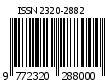
ISSN: 2320-2882 Impact Factor: 7.97 and ISSN APPROVED Journal Starting Year (ESTD) : 2013


ISSN and 7.97 Impact Factor Details
ISSN: 2320-2882 Impact Factor: 7.97 and ISSN APPROVED Journal Starting Year (ESTD) : 2013
DOI Details
CONFERENCE
CONFERENCE MANAGMENT & PUBLICATION CONFERENCE PROPOSAL
RECENT CONFERENCE

CONFERENCE PROPOSAL CONFERENCE PROCEEDINGS
CONFERENCE PROPOSAL CONFERENCE PROCEEDINGS
For Reviewer /Referral (RMS) Earn 500 per paper
Important Links
NEWS & Conference
Digital Library
IJCRT RMS | Earn 500 Per Paper.

Open Access


LICENSE
Indexing Partner
Scholarly open access journals, Peer-reviewed, and Refereed Journals, Impact factor 7.97 (Calculate by google scholar and Semantic Scholar | AI-Powered Research Tool) , Multidisciplinary, Monthly, Indexing in all major database & Metadata, Citation Generator, Digital Object Identifier(DOI)