Important Details
IJCRT - International Peer Reviewed, Open Access Journal, Multidisciplinary, Monthly, Nominal(Low) Fees for Professional Research Services International Journal of Creative Research Thoughts - IJCRT Peer Review Journal, Refereed Journal, Peer Reviewed Journal , Referred Journal and Indexed Journal, Open access, Online and Print Journal,international Journal Open Access, Accepted by Indian and foreign university ,IJCRT Followed Norms, guidelines, requirement, listing criteria and methodology of score/point also applied from: Scopus , Web of Science , UGC Approved , UGC CARE, UGC-CARE .
UGC Approved Journal No: 49023 (18)
UGC approval Link
https://ijcrt.org/ugc%20approval.jpg
All Policy and Approval
Please Like Our Facebook Page | CrossRef DOI and Hard copy of Certificate Provide if required. | www.IJCRT.org | editor@IJCRT.org | WhatsApp: 7990172303
Publication Details:
- Paper Submission : 30-Apr-2026. Call For Paper (Volume 14 | Issue 4 | Month- April 2026)
- Acceptance/Rejection Notification: Within 02-04 Days.
- Paper Publish: Within 02-04 Days after submitting all documents.
-
Submit Your Paper Any time There No deadline.
-
Publication fees : 1570 INR for Indian author & 59$ for foreign International author.
Please Like Our Facebook Page | CrossRef DOI and Hard copy of Certificate Provide if required.
Licence and Indexing
Indexing In Google Scholar, SSRN, ResearcherID-Publons, Semantic Scholar | AI-Powered Research Tool, Microsoft Academic, Academia.edu, arXiv.org, Research Gate, CiteSeerX, ResearcherID Thomson Reuters, Mendeley : reference manager, DocStoc, ISSUU, Scribd, and many more | High Impact Factor: 7.97 | Digital object identifier (DOI) and Hard Copy of certificate Provided.




























Licence
DOI
ISSN Approved impact factor: 7.97 
Creative Common 
Valid as per new UGC Gazette regulations 

INTERNATIONAL JOURNAL OF CREATIVE RESEARCH THOUGHTS - IJCRT (IJCRT.ORG)
International Peer Reviewed & Refereed Journals, Open Access Journal
IJCRT Peer-Reviewed (Refereed) Journal as Per New UGC Rules.
ISSN Approved Journal No: 2320-2882 | Impact factor: 7.97 | ESTD Year: 2013
Call For Paper - Volume 14 | Issue 4 | Month- April 2026
Scholarly open access journals, Peer-reviewed, and Refereed Journals, Impact factor 7.97 (Calculate by google scholar and Semantic Scholar | AI-Powered Research Tool) , Multidisciplinary, Monthly, Indexing in all major database & Metadata, Citation Generator, Digital Object Identifier(CrossRef DOI)
Contact Us Click Here
WhatsApp Contact Click Here
IJCRT Search Xplore - Search all paper by Paper Name , Author Name, and Title
Volume 13 | Issue 6 |
Volume 13 | Issue 6 | Month
Downlaod After Publication 1) Table of content index in PDF
2) Table of content index in HTML 2)Table of content index in HTML
3) Front Page 3) Front Page
4) Back Page 4) Back Page
5) Editor Board Member 5)Editor Board Member
6) OLD Style Issue 6)OLD Style Issue
 |
 |
|---|---|
| IJCRT Journal front page | IJCRT Journal Back Page |
Paper Title: c++ in the modern Era
Author Name(s): Dr AFTAB AHMED N A
Published Paper ID: - IJCRT2506637
Register Paper ID - 289077
Publisher Journal Name: IJPUBLICATION, IJCRT
DOI Member ID: 10.6084/m9.doi.one.IJCRT2506637 and DOI :
Author Country : Indian Author, India, 501504 , Hyderabad, 501504 , | Research Area: Science and Technology Published Paper URL: http://ijcrt.org/viewfull.php?&p_id=IJCRT2506637 Published Paper PDF: download.php?file=IJCRT2506637 Published Paper PDF: http://www.ijcrt.org/papers/IJCRT2506637.pdf
Your Paper Publication Details:
Title: C++ IN THE MODERN ERA
DOI (Digital Object Identifier) :
Pubished in Volume: 13 | Issue: 6 | Year: June 2025
Publisher Name : IJCRT | www.ijcrt.org | ISSN : 2320-2882
Subject Area: Science and Technology
Author type: Indian Author
Pubished in Volume: 13
Issue: 6
Pages: f487-f489
Year: June 2025
Downloads: 123
E-ISSN Number: 2320-2882
Abstract
c++ the classic system programming language which is the extension of c is a highly accepted and used language , like c cannot become an obsolete language, so is c++ A Language which is the language of masses,c++ continues to hold its prominence it is used in AI and machine learning,game development, desktop applications A language which cannot be ignored is both c and c++ languages
Licence: creative commons attribution 4.0
License
Creative Commons Attribution 4.0 and The Open Definition

Keywords
obsolete, masses, prominence
License
Creative Commons Attribution 4.0 and The Open Definition
Paper Title: Media Literacy and its Cultural Hegemony
Author Name(s): Dr. Sweta Mishra
Published Paper ID: - IJCRT2506636
Register Paper ID - 289355
Publisher Journal Name: IJPUBLICATION, IJCRT
DOI Member ID: 10.6084/m9.doi.one.IJCRT2506636 and DOI :
Author Country : Indian Author, India, 7682001 , Sambalpur, 7682001 , | Research Area: Medical Science All Published Paper URL: http://ijcrt.org/viewfull.php?&p_id=IJCRT2506636 Published Paper PDF: download.php?file=IJCRT2506636 Published Paper PDF: http://www.ijcrt.org/papers/IJCRT2506636.pdf
Your Paper Publication Details:
Title: MEDIA LITERACY AND ITS CULTURAL HEGEMONY
DOI (Digital Object Identifier) :
Pubished in Volume: 13 | Issue: 6 | Year: June 2025
Publisher Name : IJCRT | www.ijcrt.org | ISSN : 2320-2882
Subject Area: Medical Science All
Author type: Indian Author
Pubished in Volume: 13
Issue: 6
Pages: f484-f486
Year: June 2025
Downloads: 135
E-ISSN Number: 2320-2882
Abstract
This paper emphasises on the symbiotic relationship between media literacy and cultural hegemony. It attempts to focus on the contextual meaning of both media literacy and culture by giving a brief historical overview of societal norms from media perspective and bring to the fore the interrelatedness of culture and media. Media Literacy and cultural hegemony are interconnected notions that emphasises on how media influences societal values and customs. Media literacy empowers individuals to critically analyse media messages, while cultural hegemony refers to the dominance of certain perspectives and values within a society often reinforced by media. Media literacy helps individuals resist hegemonic influences by fostering critical thinking and media analytical skills. Media plays a vital role in shaping and maintaining cultural hegemony. By controlling the narratives and perspectives presented in media, powerful groups can influence public opinion and reinforce their dominance.
Licence: creative commons attribution 4.0
License
Creative Commons Attribution 4.0 and The Open Definition
Keywords
Media Literacy, Cultural Hegemony, Subalterns, Marxists economics
License
Creative Commons Attribution 4.0 and The Open Definition
Paper Title: Smart Parking System Using YOLOv8-Based License Plate Recognition and Automated Billing
Author Name(s): Prof. Mr. Amit T. Bhosale, Miss. Ruchika Sunil Kumbhar, Miss. Vaishnavi Sunil Saste, Miss. Rutuja, Miss. Pooja Hanmant Thombare
Published Paper ID: - IJCRT2506635
Register Paper ID - 289289
Publisher Journal Name: IJPUBLICATION, IJCRT
DOI Member ID: 10.6084/m9.doi.one.IJCRT2506635 and DOI :
Author Country : Indian Author, India, 415523 , Phaltan, 415523 , | Research Area: Science and Technology Published Paper URL: http://ijcrt.org/viewfull.php?&p_id=IJCRT2506635 Published Paper PDF: download.php?file=IJCRT2506635 Published Paper PDF: http://www.ijcrt.org/papers/IJCRT2506635.pdf
Your Paper Publication Details:
Title: SMART PARKING SYSTEM USING YOLOV8-BASED LICENSE PLATE RECOGNITION AND AUTOMATED BILLING
DOI (Digital Object Identifier) :
Pubished in Volume: 13 | Issue: 6 | Year: June 2025
Publisher Name : IJCRT | www.ijcrt.org | ISSN : 2320-2882
Subject Area: Science and Technology
Author type: Indian Author
Pubished in Volume: 13
Issue: 6
Pages: f475-f483
Year: June 2025
Downloads: 130
E-ISSN Number: 2320-2882
Abstract
As the urban fleet of vehicles is growing rapidly, parking management by intelligent and automated means has become more important. This paper proposes a real-time smart parking system utilizing computer vision and deep learning methods for vehicle detection, dynamic assignment of slots, and automatic billing. The suggested system uses the YOLOv8 object detection model to detect license plates from images with high accuracy followed by Optical Character Recognition (OCR) with added image pre-processing and luminosity normalization to ensure enhanced accuracy in extracting text. After identifying a license plate, the system auto-assigns available parking slots, captures entry and exit times, and computes charges for the stay duration. All parking transactions, including encoded plate images and timestamps, are recorded in an Excel-based database. The suggested framework presents a scalable, cost-efficient, and low-cost solution to urban traffic and parking management issues.
Licence: creative commons attribution 4.0
License
Creative Commons Attribution 4.0 and The Open Definition
Keywords
Smart parking system, License plate recognition, YOLOv8, Optical character recognition (OCR), Dynamic parking slot allocation, Automated billing, Urban traffic management
License
Creative Commons Attribution 4.0 and The Open Definition
Paper Title: Investor Psychology and Decision-Making in Indian Markets: A Descriptive Analysis of Behavioural Biases
Author Name(s): PUNITH K B, Sureshramana Mayya
Published Paper ID: - IJCRT2506634
Register Paper ID - 289317
Publisher Journal Name: IJPUBLICATION, IJCRT
DOI Member ID: 10.6084/m9.doi.one.IJCRT2506634 and DOI :
Author Country : Indian Author, India, 577302 , BHADRAVATHI, 577302 , | Research Area: Commerce All Published Paper URL: http://ijcrt.org/viewfull.php?&p_id=IJCRT2506634 Published Paper PDF: download.php?file=IJCRT2506634 Published Paper PDF: http://www.ijcrt.org/papers/IJCRT2506634.pdf
Your Paper Publication Details:
Title: INVESTOR PSYCHOLOGY AND DECISION-MAKING IN INDIAN MARKETS: A DESCRIPTIVE ANALYSIS OF BEHAVIOURAL BIASES
DOI (Digital Object Identifier) :
Pubished in Volume: 13 | Issue: 6 | Year: June 2025
Publisher Name : IJCRT | www.ijcrt.org | ISSN : 2320-2882
Subject Area: Commerce All
Author type: Indian Author
Pubished in Volume: 13
Issue: 6
Pages: f464-f474
Year: June 2025
Downloads: 110
E-ISSN Number: 2320-2882
Abstract
ABSTRACT Purpose This paper investigates the psychological biases and behavioural patterns influencing individual investment decisions in India. It particularly examines how demographic factors, confidence levels, and information sources shape the way investors behave in financial markets. Design/Methodology/Approach A cross-sectional descriptive survey was conducted among 25 individual investors across different age groups and educational levels. Data were gathered through a structured questionnaire, and statistical analyses, including chi-square tests and correlation coefficients, were applied to identify significant patterns and relationships. Findings The study found that overconfidence and herd behaviour were the most prominent behavioural biases. A moderate correlation was observed between self-reported market confidence and herd-following tendencies. Education level did not show a statistically significant relationship with susceptibility to these biases. Diversification emerged as the most frequently used strategy to counter bias-driven risks. Practical Implications The results underscore the importance of incorporating behavioural insights into investor education programs and financial advisory services. By addressing common cognitive biases, these interventions can promote more rational and informed investment behaviour. Originality/Value This study contributes region-specific empirical data to the growing field of behavioural finance, highlighting the unique characteristics of Indian retail investors. It bridges the gap between theoretical frameworks and practical financial behaviour in emerging markets.
Licence: creative commons attribution 4.0
License
Creative Commons Attribution 4.0 and The Open Definition
Keywords
Behavioural finance, investor psychology, overconfidence bias, loss aversion, investment decision-making.
License
Creative Commons Attribution 4.0 and The Open Definition
Paper Title: Prevalence of Upper Limb Nerve Compression in Smartphone -Using University Students with Forward Head Posture
Author Name(s): Saumya kumari, Dr. Apoorva Tiwari
Published Paper ID: - IJCRT2506633
Register Paper ID - 289350
Publisher Journal Name: IJPUBLICATION, IJCRT
DOI Member ID: 10.6084/m9.doi.one.IJCRT2506633 and DOI :
Author Country : Indian Author, India, 301210 , Greater Noida, 301210 , | Research Area: Humanities All Published Paper URL: http://ijcrt.org/viewfull.php?&p_id=IJCRT2506633 Published Paper PDF: download.php?file=IJCRT2506633 Published Paper PDF: http://www.ijcrt.org/papers/IJCRT2506633.pdf
Your Paper Publication Details:
Title: PREVALENCE OF UPPER LIMB NERVE COMPRESSION IN SMARTPHONE -USING UNIVERSITY STUDENTS WITH FORWARD HEAD POSTURE
DOI (Digital Object Identifier) :
Pubished in Volume: 13 | Issue: 6 | Year: June 2025
Publisher Name : IJCRT | www.ijcrt.org | ISSN : 2320-2882
Subject Area: Humanities All
Author type: Indian Author
Pubished in Volume: 13
Issue: 6
Pages: f454-f463
Year: June 2025
Downloads: 123
E-ISSN Number: 2320-2882
Abstract
With the growing integration of digital technology in education and daily life, smartphones have become indispensable tools, particularly among university students. However, this convenience comes with consequences--prolonged use of smartphones has been increasingly associated with musculoskeletal issues, including altered cervical posture. One of the most common postural abnormalities observed in frequent smartphone users is Forward Head Posture (FHP), a condition where the head is positioned anteriorly in relation to the body's vertical axis. FHP has been linked to increased cervical spine strain and may contribute to upper limb nerve compressions.
Licence: creative commons attribution 4.0
License
Creative Commons Attribution 4.0 and The Open Definition
Keywords
Forward Head Posture, Smartphone Addiction, Upper Limb Nerve Compression, University Students, Ergonomics, Neural Tension
License
Creative Commons Attribution 4.0 and The Open Definition
Paper Title: Eco Printing on Natural Fabrics Using Pine Tree Leaves: A Study of Mordant Influence on Cotton and Silk
Author Name(s): Sunita Rai, Nargis Fatima, Ekta Sharma
Published Paper ID: - IJCRT2506632
Register Paper ID - 289459
Publisher Journal Name: IJPUBLICATION, IJCRT
DOI Member ID: 10.6084/m9.doi.one.IJCRT2506632 and DOI :
Author Country : Indian Author, India, 211011 , Pryagraj , 211011 , | Research Area: Science and Technology Published Paper URL: http://ijcrt.org/viewfull.php?&p_id=IJCRT2506632 Published Paper PDF: download.php?file=IJCRT2506632 Published Paper PDF: http://www.ijcrt.org/papers/IJCRT2506632.pdf
Your Paper Publication Details:
Title: ECO PRINTING ON NATURAL FABRICS USING PINE TREE LEAVES: A STUDY OF MORDANT INFLUENCE ON COTTON AND SILK
DOI (Digital Object Identifier) :
Pubished in Volume: 13 | Issue: 6 | Year: June 2025
Publisher Name : IJCRT | www.ijcrt.org | ISSN : 2320-2882
Subject Area: Science and Technology
Author type: Indian Author
Pubished in Volume: 13
Issue: 6
Pages: f449-f453
Year: June 2025
Downloads: 144
E-ISSN Number: 2320-2882
Abstract
Eco printing is a sustainable surface embellishment technique that involves the direct transfer of plant shapes, structures, and sometimes pigments onto textiles through contact and heat. This study explores the eco-printing potential of pine tree leaves on cotton and silk fabrics, pre-treated with four different mordants: alum, copper sulphate, katha, and harda. The experiment evaluates how each mordant affects the clarity, contrast, and aesthetics of the resist-based prints. The results highlight the unique visual impact of each mordant-fabric combination, with silk generally producing clearer and more refined prints than cotton. The study underscores the role of mordants in influencing eco-print outcomes and provides insights into plant-based textile surface design. Keywords: Eco printing, pine leaves, natural dyes, mordants, cotton, silk, sustainable textiles, contact printing.
Licence: creative commons attribution 4.0
License
Creative Commons Attribution 4.0 and The Open Definition
Keywords
Keywords: Eco printing, pine leaves, natural dyes, mordants, cotton, silk, sustainable textiles, contact printing
License
Creative Commons Attribution 4.0 and The Open Definition
Paper Title: Leveraging AI and Machine Learning for Early Detection and Diagnosis of Rare Genetic Disorders Using Multi-Modal Data Integration.
Author Name(s): Roshani D Solanki., Devarsh Anilbhai Shah.
Published Paper ID: - IJCRT2506631
Register Paper ID - 289409
Publisher Journal Name: IJPUBLICATION, IJCRT
DOI Member ID: 10.6084/m9.doi.one.IJCRT2506631 and DOI :
Author Country : Indian Author, India, 382424 , Ahmedabad, 382424 , | Research Area: Science and Technology Published Paper URL: http://ijcrt.org/viewfull.php?&p_id=IJCRT2506631 Published Paper PDF: download.php?file=IJCRT2506631 Published Paper PDF: http://www.ijcrt.org/papers/IJCRT2506631.pdf
Your Paper Publication Details:
Title: LEVERAGING AI AND MACHINE LEARNING FOR EARLY DETECTION AND DIAGNOSIS OF RARE GENETIC DISORDERS USING MULTI-MODAL DATA INTEGRATION.
DOI (Digital Object Identifier) :
Pubished in Volume: 13 | Issue: 6 | Year: June 2025
Publisher Name : IJCRT | www.ijcrt.org | ISSN : 2320-2882
Subject Area: Science and Technology
Author type: Indian Author
Pubished in Volume: 13
Issue: 6
Pages: f441-f448
Year: June 2025
Downloads: 131
E-ISSN Number: 2320-2882
Abstract
The diagnosis of rare genetic disorders remains a significant challenge in modern medicine due to their complex nature, low incidence rates, and the scarcity of clinical data. Traditional diagnostic methods, including genetic testing and clinical evaluation, often require significant time and resources, leading to delayed diagnoses and suboptimal patient outcomes. Recent advancements in Artificial Intelligence (AI) and Machine Learning (ML) offer transformative potential for overcoming these limitations by enabling more efficient, accurate, and early detection of such disorders. This paper explores the application of AI and ML algorithms in integrating multi-modal data comprising genomic sequences, medical imaging, and clinical histories to improve the early detection and diagnosis of rare genetic diseases. We present a framework that leverages the power of multi-modal data fusion, where genomic data like DNA/RNA sequencing, medical imaging, for example, X-rays, MRIs, and CT scans, and clinical data like patient history, lab results, and family background) are systematically integrated to form a comprehensive dataset for analysis. We demonstrate how deep learning techniques, particularly Convolutional Neural Networks (CNNs), can extract critical features from medical images, while advanced Recurrent Neural Networks (RNNs) and Long Short-Term Memory (LSTM) networks are used for analysing sequential clinical data. Ensemble learning models, including Random Forests and Gradient Boosting Machines (GBM), are employed to classify genetic mutations and predict disease outcomes based on structured clinical data. Additionally, this paper emphasizes the importance of transfer learning and multi-task learning (MTL) techniques to address the challenges posed by limited data availability, particularly for rare genetic disorders and by utilizing pre-trained models and learning from multiple related tasks, the system is capable of improving its performance even when working with relatively small datasets. Furthermore, we discuss the integration of explainable AI (XAI) techniques, such as SHAP (Shapley Additive Explanations) and LIME (Local Interpretable Model Agnostic Explanation) with Graph Neural Networks (GNNs), to ensure transparency and interpretability in AI-based decision-making, which is crucial for clinical adoption. Our results show that the combination of genomic, imaging, and clinical data not only enhances diagnostic accuracy but also enables earlier detection of genetic disorders that might otherwise go undiagnosed for years. We conclude that Artificial Intelligence and Machine Learning, when applied to multi-modal data integration, holds the potential to revolutionize the diagnosis of rare genetic disorders, ultimately leading to better patient outcomes, personalized treatment strategies, and more efficient healthcare practices.
Licence: creative commons attribution 4.0
License
Creative Commons Attribution 4.0 and The Open Definition
Keywords
Multi-Modal Data Integration, Rare Genetic Disorders, Machine Learning in Healthcare, Explainable AI (XAI) with SHAP & LIME, Genomic and Clinical Data Fusion
License
Creative Commons Attribution 4.0 and The Open Definition
Paper Title: REAL TIME TRAFFIC SUREILLANCE AND DETECTION USING DEEP LEARNING AND COMPUTER VISION TECHNIQUES
Author Name(s): K.Mohini Devi, M.Uttam Kumar, M.Srinuvasu Rao Naidu, K.Suma
Published Paper ID: - IJCRT2506630
Register Paper ID - 289335
Publisher Journal Name: IJPUBLICATION, IJCRT
DOI Member ID: 10.6084/m9.doi.one.IJCRT2506630 and DOI :
Author Country : Indian Author, India, - , -, - , | Research Area: Science and Technology Published Paper URL: http://ijcrt.org/viewfull.php?&p_id=IJCRT2506630 Published Paper PDF: download.php?file=IJCRT2506630 Published Paper PDF: http://www.ijcrt.org/papers/IJCRT2506630.pdf
Your Paper Publication Details:
Title: REAL TIME TRAFFIC SUREILLANCE AND DETECTION USING DEEP LEARNING AND COMPUTER VISION TECHNIQUES
DOI (Digital Object Identifier) :
Pubished in Volume: 13 | Issue: 6 | Year: June 2025
Publisher Name : IJCRT | www.ijcrt.org | ISSN : 2320-2882
Subject Area: Science and Technology
Author type: Indian Author
Pubished in Volume: 13
Issue: 6
Pages: f434-f440
Year: June 2025
Downloads: 114
E-ISSN Number: 2320-2882
Abstract
Manual traffic surveillance can be a daunting task as Traffic Management Centers operate a myriad of cameras installed over a network. Injecting some level of automation could help lighten the workload of human operators performing manual surveillance and facilitate making proactive decisions which would reduce the impact of incidents and recurring congestion on roadways. This article presents a novel approach to automatically monitor real time traffic footage using deep convolutional neural networks and a stand-alone graphical user interface. The authors describe the results of research received in the process of developing models that serve as an integrated framework for an artificial intelligence enabled traffic monitoring system. The proposed system deploys several state-of-the-art deep learning algorithms to automate different traffic monitoring needs. Taking advantage of a large database of annotated video surveillance data, deep learning-based models are trained to detect queues, track stationary vehicles, and tabulate vehicle counts. A pixel-level segmentation approach is applied to detect traffic queues and predict severity. Real-time object detection algorithms coupled with different tracking systems are deployed to automatically detect stranded vehicles as well as perform vehicular counts. At each stages of development, interesting experimental results are presented to demonstrate the effectiveness of the proposed system. Overall, the results demonstrate that the proposed framework performs satisfactorily under varied conditions without being immensely impacted by environmental hazards such as blurry camera views, low illumination, rain, or snow.
Licence: creative commons attribution 4.0
License
Creative Commons Attribution 4.0 and The Open Definition
Keywords
REAL TIME TRAFFIC SUREILLANCE AND DETECTION USING DEEP LEARNING AND COMPUTER VISION TECHNIQUES
License
Creative Commons Attribution 4.0 and The Open Definition
Paper Title: Transformation And Evolution From Traditional Marketing To Digital Marketing At Spangles Infotech, Nagercoil
Author Name(s): Abdul Basith A, Shanmugavadivel D
Published Paper ID: - IJCRT2506629
Register Paper ID - 289306
Publisher Journal Name: IJPUBLICATION, IJCRT
DOI Member ID: 10.6084/m9.doi.one.IJCRT2506629 and DOI :
Author Country : Indian Author, India, 629165 , Marthandam, 629165 , | Research Area: Commerce All Published Paper URL: http://ijcrt.org/viewfull.php?&p_id=IJCRT2506629 Published Paper PDF: download.php?file=IJCRT2506629 Published Paper PDF: http://www.ijcrt.org/papers/IJCRT2506629.pdf
Your Paper Publication Details:
Title: TRANSFORMATION AND EVOLUTION FROM TRADITIONAL MARKETING TO DIGITAL MARKETING AT SPANGLES INFOTECH, NAGERCOIL
DOI (Digital Object Identifier) :
Pubished in Volume: 13 | Issue: 6 | Year: June 2025
Publisher Name : IJCRT | www.ijcrt.org | ISSN : 2320-2882
Subject Area: Commerce All
Author type: Indian Author
Pubished in Volume: 13
Issue: 6
Pages: f429-f433
Year: June 2025
Downloads: 131
E-ISSN Number: 2320-2882
Abstract
This study investigates the shift from traditional marketing methods to digital marketing strategies at Spangles Infotech, a tech-based company in Nagercoil, Tamil Nadu. Through a mixed-method approach involving a structured questionnaire administered to 168 respondents, the research identifies key preferences, marketing effectiveness, and consumer responses to both traditional and digital strategies. The results indicate a strong leaning toward digital mediums such as social media marketing and influencer campaigns, highlighting the growing importance of personalization, measurability, and cost-efficiency in the evolving marketing landscape.
Licence: creative commons attribution 4.0
License
Creative Commons Attribution 4.0 and The Open Definition
Keywords
Digital Marketing, Traditional Marketing, Consumer Behaviour, Brand Awareness, Spangles Infotech.
License
Creative Commons Attribution 4.0 and The Open Definition
Paper Title: An Approach of Multi-criteria Decision-Making Problems with Bipolar Vague Sets VIKOR Method Using MATLAB
Author Name(s): F.Prishka, L.Mariapresenti
Published Paper ID: - IJCRT2506628
Register Paper ID - 289318
Publisher Journal Name: IJPUBLICATION, IJCRT
DOI Member ID: 10.6084/m9.doi.one.IJCRT2506628 and DOI :
Author Country : Indian Author, India, 641043 , Coimbatore, 641043 , | Research Area: Mathematics All Published Paper URL: http://ijcrt.org/viewfull.php?&p_id=IJCRT2506628 Published Paper PDF: download.php?file=IJCRT2506628 Published Paper PDF: http://www.ijcrt.org/papers/IJCRT2506628.pdf
Your Paper Publication Details:
Title: AN APPROACH OF MULTI-CRITERIA DECISION-MAKING PROBLEMS WITH BIPOLAR VAGUE SETS VIKOR METHOD USING MATLAB
DOI (Digital Object Identifier) :
Pubished in Volume: 13 | Issue: 6 | Year: June 2025
Publisher Name : IJCRT | www.ijcrt.org | ISSN : 2320-2882
Subject Area: Mathematics All
Author type: Indian Author
Pubished in Volume: 13
Issue: 6
Pages: f423-f428
Year: June 2025
Downloads: 119
E-ISSN Number: 2320-2882
Abstract
In this paper we describe the concept of bipolarity on vague sets. We develop a bipolar vague VIKOR Method with multi-criteria decision-making problems in which the ranking order of the alternatives are engaged as bipolar vague sets. Lastly a mathematical illustration is given to demonstrate the purpose and efficiency of the established bipolar vague VIKOR method using MATLAB.
Licence: creative commons attribution 4.0
License
Creative Commons Attribution 4.0 and The Open Definition
Keywords
Bipolar vague set, VIKOR method and multi-criteria decision-making.
License
Creative Commons Attribution 4.0 and The Open Definition
Call For Paper April 2026
Call For Papers
April 2026
Volume 14 | Issue 4
Last Date :
30-Apr-2026
Submit Manuscript Online Impact Factor: 7.97 Review Results : Within 02-03 Days Paper Publication : Within 02-03 Days
April 2026
Volume 14 | Issue 4
Last Date :
30-Apr-2026
Submit Manuscript Online Impact Factor: 7.97 Review Results : Within 02-03 Days Paper Publication : Within 02-03 Days
Published Issue Details
For Authors
Forms / Downloads
Other IMP Links
Indexing Partner
Research Area
LICENSE





ISSN and 7.97 Impact Factor Details

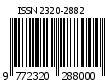
ISSN: 2320-2882 Impact Factor: 7.97 and ISSN APPROVED Journal Starting Year (ESTD) : 2013


ISSN and 7.97 Impact Factor Details
ISSN: 2320-2882 Impact Factor: 7.97 and ISSN APPROVED Journal Starting Year (ESTD) : 2013
DOI Details
CONFERENCE
CONFERENCE MANAGMENT & PUBLICATION CONFERENCE PROPOSAL
RECENT CONFERENCE

CONFERENCE PROPOSAL CONFERENCE PROCEEDINGS
CONFERENCE PROPOSAL CONFERENCE PROCEEDINGS
For Reviewer /Referral (RMS) Earn 500 per paper
Important Links
NEWS & Conference
Digital Library
IJCRT RMS | Earn 500 Per Paper.

Open Access


LICENSE
Indexing Partner
Scholarly open access journals, Peer-reviewed, and Refereed Journals, Impact factor 7.97 (Calculate by google scholar and Semantic Scholar | AI-Powered Research Tool) , Multidisciplinary, Monthly, Indexing in all major database & Metadata, Citation Generator, Digital Object Identifier(DOI)