Important Details
IJCRT - International Peer Reviewed, Open Access Journal, Multidisciplinary, Monthly, Nominal(Low) Fees for Professional Research Services International Journal of Creative Research Thoughts - IJCRT Peer Review Journal, Refereed Journal, Peer Reviewed Journal , Referred Journal and Indexed Journal, Open access, Online and Print Journal,international Journal Open Access, Accepted by Indian and foreign university ,IJCRT Followed Norms, guidelines, requirement, listing criteria and methodology of score/point also applied from: Scopus , Web of Science , UGC Approved , UGC CARE, UGC-CARE .
UGC Approved Journal No: 49023 (18)
UGC approval Link
https://ijcrt.org/ugc%20approval.jpg
All Policy and Approval
Please Like Our Facebook Page | CrossRef DOI and Hard copy of Certificate Provide if required. | www.IJCRT.org | editor@IJCRT.org | WhatsApp: 7990172303
Publication Details:
- Paper Submission : 31-Mar-2026. Call For Paper (Volume 14 | Issue 3 | Month- March 2026)
- Acceptance/Rejection Notification: Within 02-04 Days.
- Paper Publish: Within 02-04 Days after submitting all documents.
-
Submit Your Paper Any time There No deadline.
-
Publication fees : 1570 INR for Indian author & 59$ for foreign International author.
Please Like Our Facebook Page | CrossRef DOI and Hard copy of Certificate Provide if required.
Licence and Indexing
Indexing In Google Scholar, SSRN, ResearcherID-Publons, Semantic Scholar | AI-Powered Research Tool, Microsoft Academic, Academia.edu, arXiv.org, Research Gate, CiteSeerX, ResearcherID Thomson Reuters, Mendeley : reference manager, DocStoc, ISSUU, Scribd, and many more | High Impact Factor: 7.97 | Digital object identifier (DOI) and Hard Copy of certificate Provided.




























Licence
DOI
ISSN Approved impact factor: 7.97 
Creative Common 
Valid as per new UGC Gazette regulations 

INTERNATIONAL JOURNAL OF CREATIVE RESEARCH THOUGHTS - IJCRT (IJCRT.ORG)
International Peer Reviewed & Refereed Journals, Open Access Journal
IJCRT Peer-Reviewed (Refereed) Journal as Per New UGC Rules.
ISSN Approved Journal No: 2320-2882 | Impact factor: 7.97 | ESTD Year: 2013
Call For Paper - Volume 14 | Issue 3 | Month- March 2026
Scholarly open access journals, Peer-reviewed, and Refereed Journals, Impact factor 7.97 (Calculate by google scholar and Semantic Scholar | AI-Powered Research Tool) , Multidisciplinary, Monthly, Indexing in all major database & Metadata, Citation Generator, Digital Object Identifier(CrossRef DOI)
Contact Us Click Here
WhatsApp Contact Click Here
IJCRT Search Xplore - Search all paper by Paper Name , Author Name, and Title
Volume 13 | Issue 4 |
Volume 13 | Issue 4 | Month
Downlaod After Publication 1) Table of content index in PDF
2) Table of content index in HTML 2)Table of content index in HTML
3) Front Page 3) Front Page
4) Back Page 4) Back Page
5) Editor Board Member 5)Editor Board Member
6) OLD Style Issue 6)OLD Style Issue
 |
 |
|---|---|
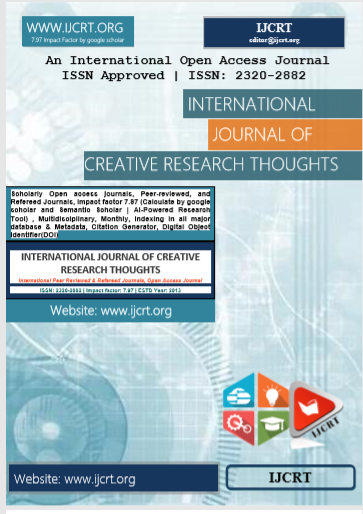
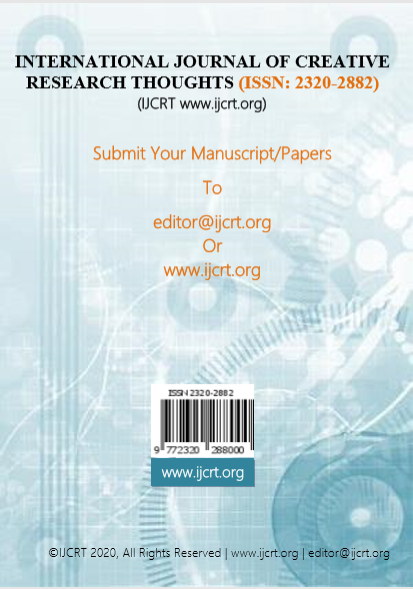
| IJCRT Journal front page | IJCRT Journal Back Page |
Paper Title: Title :- Rethinking Criminal Justice: The Case for Decriminalization of Minor Offences
Author Name(s): Anish Raj Singh, Dr Taru Mishra
Published Paper ID: - IJCRT25A4337
Register Paper ID - 283568
Publisher Journal Name: IJPUBLICATION, IJCRT
DOI Member ID: 10.6084/m9.doi.one.IJCRT25A4337 and DOI :
Author Country : Indian Author, India, 226005 , Lucknow , 226005 , | Research Area: Other area not in list Published Paper URL: http://ijcrt.org/viewfull.php?&p_id=IJCRT25A4337 Published Paper PDF: download.php?file=IJCRT25A4337 Published Paper PDF: http://www.ijcrt.org/papers/IJCRT25A4337.pdf
Your Paper Publication Details:
Title: TITLE :- RETHINKING CRIMINAL JUSTICE: THE CASE FOR DECRIMINALIZATION OF MINOR OFFENCES
DOI (Digital Object Identifier) :
Pubished in Volume: 13 | Issue: 4 | Year: April 2025
Publisher Name : IJCRT | www.ijcrt.org | ISSN : 2320-2882
Subject Area: Other area not in list
Author type: Indian Author
Pubished in Volume: 13
Issue: 4
Pages: l445-l460
Year: April 2025
Downloads: 155
E-ISSN Number: 2320-2882
Abstract
The issue of decriminalization of minor offences in India has gained importance with respect to legal policy reforms, particularly in light of an under-staffed criminal justice system and growing calls for a more alleviative and just justice system. Offences of lesser importance in India, including public annoyance, larceny, begging, vagrancy, and the illegal possession of small amounts of certain drugs, are put under primitive colonial laws such as the Indian Penal Code (IPC) and other state specific laws. Not only do these put decade-old laws give rise to the demonetization of social scum of the world, but these laws also add to the plethora of resources available for police, courts, and prisons. This paper looks into the rationale and necessity to remove legal penalties for some offence's in India, analyzing how unjustifiable approaches to minor crimes disproportionately impact basic needs such as the urban poor, Dalits, Adivasis, and even the lowly migrant workers. In addition to these, the abstract touches upon socio-legal movements advocating for blueprints of change, inclusive of the Indian Law Commission proposals and recent governmental attempts at IPC rationalization and associated frameworks. Using empirical studies and developed policies, the paper examines the possible advantages of decriminalization, including lower rates of incarceration, decreased expenditures in the justice system, and improved access to rehabilitation and social services. Other actions like community service, administrative sanctions, or diversion programs that can assist in behavioral modification without resorting to incarceration are also scrutinized. Illustrative cases from legal reform-states and lessons learned from other countries aid in imagining the possible outcomes of the modifications. On the other hand, the paper discusses the problems concerning the implementation steps, foremost being the institutional inertia and low level of public education as well as the need for simultaneous investment into social welfare structures. The paper defends its position by saying that decriminalization, within precise boundaries and an all-encompassing approach, promotes greater strife for justice, honor, and economy in the Indian legal system. In conclusion, the paper emphasizes the need to clearly define the strategies that balance prevention, responsibility, and social embrace.
Licence: creative commons attribution 4.0
License
Creative Commons Attribution 4.0 and The Open Definition

Keywords
Decriminalization, Minor offences, Portugal drug decriminalization, social justice, public nuisance laws, Petty crimes, criminal justice reform, public policy, civil penalties
License
Creative Commons Attribution 4.0 and The Open Definition
Paper Title: EXPLORING THE THERAPEUTIC AND COSMETIC POTENTIAL OF SNAIL MUCIN: FUTURE PROSPECTIVES
Author Name(s): Borade Divya Ganesh, Bambale Sanskruti Purushottam, Prajwali Bhalerao
Published Paper ID: - IJCRT25A4336
Register Paper ID - 283582
Publisher Journal Name: IJPUBLICATION, IJCRT
DOI Member ID: 10.6084/m9.doi.one.IJCRT25A4336 and DOI :
Author Country : Indian Author, India, 410401 , Lonavala, 410401 , | Research Area: Pharmacy All Published Paper URL: http://ijcrt.org/viewfull.php?&p_id=IJCRT25A4336 Published Paper PDF: download.php?file=IJCRT25A4336 Published Paper PDF: http://www.ijcrt.org/papers/IJCRT25A4336.pdf
Your Paper Publication Details:
Title: EXPLORING THE THERAPEUTIC AND COSMETIC POTENTIAL OF SNAIL MUCIN: FUTURE PROSPECTIVES
DOI (Digital Object Identifier) :
Pubished in Volume: 13 | Issue: 4 | Year: April 2025
Publisher Name : IJCRT | www.ijcrt.org | ISSN : 2320-2882
Subject Area: Pharmacy All
Author type: Indian Author
Pubished in Volume: 13
Issue: 4
Pages: l435-l444
Year: April 2025
Downloads: 121
E-ISSN Number: 2320-2882
Abstract
Mucins are a broad family of proteins with multiple functions and characteristics. Snails use mucin proteins in their mucous for several activities including microbial protection, adhesion, and lubrication. Snail Mucin is a complex mixture of Glycoprotein, Hyaluronic acid and Glycollic acid that has emerged as a promising ingredient in Pharmaceutical and Cosmetic industries. Recent studies have highlighted its advanced functions, including wound healing, Anti-aging, Skin hydration, Antimicrobial, Anti-inflammatory, etc. Snail mucin's unique composition and advanced functions states that it is a promising ingredient for future applications in skincare, wound healing, and regenerative medicine. Future research and development are needed to fully explore its potential and unlock new therapeutic opportunities.
Licence: creative commons attribution 4.0
License
Creative Commons Attribution 4.0 and The Open Definition
Keywords
H.aspersa, Snail mucin, Cosmetic Dermatology, Mollusks, Snail slime, Snail extract.
License
Creative Commons Attribution 4.0 and The Open Definition
Paper Title: Effect of Nanomaterials on Growth and Development of Cereals
Author Name(s): Rakhi Poonia
Published Paper ID: - IJCRT25A4335
Register Paper ID - 283696
Publisher Journal Name: IJPUBLICATION, IJCRT
DOI Member ID: 10.6084/m9.doi.one.IJCRT25A4335 and DOI :
Author Country : Indian Author, India, - , -, - , | Research Area: Science and Technology Published Paper URL: http://ijcrt.org/viewfull.php?&p_id=IJCRT25A4335 Published Paper PDF: download.php?file=IJCRT25A4335 Published Paper PDF: http://www.ijcrt.org/papers/IJCRT25A4335.pdf
Your Paper Publication Details:
Title: EFFECT OF NANOMATERIALS ON GROWTH AND DEVELOPMENT OF CEREALS
DOI (Digital Object Identifier) :
Pubished in Volume: 13 | Issue: 4 | Year: April 2025
Publisher Name : IJCRT | www.ijcrt.org | ISSN : 2320-2882
Subject Area: Science and Technology
Author type: Indian Author
Pubished in Volume: 13
Issue: 4
Pages: l430-l434
Year: April 2025
Downloads: 132
E-ISSN Number: 2320-2882
Abstract
Nanotechnology has emerged as a promising tool in agriculture, offering innovative solutions to enhance crop productivity and sustainability. This study explores the effects of various nanomaterials (NMs), including metal-based nanoparticles (e.g., ZnO, TiO?, and AgNPs), carbon-based nanomaterials, and nano-fertilizers, on the growth and development of major cereal crops such as rice, wheat, and maize. The application of NMs has shown to significantly influence seed germination rates, root and shoot elongation, nutrient uptake, photosynthetic efficiency, and overall biomass production. While certain nanomaterials enhance plant growth by improving nutrient availability and stress tolerance, others may exhibit phytotoxic effects depending on their concentration, particle size, and exposure duration. This review synthesizes current findings, highlighting both the beneficial and adverse impacts of NMs on cereals. It also underscores the importance of optimizing nanomaterial formulation and delivery methods to maximize agricultural benefits while minimizing environmental risks.
Licence: creative commons attribution 4.0
License
Creative Commons Attribution 4.0 and The Open Definition
Keywords
Nanomaterials, Nanoparticles, Cereals, rice, wheat, maize, plant growth, seed germination, biomass, nutrient uptake, photosynthesis, stress tolerance, phytotoxicity, nano-fertilizers, agricultural nanotechnology .
License
Creative Commons Attribution 4.0 and The Open Definition
Paper Title: An Empirical Study on Personal Finance Knowledge and Techniques of College Teachers in Howrah, West Bengal
Author Name(s): Debanjan Das
Published Paper ID: - IJCRT25A4334
Register Paper ID - 283121
Publisher Journal Name: IJPUBLICATION, IJCRT
DOI Member ID: 10.6084/m9.doi.one.IJCRT25A4334 and DOI :
Author Country : Indian Author, India, 712258 , Hooghly, 712258 , | Research Area: Commerce All Published Paper URL: http://ijcrt.org/viewfull.php?&p_id=IJCRT25A4334 Published Paper PDF: download.php?file=IJCRT25A4334 Published Paper PDF: http://www.ijcrt.org/papers/IJCRT25A4334.pdf
Your Paper Publication Details:
Title: AN EMPIRICAL STUDY ON PERSONAL FINANCE KNOWLEDGE AND TECHNIQUES OF COLLEGE TEACHERS IN HOWRAH, WEST BENGAL
DOI (Digital Object Identifier) :
Pubished in Volume: 13 | Issue: 4 | Year: April 2025
Publisher Name : IJCRT | www.ijcrt.org | ISSN : 2320-2882
Subject Area: Commerce All
Author type: Indian Author
Pubished in Volume: 13
Issue: 4
Pages: l420-l429
Year: April 2025
Downloads: 102
E-ISSN Number: 2320-2882
Abstract
Personal finance is a skill set that every people should have in their life. It gives financial freedom and financial security for future. It should be indulged in everybody's life style to check their daily expenditure, should know where they are over spending. If everybody asks themselves that, is it really necessary to spend before making any financial decision, they can save a lot of money from unnecessary spending. People with limited income should make their financial plan accordingly and they should have proper budget for every expenditure. It will be better if they are able to maintain monthly budget for their expenses. It will give them a target rather a blue print of their spending. So, this will help to create a clear understanding of their savings. Savings of money is not enough for future financial freedom; it should be invested accordingly for future wealth creation. In this study, college teachers' spending and investing behavior has been studied and it has been found that they are spending maximum portion of their income to satisfy their basic needs followed by medical expenditure. In investment portion, they are choosing secured financial instruments which brings assured return in future which helps them to meet their future obligations after retirement.
Licence: creative commons attribution 4.0
License
Creative Commons Attribution 4.0 and The Open Definition
Keywords
FD, PPF, Mutual Fund, Share Market, Personal Finance, Investment
License
Creative Commons Attribution 4.0 and The Open Definition
Paper Title: ASSESS THE KNOWLEDGE REGARDING EFFECT OF PLASTIC
Author Name(s): Ms.Gagandeep kaur, Bal Kishan Jangid, Neha Sharma
Published Paper ID: - IJCRT25A4333
Register Paper ID - 283522
Publisher Journal Name: IJPUBLICATION, IJCRT
DOI Member ID: 10.6084/m9.doi.one.IJCRT25A4333 and DOI :
Author Country : Indian Author, India, 147203 , Amloh, 147203 , | Research Area: Humanities All Published Paper URL: http://ijcrt.org/viewfull.php?&p_id=IJCRT25A4333 Published Paper PDF: download.php?file=IJCRT25A4333 Published Paper PDF: http://www.ijcrt.org/papers/IJCRT25A4333.pdf
Your Paper Publication Details:
Title: ASSESS THE KNOWLEDGE REGARDING EFFECT OF PLASTIC
DOI (Digital Object Identifier) :
Pubished in Volume: 13 | Issue: 4 | Year: April 2025
Publisher Name : IJCRT | www.ijcrt.org | ISSN : 2320-2882
Subject Area: Humanities All
Author type: Indian Author
Pubished in Volume: 13
Issue: 4
Pages: l409-l419
Year: April 2025
Downloads: 108
E-ISSN Number: 2320-2882
Abstract
OBJECTIVE: This review aims to assess the knowledge on the effects of plastics. METHODS: A search strategy was built to identify the impact of plastic pollution in environment and health in two databases- PubMed & Google Scholar. After applying inclusion exclusion criteria & critical reading, n=20 studies were selected for literature review. RESULT: Majority of the respondents were having high level knowledge about plastic hazards and plastic usage. CONCLUSION: Overall knowledge regarding effects of plastics is good and majority were in favour to strictly enforce the ban on usage of single use plastics. The study observed that plastic bags were frequently used among the single use plastics items as it cost free price.
Licence: creative commons attribution 4.0
License
Creative Commons Attribution 4.0 and The Open Definition
Keywords
Single use plastic, Pollution, Plastic ban
License
Creative Commons Attribution 4.0 and The Open Definition
Paper Title: Fire Fighting Robot Using Arduino
Author Name(s): Patil P B, Yashaswi Bharat Khandagale, Sandhya pandit khandegal, Rakshita Yoginath Nandure, Shravani Sarad Honmute
Published Paper ID: - IJCRT25A4332
Register Paper ID - 283112
Publisher Journal Name: IJPUBLICATION, IJCRT
DOI Member ID: 10.6084/m9.doi.one.IJCRT25A4332 and DOI :
Author Country : Indian Author, India, 413002 , solapur, 413002 , | Research Area: Science and Technology Published Paper URL: http://ijcrt.org/viewfull.php?&p_id=IJCRT25A4332 Published Paper PDF: download.php?file=IJCRT25A4332 Published Paper PDF: http://www.ijcrt.org/papers/IJCRT25A4332.pdf
Your Paper Publication Details:
Title: FIRE FIGHTING ROBOT USING ARDUINO
DOI (Digital Object Identifier) :
Pubished in Volume: 13 | Issue: 4 | Year: April 2025
Publisher Name : IJCRT | www.ijcrt.org | ISSN : 2320-2882
Subject Area: Science and Technology
Author type: Indian Author
Pubished in Volume: 13
Issue: 4
Pages: l405-l408
Year: April 2025
Downloads: 120
E-ISSN Number: 2320-2882
Abstract
Fire-Fighting is an extremely dangerous task but still often being carried out by human operators, thus putting human life, invaluable as it is, in a very precarious situation. In Industry oil and many other inflammable materials are used for production and other industrial purposes. Under such conditions the chance of fire accidents is more. So a suitable protective measure to extinguish the fire in case of fire accidents within the workplace should be employed. Today robotics is one of the fastest growing engineering fields and they are designed to remove the human factor from labor and dangerous work. The use of robots is more common today than ever before and Fire extinguisher robot becomes essential to protect the human life. Robot is a device, which performs human task or behave like a human-being. It needs expertise skills and complex programming to design. For designing a fire fighter robot, many sensors and motors were used [4]. The robot can detect and extinguish a fire by itself. Fire Fighting is a very dangerous task, and it involves working in a dangerous environment comprising of dense smoke, oxygen deficient atmosphere and elevated temperatures etc. Most of Fire Fighters suffer serious burn injuries, dense smoke obscures their vision [3]. There are several possibilities of fire in any remote area or in an industry. In worst cases scenario, fire causes heavy loses both financially and by taking lives, robotics is the best possible way to guard human lives, a fire-fighting robot is designed and built with an embedded system The use of robots is one of the alternative mediums for reducing fireman casualties and enhancing fireman capabilities. The robot is designed in such a way that it searches fire and tries to extinguish it. Hence in this work, A Novel Fire Fighting Robot with Arduino is presented.
Licence: creative commons attribution 4.0
License
Creative Commons Attribution 4.0 and The Open Definition
Keywords
Firefighting robot, flame sensor, Arduino Uno, Dc submersible pump
License
Creative Commons Attribution 4.0 and The Open Definition
Paper Title: YSR Jagan Mohan Reddy A Journey of Welfare, Challenges, and Controversies
Author Name(s): Vishwanatham Marella
Published Paper ID: - IJCRT25A4331
Register Paper ID - 283453
Publisher Journal Name: IJPUBLICATION, IJCRT
DOI Member ID: 10.6084/m9.doi.one.IJCRT25A4331 and DOI :
Author Country : Indian Author, India, 500055 , Hyderabad, 500055 , | Research Area: Other area not in list Published Paper URL: http://ijcrt.org/viewfull.php?&p_id=IJCRT25A4331 Published Paper PDF: download.php?file=IJCRT25A4331 Published Paper PDF: http://www.ijcrt.org/papers/IJCRT25A4331.pdf
Your Paper Publication Details:
Title: YSR JAGAN MOHAN REDDY A JOURNEY OF WELFARE, CHALLENGES, AND CONTROVERSIES
DOI (Digital Object Identifier) :
Pubished in Volume: 13 | Issue: 4 | Year: April 2025
Publisher Name : IJCRT | www.ijcrt.org | ISSN : 2320-2882
Subject Area: Other area not in list
Author type: Indian Author
Pubished in Volume: 13
Issue: 4
Pages: l388-l404
Year: April 2025
Downloads: 120
E-ISSN Number: 2320-2882
Abstract
Y. S. Jagan Mohan Reddy, the 17th Chief Minister of Andhra Pradesh, assumed office in 2019 with a strong electoral mandate and a welfare-centric vision inspired by his father's legacy, Dr. Y. S. Rajasekhara Reddy. His tenure marked a significant shift in governance strategy, emphasizing inclusive development through flagship schemes under the "Navaratnalu" umbrella. Initiatives such as Amma Vodi, YSR Rythu Bharosa, Vidya Deevena, and Arogya Sri have redefined social welfare delivery by utilizing technology-enabled direct benefit transfers (DBT) to reduce corruption and effectively reach marginalized communities. While his government garnered praise for its extensive welfare outreach, it also faced significant challenges--from fiscal stress and industrial slowdown to the controversial threecapital proposal, which sparked widespread protests and legal battles. The COVID-19 pandemic further strained the administration's capacity, revealing gaps in public health infrastructure and economic resilience. This paper examines Jagan Mohan Reddy's governance model by analyzing his achievements, structural challenges, and political controversies. It further explores the broader implications of welfare populism, administrative centralization, and allegations of institutional misuse. Through this lens, the study offers insights into the complexities of contemporary state-level leadership in India and evaluates the sustainability of a welfare-first development model.
Licence: creative commons attribution 4.0
License
Creative Commons Attribution 4.0 and The Open Definition
Keywords
Welfare Governance, YSR Congress, Navaratnalu, Three Capitals, Public Policy
License
Creative Commons Attribution 4.0 and The Open Definition
Paper Title: ZERO TRUST NETWORK ACCESS (ZTNA) MANAGEMENT TOOL FOR REMOTE WORKFORCES
Author Name(s): Vishwa S, C. Vishnu Priya
Published Paper ID: - IJCRT25A4330
Register Paper ID - 283378
Publisher Journal Name: IJPUBLICATION, IJCRT
DOI Member ID: 10.6084/m9.doi.one.IJCRT25A4330 and DOI :
Author Country : Indian Author, India, 603210 , Chennai, Tamil Nadu, India, 603210 , | Research Area: Science and Technology Published Paper URL: http://ijcrt.org/viewfull.php?&p_id=IJCRT25A4330 Published Paper PDF: download.php?file=IJCRT25A4330 Published Paper PDF: http://www.ijcrt.org/papers/IJCRT25A4330.pdf
Your Paper Publication Details:
Title: ZERO TRUST NETWORK ACCESS (ZTNA) MANAGEMENT TOOL FOR REMOTE WORKFORCES
DOI (Digital Object Identifier) :
Pubished in Volume: 13 | Issue: 4 | Year: April 2025
Publisher Name : IJCRT | www.ijcrt.org | ISSN : 2320-2882
Subject Area: Science and Technology
Author type: Indian Author
Pubished in Volume: 13
Issue: 4
Pages: l379-l387
Year: April 2025
Downloads: 127
E-ISSN Number: 2320-2882
Abstract
In today's digital era, organizations are increasingly challenged to protect a diverse, remote workforce while still providing seamless access to essential resources. Employees working from various global locations often face risks such as insecure home networks, inconsistent device security measures, and potential insider threats, which make traditional perimeter-based defenses obsolete. In response, the Zero Trust Network Access Management Tool redefines network security by discarding the conventional notion of a trusted perimeter. Instead, it enforces continuous, rigorous authentication for every user and device. By integrating adaptive security policies, real-time threat detection, and granular access controls, the tool not only addresses existing vulnerabilities but also anticipates emerging risks. This comprehensive, agile defense strategy empowers organizations to secure their digital assets effectively while fostering a flexible and productive work environment.
Licence: creative commons attribution 4.0
License
Creative Commons Attribution 4.0 and The Open Definition
Keywords
Zero Trust, Network Security, Remote Work, Access Management, Multi Factor Authentication, Context-Aware Access Control
License
Creative Commons Attribution 4.0 and The Open Definition
Paper Title: Enhancing Reading Comprehension Skills of Engineering Students Using the SQ3R Method: A Structured Approach to Technical Texts
Author Name(s): V Ramaiah Chary, Ch. Ester Rani
Published Paper ID: - IJCRT25A4329
Register Paper ID - 283460
Publisher Journal Name: IJPUBLICATION, IJCRT
DOI Member ID: 10.6084/m9.doi.one.IJCRT25A4329 and DOI :
Author Country : Indian Author, India, 500013 , Hyderbad, 500013 , | Research Area: Languages Published Paper URL: http://ijcrt.org/viewfull.php?&p_id=IJCRT25A4329 Published Paper PDF: download.php?file=IJCRT25A4329 Published Paper PDF: http://www.ijcrt.org/papers/IJCRT25A4329.pdf
Your Paper Publication Details:
Title: ENHANCING READING COMPREHENSION SKILLS OF ENGINEERING STUDENTS USING THE SQ3R METHOD: A STRUCTURED APPROACH TO TECHNICAL TEXTS
DOI (Digital Object Identifier) :
Pubished in Volume: 13 | Issue: 4 | Year: April 2025
Publisher Name : IJCRT | www.ijcrt.org | ISSN : 2320-2882
Subject Area: Languages
Author type: Indian Author
Pubished in Volume: 13
Issue: 4
Pages: l365-l378
Year: April 2025
Downloads: 140
E-ISSN Number: 2320-2882
Abstract
Reading comprehension is crucial for engineering students, given the complexity of technical texts, academic research, and problem-solving tasks. However, many students struggle to extract, analyze, and retain information effectively from dense technical materials. This study investigates the SQ3R (Survey, Question, Read, Recite, Review) method as a structured strategy to enhance reading comprehension among engineering students. A quasi-experimental design was employed, involving control and experimental groups of engineering undergraduates. The experimental group received structured SQ3R training, while the control group followed conventional reading strategies. Data collection included pre-test and post-test assessments, comprehension exercises, and qualitative feedback. Results indicate a significant improvement in comprehension accuracy, concept retention, and efficiency in reading technical content among students trained in SQ3R. This study highlights the adaptability of SQ3R for STEM disciplines and its potential to foster self-regulated learning. Findings support integrating evidence-based reading strategies into engineering curricula to improve student engagement with complex academic material.
Licence: creative commons attribution 4.0
License
Creative Commons Attribution 4.0 and The Open Definition
Keywords
SQ3R Method, Reading Comprehension, Engineering Education, Technical Texts, Active Learning
License
Creative Commons Attribution 4.0 and The Open Definition
Paper Title: ASSESS THE KNOWLEDGE REGARDING EFFECTS OF AGEING ON PHYSICAL HEALTH AMONG WOMEN ABOVE 45 YEARS IN SELECTED COMMUNITY.
Author Name(s): Ms. Lovepreet Kaur, Dr. Bal Kishan Jangid, Neha Sharma
Published Paper ID: - IJCRT25A4328
Register Paper ID - 283521
Publisher Journal Name: IJPUBLICATION, IJCRT
DOI Member ID: 10.6084/m9.doi.one.IJCRT25A4328 and DOI :
Author Country : Indian Author, India, 147203 , Amloh, 147203 , | Research Area: Humanities All Published Paper URL: http://ijcrt.org/viewfull.php?&p_id=IJCRT25A4328 Published Paper PDF: download.php?file=IJCRT25A4328 Published Paper PDF: http://www.ijcrt.org/papers/IJCRT25A4328.pdf
Your Paper Publication Details:
Title: ASSESS THE KNOWLEDGE REGARDING EFFECTS OF AGEING ON PHYSICAL HEALTH AMONG WOMEN ABOVE 45 YEARS IN SELECTED COMMUNITY.
DOI (Digital Object Identifier) :
Pubished in Volume: 13 | Issue: 4 | Year: April 2025
Publisher Name : IJCRT | www.ijcrt.org | ISSN : 2320-2882
Subject Area: Humanities All
Author type: Indian Author
Pubished in Volume: 13
Issue: 4
Pages: l360-l364
Year: April 2025
Downloads: 106
E-ISSN Number: 2320-2882
Abstract
The process of becoming older, a process that is genetically determined and environmentally modulated Physical Effect of ageing. It is special effects in which changes occurs in the body of women due to growing age such as vision, hearing, skin, muscles and bone change. The aim of the study is to assess the knowledge regarding effects of ageing on physical health among women above 45 years in selected community, District Ludhiana, Punjab. A total 100 sample of women above 45 years was selected by non-probability sampling technique. A self-structured knowledge questionnaire was used to assess the knowledge of people regarding effects of ageing on physical health among women above 45 years. Data was analyzed by descriptive and inferential statistics and presented through tables and figure. The knowledge score of people regarding effects of ageing on physical health among women above 45 years was average. The study findings showed that 4% women having good knowledge related to effects of ageing on physical health, 58% women having average knowledge and only 38% women having poor knowledge related to effects of ageing on physical health. The knowledge among women above 45 years regarding effects of ageing on physical health was average. The study can be repeated on the large-scale sample to validate and for better generalization of findings. Comparative study may be conducted to find out the similarities or differences between the knowledge of urban and rural people.
Licence: creative commons attribution 4.0
License
Creative Commons Attribution 4.0 and The Open Definition
Keywords
Knowledge, Physical Effects, ageing, women above 45 years
License
Creative Commons Attribution 4.0 and The Open Definition
Call For Paper March 2026
Call For Papers
March 2026
Volume 14 | Issue 3
Last Date :
31-Mar-2026
Submit Manuscript Online Impact Factor: 7.97 Review Results : Within 02-03 Days Paper Publication : Within 02-03 Days
March 2026
Volume 14 | Issue 3
Last Date :
31-Mar-2026
Submit Manuscript Online Impact Factor: 7.97 Review Results : Within 02-03 Days Paper Publication : Within 02-03 Days
Published Issue Details
For Authors
Forms / Downloads
Other IMP Links
Indexing Partner
Research Area
LICENSE





ISSN and 7.97 Impact Factor Details

ISSN: 2320-2882 Impact Factor: 7.97 and ISSN APPROVED Journal Starting Year (ESTD) : 2013


ISSN and 7.97 Impact Factor Details
ISSN: 2320-2882 Impact Factor: 7.97 and ISSN APPROVED Journal Starting Year (ESTD) : 2013
DOI Details
CONFERENCE
CONFERENCE MANAGMENT & PUBLICATION CONFERENCE PROPOSAL
RECENT CONFERENCE

CONFERENCE PROPOSAL CONFERENCE PROCEEDINGS
CONFERENCE PROPOSAL CONFERENCE PROCEEDINGS
For Reviewer /Referral (RMS) Earn 500 per paper
Important Links
NEWS & Conference
Digital Library
IJCRT RMS | Earn 500 Per Paper.

Open Access


LICENSE
Indexing Partner
Scholarly open access journals, Peer-reviewed, and Refereed Journals, Impact factor 7.97 (Calculate by google scholar and Semantic Scholar | AI-Powered Research Tool) , Multidisciplinary, Monthly, Indexing in all major database & Metadata, Citation Generator, Digital Object Identifier(DOI)