Important Details
IJCRT - International Peer Reviewed, Open Access Journal, Multidisciplinary, Monthly, Nominal(Low) Fees for Professional Research Services International Journal of Creative Research Thoughts - IJCRT Peer Review Journal, Refereed Journal, Peer Reviewed Journal , Referred Journal and Indexed Journal, Open access, Online and Print Journal,international Journal Open Access, Accepted by Indian and foreign university ,IJCRT Followed Norms, guidelines, requirement, listing criteria and methodology of score/point also applied from: Scopus , Web of Science , UGC Approved , UGC CARE, UGC-CARE .
UGC Approved Journal No: 49023 (18)
UGC approval Link
https://ijcrt.org/ugc%20approval.jpg
All Policy and Approval
Please Like Our Facebook Page | CrossRef DOI and Hard copy of Certificate Provide if required. | www.IJCRT.org | editor@IJCRT.org | IJCRT WhatsApp +91 94294 58311
Publication Details:
- Paper Submission : 31-Aug-2026. Call For Paper (Volume 14 | Issue 8 | Month- August 2026)
- Acceptance/Rejection Notification: Within 02-04 Days.
- Paper Publish: Within 02-04 Days after submitting all documents.
-
Submit Your Paper Any time There No deadline.
-
Publication fees : 1570 INR for Indian author & 59$ for foreign International author.
Please Like Our Facebook Page | CrossRef DOI and Hard copy of Certificate Provide if required.
Licence and Indexing
Indexing In Google Scholar, SSRN, ResearcherID-Publons, Semantic Scholar | AI-Powered Research Tool, Microsoft Academic, Academia.edu, arXiv.org, Research Gate, CiteSeerX, ResearcherID Thomson Reuters, Mendeley : reference manager, DocStoc, ISSUU, Scribd, and many more | High Impact Factor: 7.97 | Digital object identifier (DOI) and Hard Copy of certificate Provided.




























Licence
DOI
ISSN Approved impact factor: 7.97 
Creative Common 
Valid as per new UGC Gazette regulations 

INTERNATIONAL JOURNAL OF CREATIVE RESEARCH THOUGHTS - IJCRT (IJCRT.ORG)
International Peer Reviewed & Refereed Journals, Open Access Journal
IJCRT Peer-Reviewed (Refereed) Journal as Per New UGC Rules.
ISSN Approved Journal No: 2320-2882 | Impact factor: 7.97 | ESTD Year: 2013
Call For Paper - Volume 14 | Issue 8 | Month- August 2026
Scholarly open access journals, Peer-reviewed, and Refereed Journals, Impact factor 7.97 (Calculate by google scholar and Semantic Scholar | AI-Powered Research Tool) , Multidisciplinary, Monthly, Indexing in all major database & Metadata, Citation Generator, Digital Object Identifier(CrossRef DOI)
IJCRT WhatsApp Contact
IJCRT Search Xplore - Search all paper by Paper Name , Author Name, and Title
Volume 13 | Issue 10 |
Volume 13 | Issue 10 | Month
Downlaod After Publication 1) Table of content index in PDF
2) Table of content index in HTML 2)Table of content index in HTML
3) Front Page 3) Front Page
4) Back Page 4) Back Page
5) Editor Board Member 5)Editor Board Member
6) OLD Style Issue 6)OLD Style Issue
 |
 |
|---|---|
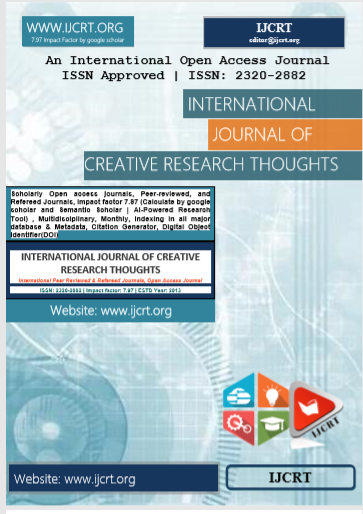
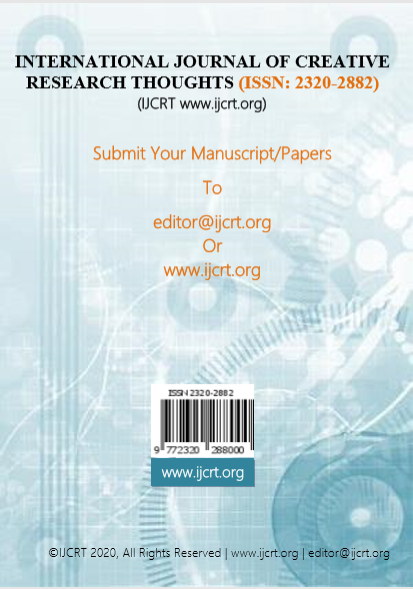
| IJCRT Journal front page | IJCRT Journal Back Page |
Paper Title: INFLUENCE OF SMART PHONE USE ON PRODUCTIVITY LEVELS OF EDUCATION COLLEGE STUDENTS
Author Name(s): Dr.A.RAJESWARI
Published Paper ID: - IJCRT2510751
Register Paper ID - 295758
Publisher Journal Name: IJPUBLICATION, IJCRT
DOI Member ID: 10.6084/m9.doi.one.IJCRT2510751 and DOI :
Author Country : Indian Author, India, 600097 , Chennai-600097, 600097 , | Research Area: Medical Science All Published Paper URL: http://ijcrt.org/viewfull.php?&p_id=IJCRT2510751 Published Paper PDF: download.php?file=IJCRT2510751 Published Paper PDF: http://www.ijcrt.org/papers/IJCRT2510751.pdf
Your Paper Publication Details:
Title: INFLUENCE OF SMART PHONE USE ON PRODUCTIVITY LEVELS OF EDUCATION COLLEGE STUDENTS
DOI (Digital Object Identifier) :
Pubished in Volume: 13 | Issue: 10 | Year: October 2025
Publisher Name : IJCRT | www.ijcrt.org | ISSN : 2320-2882
Subject Area: Medical Science All
Author type: Indian Author
Pubished in Volume: 13
Issue: 10
Pages: g417-g428
Year: October 2025
Downloads: 137
E-ISSN Number: 2320-2882
Abstract
The widespread existence of smart phones in the classroom has radically changed the way college students cope with work and play. This article examines the intricate interplay between the use of smart phones and academic productivity. Smart phones provide a level of access to information, learning resources, and effective communication channels unlike any other, yet they also make available enormous sources of distraction via social media, entertainment, and incessant notifications. Conversely, habitual, uncontrolled usage, especially for multitasking and while studying, is highly linked to reduced concentration, more procrastination, and poorer academic achievement. The paper concludes by noting a research gap about the efficacy of specific interventions in promoting effective smart phone habits and recommending future study into pedagogical approaches embracing technology without sacrificing intense, concentrated work.
Licence: creative commons attribution 4.0
License
Creative Commons Attribution 4.0 and The Open Definition

Keywords
College Students, Smart phone Use, Productivity levels,Digital Distraction, Educational Technology.
License
Creative Commons Attribution 4.0 and The Open Definition
Paper Title: Mindful Management: Enhancing Classroom Efficiency to Reduce Student Stress and Boost Academic Achievement
Author Name(s): Amit Kumar Mandal, Dr. Shweta Talesara
Published Paper ID: - IJCRT2510750
Register Paper ID - 295802
Publisher Journal Name: IJPUBLICATION, IJCRT
DOI Member ID: 10.6084/m9.doi.one.IJCRT2510750 and DOI :
Author Country : Indian Author, India, 452001 , Indore, 452001 , | Research Area: Arts1 All Published Paper URL: http://ijcrt.org/viewfull.php?&p_id=IJCRT2510750 Published Paper PDF: download.php?file=IJCRT2510750 Published Paper PDF: http://www.ijcrt.org/papers/IJCRT2510750.pdf
Your Paper Publication Details:
Title: MINDFUL MANAGEMENT: ENHANCING CLASSROOM EFFICIENCY TO REDUCE STUDENT STRESS AND BOOST ACADEMIC ACHIEVEMENT
DOI (Digital Object Identifier) :
Pubished in Volume: 13 | Issue: 10 | Year: October 2025
Publisher Name : IJCRT | www.ijcrt.org | ISSN : 2320-2882
Subject Area: Arts1 All
Author type: Indian Author
Pubished in Volume: 13
Issue: 10
Pages: g404-g416
Year: October 2025
Downloads: 166
E-ISSN Number: 2320-2882
Abstract
Licence: creative commons attribution 4.0
License
Creative Commons Attribution 4.0 and The Open Definition
Keywords
Mindful management, classroom efficiency, student stress, academic achievement, educational psychology, stress reduction strategies
License
Creative Commons Attribution 4.0 and The Open Definition
Paper Title: GEOEFFECTIVENESS OF CME's in the 24th Solar Cycle
Author Name(s): RAJIV KUMAR
Published Paper ID: - IJCRT2510749
Register Paper ID - 295817
Publisher Journal Name: IJPUBLICATION, IJCRT
DOI Member ID: 10.6084/m9.doi.one.IJCRT2510749 and DOI :
Author Country : Indian Author, India, 482001 , JABALPUR, 482001 , | Research Area: Physics All Published Paper URL: http://ijcrt.org/viewfull.php?&p_id=IJCRT2510749 Published Paper PDF: download.php?file=IJCRT2510749 Published Paper PDF: http://www.ijcrt.org/papers/IJCRT2510749.pdf
Your Paper Publication Details:
Title: GEOEFFECTIVENESS OF CME'S IN THE 24TH SOLAR CYCLE
DOI (Digital Object Identifier) :
Pubished in Volume: 13 | Issue: 10 | Year: October 2025
Publisher Name : IJCRT | www.ijcrt.org | ISSN : 2320-2882
Subject Area: Physics All
Author type: Indian Author
Pubished in Volume: 13
Issue: 10
Pages: g397-g403
Year: October 2025
Downloads: 154
E-ISSN Number: 2320-2882
Abstract
A detailed study on the impact of Coronal Mass Ejections (CMEs) and Magnetic Clouds (MCs) on geomagnetic activity during the 24th solar cycle, from December 2009 to December 2019, has been conducted. The collected data on CMEs associated with geomagnetic storms, defined by a Dst index less than -50 nT, has been grouped into two categories: geoeffective events and non-geoeffective events. Most of the observed CMEs are of the halo type, and they are mostly found in the western hemisphere. Halo and partial halo CMEs are likely to be the main contributors to high-intensity geomagnetic storms. A weak anti-correlation (R=0.54) was found between the speed of CMEs and the Dst index for geoeffective events. However, a stronger correlation (R=0.51) was observed between CME speed and solar wind speed, while a moderate correlation (R=0.16) was noted between the Dst index and solar wind speed. The correlation between the Dst index and the southward component of the magnetic field (Bz) was found to be weak (R=0.17). The analysis showed that intense and prolonged southward magnetic field components along with high-speed solar wind are the key factors behind geomagnetic storms. It was also noted that geomagnetic storms are only weakly influenced by the speed of CMEs.
Licence: creative commons attribution 4.0
License
Creative Commons Attribution 4.0 and The Open Definition
Keywords
Coronal mass ejections; Solar Wind; Interplanetary Magnetic Field; Geomagnetic Storms.
License
Creative Commons Attribution 4.0 and The Open Definition
Paper Title: Effect of Manual Therapy on Upper Limb Motor Function after Stroke in Hemiplegia Patients
Author Name(s): Danish Ali, Dr. Gunjan Dewan
Published Paper ID: - IJCRT2510748
Register Paper ID - 295798
Publisher Journal Name: IJPUBLICATION, IJCRT
DOI Member ID: 10.6084/m9.doi.one.IJCRT2510748 and DOI :
Author Country : Indian Author, India, 201310 , GAUTAM BUDDHA NAGAR, 201310 , | Research Area: Health Science All Published Paper URL: http://ijcrt.org/viewfull.php?&p_id=IJCRT2510748 Published Paper PDF: download.php?file=IJCRT2510748 Published Paper PDF: http://www.ijcrt.org/papers/IJCRT2510748.pdf
Your Paper Publication Details:
Title: EFFECT OF MANUAL THERAPY ON UPPER LIMB MOTOR FUNCTION AFTER STROKE IN HEMIPLEGIA PATIENTS
DOI (Digital Object Identifier) :
Pubished in Volume: 13 | Issue: 10 | Year: October 2025
Publisher Name : IJCRT | www.ijcrt.org | ISSN : 2320-2882
Subject Area: Health Science All
Author type: Indian Author
Pubished in Volume: 13
Issue: 10
Pages: g385-g396
Year: October 2025
Downloads: 151
E-ISSN Number: 2320-2882
Abstract
Introduction: Stroke is a leading cause of long-term disability worldwide, often resulting in hemiplegia, which severely impacts upper limb function and the ability to perform daily activities. Despite advancements in stroke rehabilitation, many patients do not achieve full recovery of arm function. This study aims to evaluate the effectiveness of manual therapy in improving upper limb motor function in stroke patients with hemiplegia. Objectives: The primary objective of this study is to assess whether manual therapy, when combined with standard rehabilitation care, leads to greater improvements in upper limb motor function, muscle spasticity, and functional independence compared to standard rehabilitation care alone. Methods: A randomized controlled trial was conducted with 60 stroke patients with hemiplegia. Participants were randomly assigned to either the experimental group (manual therapy + standard rehabilitation care) or the control group (standard rehabilitation care only). Both groups were treated over an eight-week period. Outcome measures included the Fugl-Meyer Assessment for Upper Extremity (FMA-UE), Modified Ashworth Scale (MAS), Functional Independence Measure (FIM), and Action Research Arm Test (ARAT). Assessments were conducted at baseline, post-treatment, and at follow-up intervals. Results: Both groups showed significant improvements across all outcome measures. However, the experimental group demonstrated significantly greater improvements compared to the control group. Post-treatment, the manual therapy group exhibited higher mean scores in the FMA-UE (67.10 vs. 57.13), ARAT (59.07 vs. 50.23), FIM (72.07 vs. 57.90), and reduced MAS scores indicating lower spasticity (63.00 vs. 55.47), all with P<0.001. Conclusion: The findings suggest that manual therapy, in conjunction with standard rehabilitation care, significantly enhances upper limb motor function, reduces muscle spasticity, and improves functional independence in stroke patients with hemiplegia. Integrating manual therapy into rehabilitation programs can optimize recovery outcomes for this patient population.
Licence: creative commons attribution 4.0
License
Creative Commons Attribution 4.0 and The Open Definition
Keywords
Stroke, Hemiplegia, Upper Limb Motor Function, Manual Therapy, Rehabilitation, Randomized Controlled Trial
License
Creative Commons Attribution 4.0 and The Open Definition
Paper Title: Traditional Indian Water Systems: Engineering, Culture and Sustainability
Author Name(s): Chandra Shekhar Singh, Deepak Kumar Chaurasia, Nishant Singh, Narendra Kumar Rana, Vishwambhar Nath Sharma
Published Paper ID: - IJCRT2510747
Register Paper ID - 295786
Publisher Journal Name: IJPUBLICATION, IJCRT
DOI Member ID: 10.6084/m9.doi.one.IJCRT2510747 and DOI : https://doi.org/10.56975/ijcrt.v13i10.295786
Author Country : Indian Author, India, 221005 , Varanasi, 221005 , | Research Area: Science All Published Paper URL: http://ijcrt.org/viewfull.php?&p_id=IJCRT2510747 Published Paper PDF: download.php?file=IJCRT2510747 Published Paper PDF: http://www.ijcrt.org/papers/IJCRT2510747.pdf
Your Paper Publication Details:
Title: TRADITIONAL INDIAN WATER SYSTEMS: ENGINEERING, CULTURE AND SUSTAINABILITY
DOI (Digital Object Identifier) : https://doi.org/10.56975/ijcrt.v13i10.295786
Pubished in Volume: 13 | Issue: 10 | Year: October 2025
Publisher Name : IJCRT | www.ijcrt.org | ISSN : 2320-2882
Subject Area: Science All
Author type: Indian Author
Pubished in Volume: 13
Issue: 10
Pages: g369-g384
Year: October 2025
Downloads: 334
E-ISSN Number: 2320-2882
Abstract
India's ancient water management systems are a complex mixture of engineering skill, ecological equilibrium, and cultural devotion. Covering various geographic and climatic regions, these systems range from stepwells (baolis), tanks, johads, kunds, canals, and rooftop rainwater harvesting structures discovered and perfected over centuries to serve the household, agricultural, and religious requirements of societies. This research examines the various dimensions of traditional Indian water systems by viewing them through the filters of indigenous engineering, socio-cultural practices, and paradigms of sustainability. The study explores the structural and functional dynamics behind these systems, shedding light on how local materials, geomorphology, and hydrology were cleverly combined into decentralised, community-led designs. The stepped geometry of Gujarat's vavs, tank cascade systems of South India, and the Northeast's bamboo drip irrigation are examples of water technologies that show incredible resilience, flexibility, and affordability attributes that are becoming increasingly pertinent in the era of contemporary water crises and climate change. In addition to their engineering importance, these systems were integral to the socio-religious life of Indian society. Water bodies tended to be associated with temples, festivals, and rituals, which strengthened stewardship through cultural norms. Such blending promoted sustainable water use practice based on collective responsibility and spiritual ethos. Over the last few decades, though, numerous traditional water systems have gone out of use or been deconstructed as a result of urbanisation, abandonment, and centralised water infrastructure development. In a multi-disciplinary analysis involving field surveys, archival work, and interviews with stakeholders, this article weighs the ecological and cultural costs of such decline. It also provides nascent examples of resurgence frequently initiated by local communities and civil society groups where traditional systems are being renewed and hybridised with contemporary technology. The results posit in favour of the revalorization of India's water heritage in modern water governance and urban planning. By reconciling ancient knowledge with modern innovation, ancient Indian water systems present replicable models for sustainable and equitable water management in the age of Anthropocene.
Licence: creative commons attribution 4.0
License
Creative Commons Attribution 4.0 and The Open Definition
Keywords
Indian Water System, Sacred Water Bodies, Groundwater, Sustainability, Artificial Groundwater Recharge.
License
Creative Commons Attribution 4.0 and The Open Definition
Paper Title: Ethics of AI in Cyber security
Author Name(s): Dr. Pratibha N. Atram
Published Paper ID: - IJCRT2510746
Register Paper ID - 295792
Publisher Journal Name: IJPUBLICATION, IJCRT
DOI Member ID: 10.6084/m9.doi.one.IJCRT2510746 and DOI :
Author Country : Indian Author, India, 443404 , Nandura, 443404 , | Research Area: Social Science All Published Paper URL: http://ijcrt.org/viewfull.php?&p_id=IJCRT2510746 Published Paper PDF: download.php?file=IJCRT2510746 Published Paper PDF: http://www.ijcrt.org/papers/IJCRT2510746.pdf
Your Paper Publication Details:
Title: ETHICS OF AI IN CYBER SECURITY
DOI (Digital Object Identifier) :
Pubished in Volume: 13 | Issue: 10 | Year: October 2025
Publisher Name : IJCRT | www.ijcrt.org | ISSN : 2320-2882
Subject Area: Social Science All
Author type: Indian Author
Pubished in Volume: 13
Issue: 10
Pages: g366-g368
Year: October 2025
Downloads: 131
E-ISSN Number: 2320-2882
Abstract
Additionally, artificial intelligence (AI) is fast revolutionizing cybersecurity and presenting new moral conundrums. This is in addition to boosting detection, response, and prediction skills. An examination of the ethical environment that exists at the junction of artificial intelligence and cybersecurity is presented in this article. Efforts are being made to provide designers, operators, and lawmakers with a governance framework and rules that are both practical and ethical. It provides a list of the fundamental ethical dilemmas, which include privacy versus security, accountability, transparency, fairness, dual use dangers, and human oversight, and it investigates the ways in which currently widespread AI cybersecurity solutions either worsen or generate these conflicts. Creating a map of the ethical conundrums that are brought about by the deployment of AI in cyber security is the objective of this project.
Licence: creative commons attribution 4.0
License
Creative Commons Attribution 4.0 and The Open Definition
Keywords
AI ethics, cyber security, accountability, privacy, bias
License
Creative Commons Attribution 4.0 and The Open Definition
Paper Title: THE CRITICAL ROLE OF TECHNOLOGY IN EDUCATION
Author Name(s): Dr. Sidhanshu, Dr. Meenakshi Choudhary, Smt. Ekta Rani
Published Paper ID: - IJCRT2510745
Register Paper ID - 295683
Publisher Journal Name: IJPUBLICATION, IJCRT
DOI Member ID: 10.6084/m9.doi.one.IJCRT2510745 and DOI :
Author Country : Indian Author, India, 123106 , Dharuhera, 123106 , | Research Area: Social Science All Published Paper URL: http://ijcrt.org/viewfull.php?&p_id=IJCRT2510745 Published Paper PDF: download.php?file=IJCRT2510745 Published Paper PDF: http://www.ijcrt.org/papers/IJCRT2510745.pdf
Your Paper Publication Details:
Title: THE CRITICAL ROLE OF TECHNOLOGY IN EDUCATION
DOI (Digital Object Identifier) :
Pubished in Volume: 13 | Issue: 10 | Year: October 2025
Publisher Name : IJCRT | www.ijcrt.org | ISSN : 2320-2882
Subject Area: Social Science All
Author type: Indian Author
Pubished in Volume: 13
Issue: 10
Pages: g363-g365
Year: October 2025
Downloads: 156
E-ISSN Number: 2320-2882
Abstract
Technology has revolutionized education by reshaping traditional teaching practices and fostering the acquisition of 21st-century skills. This paper explores how technology integration enhances learning objectives, promotes self-directed learning, and empowers learners for success in an increasingly digital world. The accessibility of information through the internet has expanded learning opportunities beyond classroom confines, nurturing a lifelong quest for knowledge. This research highlights the comparison between traditional and modern education, the need for technology in classrooms, the role of Information and Communication Technology (ICT) in education, the benefits and limitations of technology in education, and its applications. It also examines the negative impacts and the need for digital literacy.
Licence: creative commons attribution 4.0
License
Creative Commons Attribution 4.0 and The Open Definition
Keywords
: Information and Communication Technology (ICT), Digital Literacy
License
Creative Commons Attribution 4.0 and The Open Definition
Paper Title: Cancer Nanomedicine: A New Era Of Successful Targeted Therpy
Author Name(s): Lonare Shruti Shantaram
Published Paper ID: - IJCRT2510744
Register Paper ID - 295692
Publisher Journal Name: IJPUBLICATION, IJCRT
DOI Member ID: 10.6084/m9.doi.one.IJCRT2510744 and DOI :
Author Country : Indian Author, India, 422102 , Nashik, 422102 , | Research Area: Pharmacy All Published Paper URL: http://ijcrt.org/viewfull.php?&p_id=IJCRT2510744 Published Paper PDF: download.php?file=IJCRT2510744 Published Paper PDF: http://www.ijcrt.org/papers/IJCRT2510744.pdf
Your Paper Publication Details:
Title: CANCER NANOMEDICINE: A NEW ERA OF SUCCESSFUL TARGETED THERPY
DOI (Digital Object Identifier) :
Pubished in Volume: 13 | Issue: 10 | Year: October 2025
Publisher Name : IJCRT | www.ijcrt.org | ISSN : 2320-2882
Subject Area: Pharmacy All
Author type: Indian Author
Pubished in Volume: 13
Issue: 10
Pages: g357-g362
Year: October 2025
Downloads: 132
E-ISSN Number: 2320-2882
Abstract
Cancer is still a deadly disease around the world. Right now, conventional cancer treatments and modern immunotherapies are not specifically designed to target tumors. They struggle to tell the difference between cancer cells and healthy cells, which results in many unwanted side effects. Recent developments in nanotechnology, along with our improved understanding of cancer biology and Nano-bio interactions, have led to the creation of various Nano carriers. These Nano carriers aim to boost the effectiveness of cancer drugs while lowering the side effects by targeting tumor tissue, cells, or organelles specifically. However, most Nano carriers lack hierarchical targeting ability. Their effectiveness is often reduced due to poor tumor accumulation, ineffective cellular uptake, or incorrect subcellular localization. This review discusses current and future strategies for designing cancer Nano medicines that target tumor tissue, cells, and organelles. It also highlights recent progress in hierarchical targeting technologies that can combine these three targeting stages to improve treatment results. Finally, we touch on the challenges and future possibilities for bringing cancer Nano medicines into clinical use. The major modalities of antitumor drug resistance may be grouped into at least five categories: decreased drug influx, increased drug efflux predominantly via ATP-driven extrusion pumps frequently of the ATP-binding cassette (ABC) superfamily, activation of DNA repair, metabolic modification and detoxification as well as inactivation of apoptosis pathways with parallel activation of anti-apoptotic cellular defense modalities (2009). Members of the ABC superfamily including P-glycoprotein (P-gp/ABCB1), multidrug resistance proteins (MRPs/ABCC) and breast cancer resistance protein (BCRP/ABCG2) function as ATP- driven drug efflux transporters, which form a unique defense against chemotherapeutics and numerous endo- and exotoxins. These pumps significantly decrease the intracellular concentration of a multitude of endogenous and exogenous cytotoxic agents which are structurally and mechanistically distinct, thereby result-ing in MDR.
Licence: creative commons attribution 4.0
License
Creative Commons Attribution 4.0 and The Open Definition
Keywords
Cancer therpy , Nanomedicine, Immuno-therpy, Nanomaterial, Nanocarrier, Therapeutics,
License
Creative Commons Attribution 4.0 and The Open Definition
Paper Title: Relationship between Work life balance and marital satisfaction among corporate employees
Author Name(s): Dr. Shreelashmi K
Published Paper ID: - IJCRT2510743
Register Paper ID - 295218
Publisher Journal Name: IJPUBLICATION, IJCRT
DOI Member ID: 10.6084/m9.doi.one.IJCRT2510743 and DOI :
Author Country : Indian Author, India, 560078 , Bangalore, 560078 , | Research Area: Medical Science All Published Paper URL: http://ijcrt.org/viewfull.php?&p_id=IJCRT2510743 Published Paper PDF: download.php?file=IJCRT2510743 Published Paper PDF: http://www.ijcrt.org/papers/IJCRT2510743.pdf
Your Paper Publication Details:
Title: RELATIONSHIP BETWEEN WORK LIFE BALANCE AND MARITAL SATISFACTION AMONG CORPORATE EMPLOYEES
DOI (Digital Object Identifier) :
Pubished in Volume: 13 | Issue: 10 | Year: October 2025
Publisher Name : IJCRT | www.ijcrt.org | ISSN : 2320-2882
Subject Area: Medical Science All
Author type: Indian Author
Pubished in Volume: 13
Issue: 10
Pages: g348-g356
Year: October 2025
Downloads: 140
E-ISSN Number: 2320-2882
Abstract
The present study aims to study the relationship between Work life balance and marital satisfaction among corporate employees. The hypothesis of the study was there is significant relationship between Work life balance and marital satisfaction among corporate employees. The convenience sampling method has been used to collect the data. The 218 participants were participated in the study. In that 105 were the Male corporate employees and 113 were the female corporate employees. The Work Life balance scale by Pareek and Purohit (2010) and Marital adjustment scale by Dr. Pramod Kumar (2018) has been used to collect data. The The present study results shows that There is a significant relationship between work life balance and marital satisfaction among corporate employees.
Licence: creative commons attribution 4.0
License
Creative Commons Attribution 4.0 and The Open Definition
Keywords
Marital Adjustment, Work Life Balance & Corporate employees
License
Creative Commons Attribution 4.0 and The Open Definition
Paper Title: Clinical Pharmacy and Patient Care
Author Name(s): Ratnadip Dipak Nikale, Ketan Ramesh Salve, Mrs. Akanksha Nirmal
Published Paper ID: - IJCRT2510742
Register Paper ID - 295582
Publisher Journal Name: IJPUBLICATION, IJCRT
DOI Member ID: 10.6084/m9.doi.one.IJCRT2510742 and DOI :
Author Country : Indian Author, India, 422305 , Nashik, 422305 , | Research Area: Pharmacy All Published Paper URL: http://ijcrt.org/viewfull.php?&p_id=IJCRT2510742 Published Paper PDF: download.php?file=IJCRT2510742 Published Paper PDF: http://www.ijcrt.org/papers/IJCRT2510742.pdf
Your Paper Publication Details:
Title: CLINICAL PHARMACY AND PATIENT CARE
DOI (Digital Object Identifier) :
Pubished in Volume: 13 | Issue: 10 | Year: October 2025
Publisher Name : IJCRT | www.ijcrt.org | ISSN : 2320-2882
Subject Area: Pharmacy All
Author type: Indian Author
Pubished in Volume: 13
Issue: 10
Pages: g338-g347
Year: October 2025
Downloads: 155
E-ISSN Number: 2320-2882
Abstract
Clinical pharmacy is a dynamic branch of pharmacy focused on the optimization of medication use and the enhancement of patient care through the direct involvement of clinical pharmacists in the healthcare process. Unlike traditional pharmacy roles centered on medication dispensing, clinical pharmacy emphasizes direct interaction with patients and collaborative efforts with physicians and other healthcare professionals to improve therapeutic outcomes and promote health and wellness. Clinical pharmacists are actively engaged in comprehensive patient care activities, including medication therapy management, the prevention and resolution of drug-related problems, patient counseling, and the monitoring of drug efficacy and safety. Patient-centered care is the cornerstone of clinical pharmacy practice, with pharmacists playing a crucial role in medication chart reviews, identification of drug interactions, adverse drug reaction management, and the individualization of therapy based on clinical and laboratory data. Clinical pharmacists help bridge the gap between patients and physicians, ensuring the rational, safe, and cost-effective use of medications while prioritizing patient education, compliance, and therapeutic monitoring. Their involvement extends from inpatient hospital wards to outpatient clinics, where they participate in ward rounds, contribute to the development of treatment guidelines, and provide evidence-based recommendations. Through active collaboration with other healthcare providers, clinical pharmacists help optimize pharmacological interventions and safeguard patients against medication errors and complications. By leveraging their specialized knowledge, clinical pharmacists contribute not only to the improvement of individual patient outcomes but also to broader public health objectives through disease prevention, health promotion, and continuous professional education. Thus, clinical pharmacy stands as a vital component of modern healthcare, dedicated to advancing both patient care quality and medication safety. Clinical pharmacy delivers distinct advancements in patient care by focusing on optimal medication use and safety through direct pharmacist intervention. Clinical pharmacists collaborate with physicians and healthcare teams to identify, prevent, and resolve medication-related issues, thereby reducing adverse drug events and enhancing treatment outcomes.
Licence: creative commons attribution 4.0
License
Creative Commons Attribution 4.0 and The Open Definition
Keywords
o Medication Management: Ensuring accurate medication reconciliation, preventing drug-related problems, and optimizing therapeutic regimens based on individual patient needs. o Collaborative Care: Interdisciplinary teamwork involving pharmacists, physicians, nurses, and other healthcare providers to deliver comprehensive pharmaceutical care. o Patient Education: Counseling patients to improve medication adherence, understanding of therapy, and self-management abilities. o Technology Integration:
License
Creative Commons Attribution 4.0 and The Open Definition
Call For Paper August 2026
Call For Papers
August 2026
Volume 14 | Issue 8
Last Date :
31-Aug-2026
Submit Manuscript Online Impact Factor: 7.97 Review Results : Within 02-03 Days Paper Publication : Within 02-03 Days
August 2026
Volume 14 | Issue 8
Last Date :
31-Aug-2026
Submit Manuscript Online Impact Factor: 7.97 Review Results : Within 02-03 Days Paper Publication : Within 02-03 Days
Published Issue Details
For Authors
Forms / Downloads
Other IMP Links
Indexing Partner
Research Area
LICENSE





ISSN and 7.97 Impact Factor Details

ISSN: 2320-2882 Impact Factor: 7.97 and ISSN APPROVED Journal Starting Year (ESTD) : 2013


ISSN and 7.97 Impact Factor Details
ISSN: 2320-2882 Impact Factor: 7.97 and ISSN APPROVED Journal Starting Year (ESTD) : 2013
DOI Details
CONFERENCE
CONFERENCE MANAGMENT & PUBLICATION CONFERENCE PROPOSAL
RECENT CONFERENCE

CONFERENCE PROPOSAL CONFERENCE PROCEEDINGS
CONFERENCE PROPOSAL CONFERENCE PROCEEDINGS
For Reviewer /Referral (RMS) Earn 500 per paper
Important Links
NEWS & Conference
Digital Library
IJCRT RMS | Earn 500 Per Paper.

Open Access


LICENSE
Indexing Partner
Scholarly open access journals, Peer-reviewed, and Refereed Journals, Impact factor 7.97 (Calculate by google scholar and Semantic Scholar | AI-Powered Research Tool) , Multidisciplinary, Monthly, Indexing in all major database & Metadata, Citation Generator, Digital Object Identifier(DOI)