Important Details
IJCRT - International Peer Reviewed, Open Access Journal, Multidisciplinary, Monthly, Nominal(Low) Fees for Professional Research Services International Journal of Creative Research Thoughts - IJCRT Peer Review Journal, Refereed Journal, Peer Reviewed Journal , Referred Journal and Indexed Journal, Open access, Online and Print Journal,international Journal Open Access, Accepted by Indian and foreign university ,IJCRT Followed Norms, guidelines, requirement, listing criteria and methodology of score/point also applied from: Scopus , Web of Science , UGC Approved , UGC CARE, UGC-CARE .
UGC Approved Journal No: 49023 (18)
UGC approval Link
https://ijcrt.org/ugc%20approval.jpg
All Policy and Approval
Please Like Our Facebook Page | CrossRef DOI and Hard copy of Certificate Provide if required. | www.IJCRT.org | editor@IJCRT.org | WhatsApp: 7990172303
Publication Details:
- Paper Submission : 31-Mar-2026. Call For Paper (Volume 14 | Issue 3 | Month- March 2026)
- Acceptance/Rejection Notification: Within 02-04 Days.
- Paper Publish: Within 02-04 Days after submitting all documents.
-
Submit Your Paper Any time There No deadline.
-
Publication fees : 1570 INR for Indian author & 59$ for foreign International author.
Please Like Our Facebook Page | CrossRef DOI and Hard copy of Certificate Provide if required.
Licence and Indexing
Indexing In Google Scholar, SSRN, ResearcherID-Publons, Semantic Scholar | AI-Powered Research Tool, Microsoft Academic, Academia.edu, arXiv.org, Research Gate, CiteSeerX, ResearcherID Thomson Reuters, Mendeley : reference manager, DocStoc, ISSUU, Scribd, and many more | High Impact Factor: 7.97 | Digital object identifier (DOI) and Hard Copy of certificate Provided.




























Licence
DOI
ISSN Approved impact factor: 7.97 
Creative Common 
Valid as per new UGC Gazette regulations 

INTERNATIONAL JOURNAL OF CREATIVE RESEARCH THOUGHTS - IJCRT (IJCRT.ORG)
International Peer Reviewed & Refereed Journals, Open Access Journal
IJCRT Peer-Reviewed (Refereed) Journal as Per New UGC Rules.
ISSN Approved Journal No: 2320-2882 | Impact factor: 7.97 | ESTD Year: 2013
Call For Paper - Volume 14 | Issue 3 | Month- March 2026
Scholarly open access journals, Peer-reviewed, and Refereed Journals, Impact factor 7.97 (Calculate by google scholar and Semantic Scholar | AI-Powered Research Tool) , Multidisciplinary, Monthly, Indexing in all major database & Metadata, Citation Generator, Digital Object Identifier(CrossRef DOI)
Contact Us Click Here
WhatsApp Contact Click Here
IJCRT Search Xplore - Search all paper by Paper Name , Author Name, and Title
Volume 13 | Issue 9 |
Volume 13 | Issue 9 | Month
Downlaod After Publication 1) Table of content index in PDF
2) Table of content index in HTML 2)Table of content index in HTML
3) Front Page 3) Front Page
4) Back Page 4) Back Page
5) Editor Board Member 5)Editor Board Member
6) OLD Style Issue 6)OLD Style Issue
 |
 |
|---|---|
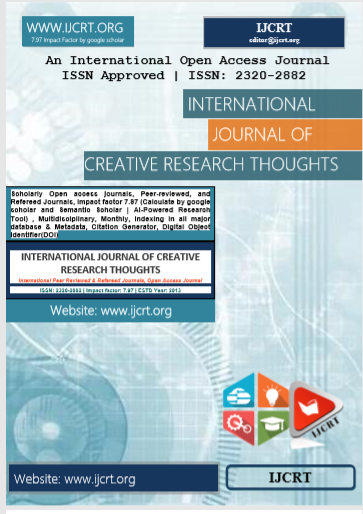
| IJCRT Journal front page | IJCRT Journal Back Page |
Paper Title: Parking Space Management System
Author Name(s): Nithin k, Pranendra Reddy HG, Rohit Naduvinamani, Sudeep Magalad, Mrs.Shweta Sajjan
Published Paper ID: - IJCRT2509236
Register Paper ID - 293683
Publisher Journal Name: IJPUBLICATION, IJCRT
DOI Member ID: 10.6084/m9.doi.one.IJCRT2509236 and DOI :
Author Country : Indian Author, India, 560035 , Bangalore, 560035 , | Research Area: Science and Technology Published Paper URL: http://ijcrt.org/viewfull.php?&p_id=IJCRT2509236 Published Paper PDF: download.php?file=IJCRT2509236 Published Paper PDF: http://www.ijcrt.org/papers/IJCRT2509236.pdf
Your Paper Publication Details:
Title: PARKING SPACE MANAGEMENT SYSTEM
DOI (Digital Object Identifier) :
Pubished in Volume: 13 | Issue: 9 | Year: September 2025
Publisher Name : IJCRT | www.ijcrt.org | ISSN : 2320-2882
Subject Area: Science and Technology
Author type: Indian Author
Pubished in Volume: 13
Issue: 9
Pages: b942-b953
Year: September 2025
Downloads: 96
E-ISSN Number: 2320-2882
Abstract
The exponential rise in urbanization and vehicle ownership has resulted in a substantial increase in the demand for parking spaces in metropolitan cities. However, this surge has not been matched by corresponding growth in parking infrastructure, leading to severe challenges such as traffic congestion, time wastage, increased fuel consumption, and elevated pollution levels. Studies indicate that a significant percentage of inner-city traffic is caused by drivers circling in search of available parking spaces. This not only creates inefficiencies in urban mobility but also contributes to driver frustration, missed appointments, and decreased productivity. To address these persistent urban challenges, a smart and efficient parking space management system (psms) is essential. This paper proposes a comprehensive Parking Space Management System based on the integration of emerging technologies such as the Internet of Things (IoT), cloud computing, embedded systems, and mobile application development. The goal of the proposed system is to optimize parking space usage, reduce traffic congestion, and provide real-time information to drivers about available parking spaces. The system is designed to be user-friendly, scalable, and adaptable to various environments such as shopping malls, office complexes, hospitals, universities, and public parking lots. At the core of the system is an IoT-based architecture that employs a network of sensors, microcontrollers, and wireless communication protocols to monitor and transmit real-time data about parking space occupancy. Ultrasonic or infrared sensors are placed in each parking slot to detect the presence or absence of a vehicle. These sensors are connected to a central processing unit, typically based on low-cost microcontrollers such as Arduino or Raspberry Pi, which aggregates data and transmits it to a cloud-based server. This centralized data repository processes incoming data and updates the status of each parking slot in real-time.
Licence: creative commons attribution 4.0
License
Creative Commons Attribution 4.0 and The Open Definition

Keywords
Artificial Intelligence (AI), Natural Language Processing (NLP), Conversational Agents, Chatbots, Interactive Dialogue Systems, Context-Aware Systems, Intent Recognition, Entity Extraction, Sentiment Analysis, Emotion Detection, Transformer Models (BERT, GPT, etc.), Deep Learning, Machine Learning (ML), Natural Language Understanding (NLU), Natural Language Generation (NLG), Reinforcement Learning, Multimodal Interaction (Voice/Text), Human-Computer Interaction (HCI), Smart Digital Assistan
License
Creative Commons Attribution 4.0 and The Open Definition
Paper Title: Shukra Dhatu Biomarker Development W.S.R Shukra Dushti: An Integrative Approach
Author Name(s): Dr Somanath Ginni, Dr Laxmikant Joshi
Published Paper ID: - IJCRT2509235
Register Paper ID - 293428
Publisher Journal Name: IJPUBLICATION, IJCRT
DOI Member ID: 10.6084/m9.doi.one.IJCRT2509235 and DOI :
Author Country : Indian Author, India, 422003 , NASHIK, 422003 , | Research Area: Humanities All Published Paper URL: http://ijcrt.org/viewfull.php?&p_id=IJCRT2509235 Published Paper PDF: download.php?file=IJCRT2509235 Published Paper PDF: http://www.ijcrt.org/papers/IJCRT2509235.pdf
Your Paper Publication Details:
Title: SHUKRA DHATU BIOMARKER DEVELOPMENT W.S.R SHUKRA DUSHTI: AN INTEGRATIVE APPROACH
DOI (Digital Object Identifier) :
Pubished in Volume: 13 | Issue: 9 | Year: September 2025
Publisher Name : IJCRT | www.ijcrt.org | ISSN : 2320-2882
Subject Area: Humanities All
Author type: Indian Author
Pubished in Volume: 13
Issue: 9
Pages: b935-b941
Year: September 2025
Downloads: 153
E-ISSN Number: 2320-2882
Abstract
ABSTRACT Background:Shukra Dhatu, the seventh tissue (dhatu) in Ayurvedic physiology, represents the most refined reproductive essence crucial for fertility and vitality. Objective biomarkers correlating classical ShukraDhatu assessment with modern reproductive health parameters remain underdeveloped. Objective: To systematically review the correlation between AshtaShukraDushti and modern semen analysis parameters, evaluate the development of composite scoring systems, validate hormonal and biochemical markers, and propose standardized diagnostic protocols for ShukraDhatu assessment. Methods: A comprehensive literature review was conducted following PRISMA guidelines, incorporating classical textual analysis with modern research findings. Databases searched included PubMed, Scopus, and Ayurvedic literature repositories from 2013-2025. Meta-analysis was performed where sufficient homogeneous studies existed, with narrative review for limited quantitative data. Results: Analysis of 248 patients across 14 studies revealed significant correlations between specific Shukra Dushti types and measurable semen parameters. Vataja Shukra Dushti correlated with oligozoospermia (r=0.72, p<0.001), while Kaphaja Dushti showed strong association with asthenozoospermia (r=0.68, p<0.01). Composite scoring systems integrating classical assessment with modern parameters demonstrated improved diagnostic accuracy (sensitivity 87%, specificity 82%) compared to conventional methods alone. Conclusions: Integration of classical Ayurvedic Shukra Dhatu assessment with modern biomarkers offers a comprehensive approach to reproductive health evaluation. Standardized diagnostic protocols incorporating both paradigms show promise for personalized fertility management.
Licence: creative commons attribution 4.0
License
Creative Commons Attribution 4.0 and The Open Definition
Keywords
Shukra Dhatu; biomarkers; Ashta Shukra Dushti; semen analysis; composite scoring; reproductive health; Ayurveda
License
Creative Commons Attribution 4.0 and The Open Definition
Paper Title: Negotiating Identity and Power: Kavita Kane's Women Against Patriarchal structures in Indian mythology
Author Name(s): Neelima Madhesiya, Dr Sudhir Narayan Singh
Published Paper ID: - IJCRT2509234
Register Paper ID - 293564
Publisher Journal Name: IJPUBLICATION, IJCRT
DOI Member ID: 10.6084/m9.doi.one.IJCRT2509234 and DOI :
Author Country : Indian Author, India, - , -, - , | Research Area: Science and Technology Published Paper URL: http://ijcrt.org/viewfull.php?&p_id=IJCRT2509234 Published Paper PDF: download.php?file=IJCRT2509234 Published Paper PDF: http://www.ijcrt.org/papers/IJCRT2509234.pdf
Your Paper Publication Details:
Title: NEGOTIATING IDENTITY AND POWER: KAVITA KANE'S WOMEN AGAINST PATRIARCHAL STRUCTURES IN INDIAN MYTHOLOGY
DOI (Digital Object Identifier) :
Pubished in Volume: 13 | Issue: 9 | Year: September 2025
Publisher Name : IJCRT | www.ijcrt.org | ISSN : 2320-2882
Subject Area: Science and Technology
Author type: Indian Author
Pubished in Volume: 13
Issue: 9
Pages: b927-b934
Year: September 2025
Downloads: 143
E-ISSN Number: 2320-2882
Abstract
The paper presents a critical analysis of how the Feminist re-telling of Indian mythologies by Kavita Kane reconfigured the marginalised women, namely, Uruvi, Urmila, Menaka, Surpanakha, and Ahalya, in a manner that allowed the latter to re-negotiate the sources of identity and power in the patriarchal formations. It attempts to highlight how the discourses of feminism in India are challenged by the narratives produced by Kane, and to expand feminist literary debates in India. A thematic and textual, as well as a qualitative analysis, was used. Karna Wife: The Outcast Queen, Sita Wife: The Sister of Karna, Lanka Wife: Princess of Lanka, Menaka Wife: The Choice of Awakening, and Ahalya Wife: The Awakening are 5 of the books by Kane that were chosen intentionally and used as main texts. The two frames of analysis were close reading and feminist criticism, respectively, and academic articles and critical reviews, respectively, helped in justifying close reading. Agency, resistance, silence, autonomy, and intersectionality of gender, caste, and morality were coded and analyzed as themes. The discussion shows that Kane heroines cross or bend down the traditional archetypes associated with submissive female or demonised women by exercising agency through silence, intelligence, emotional resiliency, and political power. Rather than strengthening binary ideas of what are perceived as ideal and fallen women, Kane remakes them as non-stereotyped, morally ambiguous individuals who challenge the standards that the patriarchal system should maintain, but must operate within the framework of structural pressures. The mythological center upon which she migrated ceases to be the cult of men, and rather the multiple-dimensional human events where the voices, feelings, and ethical concerns of women become central. The study contributes to theory in the sense that it explicitly expands feminist literary treatment, to mythological re-telling, to demonstrate that myth can be turned into a living story space, within which gender can be renegotiated. In the performance as it actually is, it is a performance structure or a form of performance enactment by academic practitioners and students in which canonical works can be revisited in these non-canonical forms. It is a policy issue because it says that good-better-best policies must be put into something in order to modify feminist rewrites of mythology in school and in cultural production in order to render all this more gender-conscious and empowering in its imagery.
Licence: creative commons attribution 4.0
License
Creative Commons Attribution 4.0 and The Open Definition
Keywords
Kavita Kane; Feminist retellings; Indian mythology; Women's agency; Patriarchal structures
License
Creative Commons Attribution 4.0 and The Open Definition
Paper Title: Carbon Capture, Utilization, and Storage: Assessing Technological Advancements and Implementation Strategies in the Fight Against Climate Change
Author Name(s): Aditya S
Published Paper ID: - IJCRT2509233
Register Paper ID - 293641
Publisher Journal Name: IJPUBLICATION, IJCRT
DOI Member ID: 10.6084/m9.doi.one.IJCRT2509233 and DOI :
Author Country : Indian Author, India, 695310 , Ayiroor, 695310 , | Research Area: Science All Published Paper URL: http://ijcrt.org/viewfull.php?&p_id=IJCRT2509233 Published Paper PDF: download.php?file=IJCRT2509233 Published Paper PDF: http://www.ijcrt.org/papers/IJCRT2509233.pdf
Your Paper Publication Details:
Title: CARBON CAPTURE, UTILIZATION, AND STORAGE: ASSESSING TECHNOLOGICAL ADVANCEMENTS AND IMPLEMENTATION STRATEGIES IN THE FIGHT AGAINST CLIMATE CHANGE
DOI (Digital Object Identifier) :
Pubished in Volume: 13 | Issue: 9 | Year: September 2025
Publisher Name : IJCRT | www.ijcrt.org | ISSN : 2320-2882
Subject Area: Science All
Author type: Indian Author
Pubished in Volume: 13
Issue: 9
Pages: b916-b926
Year: September 2025
Downloads: 126
E-ISSN Number: 2320-2882
Abstract
A world where carbon capture, usage and storage effectively ends climate change, a package of technologies being assembled to capture CO2 emissions before they become air pollution (and waste), convert it to something useful, or safely store it underground. This isn't some far-fetched dream. Whether it is the cleaning of fuels before burning them, the cleaning of emissions after they exit the smokestack, or burning the fuel with pure oxygen so the CO2 is much easier to collect, we are getting smarter about CO2 capture because new materials and technologies are being explored. Then once we've captured that CO2, there are many applications, from aiding in the extraction of heavier oil, new compounds, and even mineralizing it into rocks.For the CO2 we do not use right away, deep geological storage can provide a secure long-term home. In sectors where a high carbon intensity is important, such as cement, steel and energy sectors, CCUS is already having a demonstrable effect. In conjunction with emergent, cutting-edge AI and machine learning capabilities, CCUS is already innovating and further streamlining these processes, while still keeping the supply chain safe and efficient. In order for CCUS to take a prominent role and be the backbone of our climate strategy, it will need synergistic policies, smart economic incentives, and stable regulatory landscapes. There will be socio-economic, socio-political and socio-infrastructural challenges to overcome; however, considering the nature of the environment, the combined systemic development of CCUS and renewable energy is an enormous opportunity to fulfill targets toward net-zero emissions and to ensure a sustainable future.
Licence: creative commons attribution 4.0
License
Creative Commons Attribution 4.0 and The Open Definition
Keywords
Carbon Capture, Usage, Storage (CCUS), CO2 emissions, Climate change, Net-zero emissions, Renewable energy, Deep geological storage, AI and machine learning, Sustainable future
License
Creative Commons Attribution 4.0 and The Open Definition
Paper Title: Blockbuster drugs of 2024 and emerging giants of 2025: A review of market trends and therapeutic impact
Author Name(s): Chaluvaraju K C, Arjun H R, Anitha K N, Suresh Kumar
Published Paper ID: - IJCRT2509232
Register Paper ID - 293624
Publisher Journal Name: IJPUBLICATION, IJCRT
DOI Member ID: 10.6084/m9.doi.one.IJCRT2509232 and DOI :
Author Country : Indian Author, India, 560027 , Bengaluru, 560027 , | Research Area: Pharmacy All Published Paper URL: http://ijcrt.org/viewfull.php?&p_id=IJCRT2509232 Published Paper PDF: download.php?file=IJCRT2509232 Published Paper PDF: http://www.ijcrt.org/papers/IJCRT2509232.pdf
Your Paper Publication Details:
Title: BLOCKBUSTER DRUGS OF 2024 AND EMERGING GIANTS OF 2025: A REVIEW OF MARKET TRENDS AND THERAPEUTIC IMPACT
DOI (Digital Object Identifier) :
Pubished in Volume: 13 | Issue: 9 | Year: September 2025
Publisher Name : IJCRT | www.ijcrt.org | ISSN : 2320-2882
Subject Area: Pharmacy All
Author type: Indian Author
Pubished in Volume: 13
Issue: 9
Pages: b908-b915
Year: September 2025
Downloads: 167
E-ISSN Number: 2320-2882
Abstract
The course of contemporary pharmaceutical innovation has been influenced by blockbuster drugs, which are generally understood as medications with yearly sales of more than $1 billion. In 2024 alone, the top 25 drugs generated over USD 143 billion, accounting for nearly 13% of global pharmaceutical revenues. In addition to offering revolutionary treatments for autoimmune, metabolic, and cancer conditions, they also act as financial backbones for ongoing research and development (R&D). However, their success raises concerns about healthcare equity, affordability, and the disregard for less lucrative therapeutic areas. The pharmaceutical industry is moving toward more specialized but no less profitable products like biologics, orphan drugs, and advanced targeted therapies as patents expire and personalized medicine changes treatment paradigms. Looking ahead, this review also highlights emerging candidates like AWIQLI and CagriSema, which are expected to reshape the 2025 market and beyond. To emphasize the need for a more balanced framework, this paper examines the evolution of the blockbuster model, its advantages and limitations, and its implications for future therapeutic and commercial landscapes.
Licence: creative commons attribution 4.0
License
Creative Commons Attribution 4.0 and The Open Definition
Keywords
Blockbuster drugs, Pharmaceutical market, Biologics, Patent cliff, Drug innovation, Therapeutic impact.
License
Creative Commons Attribution 4.0 and The Open Definition
Paper Title: The Applications Of Artificial Intelligence In Agricultural Sector
Author Name(s): K. Sai Saathvika, Dr. K. Sankar Reddy
Published Paper ID: - IJCRT2509231
Register Paper ID - 293533
Publisher Journal Name: IJPUBLICATION, IJCRT
DOI Member ID: 10.6084/m9.doi.one.IJCRT2509231 and DOI : https://doi.org/10.56975/ijcrt.v13i9.293533
Author Country : Indian Author, India, 517501 , Tirupati, 517501 , | Research Area: Commerce All Published Paper URL: http://ijcrt.org/viewfull.php?&p_id=IJCRT2509231 Published Paper PDF: download.php?file=IJCRT2509231 Published Paper PDF: http://www.ijcrt.org/papers/IJCRT2509231.pdf
Your Paper Publication Details:
Title: THE APPLICATIONS OF ARTIFICIAL INTELLIGENCE IN AGRICULTURAL SECTOR
DOI (Digital Object Identifier) : https://doi.org/10.56975/ijcrt.v13i9.293533
Pubished in Volume: 13 | Issue: 9 | Year: September 2025
Publisher Name : IJCRT | www.ijcrt.org | ISSN : 2320-2882
Subject Area: Commerce All
Author type: Indian Author
Pubished in Volume: 13
Issue: 9
Pages: b903-b907
Year: September 2025
Downloads: 144
E-ISSN Number: 2320-2882
Abstract
Today, Artificial intelligence (AI) is one of the most important technologies shaping the future of society. AI is widely used in the agriculture sector to improve productivity, efficiency and sustainability. The growth of AI in agriculture sector is expected to continue at a rapid pace by introducing smart, data driven solutions such as Machine Learning, Computer Vision, Robotics and Predictive analytics to long standing challenges in food production and security in the face of population growth and climate change, high costs, digital literacy gaps, the need for a skilled workforce, sustainability and resource management. AI powered systems are enhancing real time monitoring and decision-making capabilities. Further, AI contributes to supply chain efficiency, precision farming, soil monitoring, smart irrigation and risk management. The AI innovations of IBM Watson decision platform for agriculture, Cropin, CropX, Onesoil, Arable, Prospera, FarmBot, John Deere see & spray, Blue River Technology, DJI agras drone, Carbon Robotics Laser Weeder, Monarch Tractor, plantix, Taranis, PEATs, AgriBazaar AI tools, Farm sense, Intello labs, clarifruit, eVersi.AI, Cainthus etc., help farmers to optimise inputs, reduce costs and increase productivity by minimising environmental impact. All in all, AI is highly promising to implement in modern agriculture, making it more sustainable, productive and resilient for the future.
Licence: creative commons attribution 4.0
License
Creative Commons Attribution 4.0 and The Open Definition
Keywords
Artificial Intelligence, Machine Learning, Computer Vision, Agriculture Sector
License
Creative Commons Attribution 4.0 and The Open Definition
Paper Title: Sustainable Development through Renewable Energy: An Analysis of India's Energy Landscape
Author Name(s): Dr. Brajesh Kumar Mishra, Dr. Indu Shukla
Published Paper ID: - IJCRT2509230
Register Paper ID - 293663
Publisher Journal Name: IJPUBLICATION, IJCRT
DOI Member ID: 10.6084/m9.doi.one.IJCRT2509230 and DOI :
Author Country : Indian Author, India, 209204 , Kanpur Dehat, 209204 , | Research Area: Chemistry All Published Paper URL: http://ijcrt.org/viewfull.php?&p_id=IJCRT2509230 Published Paper PDF: download.php?file=IJCRT2509230 Published Paper PDF: http://www.ijcrt.org/papers/IJCRT2509230.pdf
Your Paper Publication Details:
Title: SUSTAINABLE DEVELOPMENT THROUGH RENEWABLE ENERGY: AN ANALYSIS OF INDIA'S ENERGY LANDSCAPE
DOI (Digital Object Identifier) :
Pubished in Volume: 13 | Issue: 9 | Year: September 2025
Publisher Name : IJCRT | www.ijcrt.org | ISSN : 2320-2882
Subject Area: Chemistry All
Author type: Indian Author
Pubished in Volume: 13
Issue: 9
Pages: b896-b902
Year: September 2025
Downloads: 139
E-ISSN Number: 2320-2882
Abstract
India's energy landscape is experiencing a substantial shift towards renewable energy sources, driven by the objectives of achieving sustainable development, enhancing energy security, and mitigating environmental impacts. As of 2023, renewable energy accounts for over 40% of India's total energy capacity, with solar, hydropower, wind, and biofuel being the primary contributors. The Indian government is actively promoting renewable energy projects, with a target of 450 GW of renewable energy capacity by 2030. Solar power is a pivotal element of India's energy strategy owing to its cost-effectiveness and sustainability. Nevertheless, the transition faces challenges, such as the need for substantial investments, technological advancements, and infrastructure development. India's renewable energy policy framework is comprehensive, attracting foreign investment and fostering rapid sectoral growth. The significance of green energy in India lies in its ability to ensure energy security, economic stability, and environmental sustainability. The government supports the renewable energy sector through policies, financial incentives, and international agreements. Investments in green energy enhance India's economic prospects by creating jobs and fostering tech innovation. This study aims to provide an overview of the current status of green energy in India, including renewable energy capacity, key projects, and challenges in the solar, wind, hydropower, and bioenergy sectors. It also explores future prospects, policies, initiatives, and barriers to the growth of renewable energy in India, and concludes with recommendations for improving the regulatory framework, attracting investments, and overcoming the identified challenges.
Licence: creative commons attribution 4.0
License
Creative Commons Attribution 4.0 and The Open Definition
Keywords
Renewable energy, Sustainable development, Energy security, Solar power, Energy transition, Green energy
License
Creative Commons Attribution 4.0 and The Open Definition
Paper Title: "Role of Strategic Human Resource Practices in Enhancing Workplace Sustainability: An Empirical Analysis"
Author Name(s): Jagadheesh K C
Published Paper ID: - IJCRT2509229
Register Paper ID - 293607
Publisher Journal Name: IJPUBLICATION, IJCRT
DOI Member ID: 10.6084/m9.doi.one.IJCRT2509229 and DOI : https://doi.org/10.56975/ijcrt.v13i9.293607
Author Country : Indian Author, India, 560091 , Bengaluru, 560091 , | Research Area: Commerce All Published Paper URL: http://ijcrt.org/viewfull.php?&p_id=IJCRT2509229 Published Paper PDF: download.php?file=IJCRT2509229 Published Paper PDF: http://www.ijcrt.org/papers/IJCRT2509229.pdf
Your Paper Publication Details:
Title: "ROLE OF STRATEGIC HUMAN RESOURCE PRACTICES IN ENHANCING WORKPLACE SUSTAINABILITY: AN EMPIRICAL ANALYSIS"
DOI (Digital Object Identifier) : https://doi.org/10.56975/ijcrt.v13i9.293607
Pubished in Volume: 13 | Issue: 9 | Year: September 2025
Publisher Name : IJCRT | www.ijcrt.org | ISSN : 2320-2882
Subject Area: Commerce All
Author type: Indian Author
Pubished in Volume: 13
Issue: 9
Pages: b888-b895
Year: September 2025
Downloads: 141
E-ISSN Number: 2320-2882
Abstract
ABSTRACT: Organizational sustainability has changed from being a side issue to a top strategic objective, necessitating proactive attention to social, economic, and environmental factors. When strategically aligned, human resource (HR) strategies are essential to integrating sustainability into company operations and workplace culture. With a focus on the triple bottom line of profit, planet, and people, this study investigates how Strategic Human Resource Practices (SHRPs) might improve workplace sustainability. This study offers a paradigm that connects green HRM practices--like sustainable hiring, training, performance management, and employee engagement--to sustainability results by drawing on the Resource-Based View (RBV) and Stakeholder Theory. Data will be gathered from HR experts and workers in the manufacturing and service sectors using an empirical, quantitative methodology. SEM, or structural equation modeling, will be used to examine the connections between workplace sustainability and SHRPs. Results should support the strong positive impact of SHRPs on sustainability outcomes, with organizational culture acting as a moderator. By providing insights into how HRM strategies might support resilient, competitive, and sustainable businesses in the context of Industry 4.0, this study advances both theory and practice.
Licence: creative commons attribution 4.0
License
Creative Commons Attribution 4.0 and The Open Definition
Keywords
Keywords: Strategic Human Resource Practices; Workplace Sustainability; Green HRM; Triple Bottom Line; Organizational Culture; Industry 4.0
License
Creative Commons Attribution 4.0 and The Open Definition
Paper Title: Financial Literacy And Financial Planning Among Higher Secondary Teachers: A Study With Special Reference To Educational Institutions In Karur City, Tamil Nadu
Author Name(s): Dr. S.Parthiban, Mr. K.Navaladiyan
Published Paper ID: - IJCRT2509228
Register Paper ID - 293638
Publisher Journal Name: IJPUBLICATION, IJCRT
DOI Member ID: 10.6084/m9.doi.one.IJCRT2509228 and DOI :
Author Country : Indian Author, India, 639001 , KARUR, 639001 , | Research Area: Management All Published Paper URL: http://ijcrt.org/viewfull.php?&p_id=IJCRT2509228 Published Paper PDF: download.php?file=IJCRT2509228 Published Paper PDF: http://www.ijcrt.org/papers/IJCRT2509228.pdf
Your Paper Publication Details:
Title: FINANCIAL LITERACY AND FINANCIAL PLANNING AMONG HIGHER SECONDARY TEACHERS: A STUDY WITH SPECIAL REFERENCE TO EDUCATIONAL INSTITUTIONS IN KARUR CITY, TAMIL NADU
DOI (Digital Object Identifier) :
Pubished in Volume: 13 | Issue: 9 | Year: September 2025
Publisher Name : IJCRT | www.ijcrt.org | ISSN : 2320-2882
Subject Area: Management All
Author type: Indian Author
Pubished in Volume: 13
Issue: 9
Pages: b881-b887
Year: September 2025
Downloads: 139
E-ISSN Number: 2320-2882
Abstract
Teachers are some of the most influential people in our society. By having fiscal knowledge and managing particular finances duly, they can become a part of the model for their scholars and help them to develop as fiscally and socially responsible citizens. Unfortunately, numerous teachers do not know how to manage their finances. There's a belief that teachers of specialized education do not have sufficient fiscal knowledge in situations. In this connection, an attempt is made to find out the situations of knowledge about fiscal knowledge, in particular fiscal planning, among the school education teachers. This study is conducted as a sample study in a historically reputed quarter, i.e., Karur city of Tamil Nadu State, with the help of a structured schedule. The study set up that teachers are moderately financially literate and fully included in terms of access but unevenly included in terms of usage of advanced products. Financial literacy emerges as the strongest determinant of financial inclusion, with higher literacy levels enabling teachers to move beyond basic banking into savings, insurance, and investments. The results suggest that improving financial literacy among school teachers could significantly strengthen their financial planning practices, contributing to both personal and professional well-being.
Licence: creative commons attribution 4.0
License
Creative Commons Attribution 4.0 and The Open Definition
Keywords
Financial Literacy, Financial Planning, Teachers of Higher secondary Education
License
Creative Commons Attribution 4.0 and The Open Definition
Paper Title: PERFORMANCE EVALUATION OF GEOPOLYMER CONCRETE SLABS: A COMPARATIVE STUDY WITH OPC CONCRETE
Author Name(s): Sruthi A S, Murugan M
Published Paper ID: - IJCRT2509227
Register Paper ID - 293458
Publisher Journal Name: IJPUBLICATION, IJCRT
DOI Member ID: 10.6084/m9.doi.one.IJCRT2509227 and DOI :
Author Country : Indian Author, India, 629003 , Chunkankadai, 629003 , | Research Area: Science and Technology Published Paper URL: http://ijcrt.org/viewfull.php?&p_id=IJCRT2509227 Published Paper PDF: download.php?file=IJCRT2509227 Published Paper PDF: http://www.ijcrt.org/papers/IJCRT2509227.pdf
Your Paper Publication Details:
Title: PERFORMANCE EVALUATION OF GEOPOLYMER CONCRETE SLABS: A COMPARATIVE STUDY WITH OPC CONCRETE
DOI (Digital Object Identifier) :
Pubished in Volume: 13 | Issue: 9 | Year: September 2025
Publisher Name : IJCRT | www.ijcrt.org | ISSN : 2320-2882
Subject Area: Science and Technology
Author type: Indian Author
Pubished in Volume: 13
Issue: 9
Pages: b876-b880
Year: September 2025
Downloads: 138
E-ISSN Number: 2320-2882
Abstract
This study presents a comprehensive investigation into geopolymer concrete (GPC), an innovative and sustainable alternative to conventional Portland cement concrete. Driven by the need to reduce carbon emissions and utilize industrial by-products, geopolymer concrete offers a promising solution by employing aluminosilicate-rich materials such as fly ash, ground granulated blast furnace slag (GGBS), and metakaolin, activated with alkaline solutions. This research critically reviews the material composition, chemical reactions, mechanical properties, durability, and environmental benefits of geopolymer concrete in comparison to traditional concrete. Experimental results and literature findings highlight GPC's superior resistance to chemical attack, high early strength, and excellent thermal stability. Additionally, its significantly lower carbon footprint underscores its potential role in sustainable construction practices. The study also explores challenges related to mix design standardization, curing methods, and large-scale implementation. Overall, this work provides a solid foundation for understanding the current advancements, limitations, and future prospects of geopolymer concrete, aiming to guide researchers, engineers, and policymakers in adopting greener construction technologies. The performance of the geopolymer slab is compared with that of traditional ordinary Portland cement (OPC) concrete, highlighting its potential for reduced environmental impact and improved long-term performance. The findings emphasize the viability of geopolymer concrete as a sustainable alternative for structural elements such as slabs and offer guidance for further development and application in the construction industry.
Licence: creative commons attribution 4.0
License
Creative Commons Attribution 4.0 and The Open Definition
Keywords
Geopolymer concrete, Fly ash, GGBS, Alkaline activators, Concrete slab, Mix design, Heat curing, Mechanical properties, Durability, Microstructural analysis, Sustainable construction
License
Creative Commons Attribution 4.0 and The Open Definition
Call For Paper March 2026
Call For Papers
March 2026
Volume 14 | Issue 3
Last Date :
31-Mar-2026
Submit Manuscript Online Impact Factor: 7.97 Review Results : Within 02-03 Days Paper Publication : Within 02-03 Days
March 2026
Volume 14 | Issue 3
Last Date :
31-Mar-2026
Submit Manuscript Online Impact Factor: 7.97 Review Results : Within 02-03 Days Paper Publication : Within 02-03 Days
Published Issue Details
For Authors
Forms / Downloads
Other IMP Links
Indexing Partner
Research Area
LICENSE





ISSN and 7.97 Impact Factor Details

ISSN: 2320-2882 Impact Factor: 7.97 and ISSN APPROVED Journal Starting Year (ESTD) : 2013


ISSN and 7.97 Impact Factor Details
ISSN: 2320-2882 Impact Factor: 7.97 and ISSN APPROVED Journal Starting Year (ESTD) : 2013
DOI Details
CONFERENCE
CONFERENCE MANAGMENT & PUBLICATION CONFERENCE PROPOSAL
RECENT CONFERENCE

CONFERENCE PROPOSAL CONFERENCE PROCEEDINGS
CONFERENCE PROPOSAL CONFERENCE PROCEEDINGS
For Reviewer /Referral (RMS) Earn 500 per paper
Important Links
NEWS & Conference
Digital Library
IJCRT RMS | Earn 500 Per Paper.

Open Access


LICENSE
Indexing Partner
Scholarly open access journals, Peer-reviewed, and Refereed Journals, Impact factor 7.97 (Calculate by google scholar and Semantic Scholar | AI-Powered Research Tool) , Multidisciplinary, Monthly, Indexing in all major database & Metadata, Citation Generator, Digital Object Identifier(DOI)