Important Details
IJCRT - International Peer Reviewed, Open Access Journal, Multidisciplinary, Monthly, Nominal(Low) Fees for Professional Research Services International Journal of Creative Research Thoughts - IJCRT Peer Review Journal, Refereed Journal, Peer Reviewed Journal , Referred Journal and Indexed Journal, Open access, Online and Print Journal,international Journal Open Access, Accepted by Indian and foreign university ,IJCRT Followed Norms, guidelines, requirement, listing criteria and methodology of score/point also applied from: Scopus , Web of Science , UGC Approved , UGC CARE, UGC-CARE .
UGC Approved Journal No: 49023 (18)
UGC approval Link
https://ijcrt.org/ugc%20approval.jpg
All Policy and Approval
Please Like Our Facebook Page | CrossRef DOI and Hard copy of Certificate Provide if required. | www.IJCRT.org | editor@IJCRT.org | WhatsApp: 7990172303
Publication Details:
- Paper Submission : 31-Mar-2026. Call For Paper (Volume 14 | Issue 3 | Month- March 2026)
- Acceptance/Rejection Notification: Within 02-04 Days.
- Paper Publish: Within 02-04 Days after submitting all documents.
-
Submit Your Paper Any time There No deadline.
-
Publication fees : 1570 INR for Indian author & 59$ for foreign International author.
Please Like Our Facebook Page | CrossRef DOI and Hard copy of Certificate Provide if required.
Licence and Indexing
Indexing In Google Scholar, SSRN, ResearcherID-Publons, Semantic Scholar | AI-Powered Research Tool, Microsoft Academic, Academia.edu, arXiv.org, Research Gate, CiteSeerX, ResearcherID Thomson Reuters, Mendeley : reference manager, DocStoc, ISSUU, Scribd, and many more | High Impact Factor: 7.97 | Digital object identifier (DOI) and Hard Copy of certificate Provided.




























Licence
DOI
ISSN Approved impact factor: 7.97 
Creative Common 
Valid as per new UGC Gazette regulations 

INTERNATIONAL JOURNAL OF CREATIVE RESEARCH THOUGHTS - IJCRT (IJCRT.ORG)
International Peer Reviewed & Refereed Journals, Open Access Journal
IJCRT Peer-Reviewed (Refereed) Journal as Per New UGC Rules.
ISSN Approved Journal No: 2320-2882 | Impact factor: 7.97 | ESTD Year: 2013
Call For Paper - Volume 14 | Issue 3 | Month- March 2026
Scholarly open access journals, Peer-reviewed, and Refereed Journals, Impact factor 7.97 (Calculate by google scholar and Semantic Scholar | AI-Powered Research Tool) , Multidisciplinary, Monthly, Indexing in all major database & Metadata, Citation Generator, Digital Object Identifier(CrossRef DOI)
Contact Us Click Here
WhatsApp Contact Click Here
IJCRT Search Xplore - Search all paper by Paper Name , Author Name, and Title
Volume 13 | Issue 6 |
Volume 13 | Issue 6 | Month
Downlaod After Publication 1) Table of content index in PDF
2) Table of content index in HTML 2)Table of content index in HTML
3) Front Page 3) Front Page
4) Back Page 4) Back Page
5) Editor Board Member 5)Editor Board Member
6) OLD Style Issue 6)OLD Style Issue
 |
 |
|---|---|
| IJCRT Journal front page | IJCRT Journal Back Page |
Paper Title: Retail Price Optimization Using Machine Learning
Author Name(s): Mukhtar Ahmad, Mohd Dilshad, Govind Kumar, Sunil Kumar
Published Paper ID: - IJCRT2506487
Register Paper ID - 287274
Publisher Journal Name: IJPUBLICATION, IJCRT
DOI Member ID: 10.6084/m9.doi.one.IJCRT2506487 and DOI :
Author Country : Indian Author, India, 201310 , Greater Noida, 201310 , | Research Area: Science and Technology Published Paper URL: http://ijcrt.org/viewfull.php?&p_id=IJCRT2506487 Published Paper PDF: download.php?file=IJCRT2506487 Published Paper PDF: http://www.ijcrt.org/papers/IJCRT2506487.pdf
Your Paper Publication Details:
Title: RETAIL PRICE OPTIMIZATION USING MACHINE LEARNING
DOI (Digital Object Identifier) :
Pubished in Volume: 13 | Issue: 6 | Year: June 2025
Publisher Name : IJCRT | www.ijcrt.org | ISSN : 2320-2882
Subject Area: Science and Technology
Author type: Indian Author
Pubished in Volume: 13
Issue: 6
Pages: e201-e205
Year: June 2025
Downloads: 153
E-ISSN Number: 2320-2882
Abstract
Retail price optimization enhances revenue, inventory management, and adaptability to consumer behavior. This project integrates insights from 12 studies, employing machine learning-based demand forecasting, dynamic pricing, and inventory management techniques. Key features include dynamic elasticity forecasting for adapting to behavioral changes, inventory-aware constraints to minimize unsold stock, and real-time competitor analysis for price adjustments. Unlike static models, this hybrid approach improves scalability, incorporates behavioral factors, and adapts to market shifts. Simulations demonstrate up to 20% revenue growth, 15% higher forecast accuracy, and improved inventory turnover, offering a scalable solution for both e-commerce and physical retail. Future extensions could explore customer segmentation and reinforcement learning-based pricing.
Licence: creative commons attribution 4.0
License
Creative Commons Attribution 4.0 and The Open Definition

Keywords
Retail Price optimization, machine learning, Supervised Learning, Unsupervised Learning
License
Creative Commons Attribution 4.0 and The Open Definition
Paper Title: Formulation and evalution of herbal chyawanprash by using sarata extracts .
Author Name(s): Mr.siddhant S. Nagare, Dr. Rahulkumar D. Rahane, Mr. Pravinkumar M. Pawar, Mr. Vaibhav N. Kadam, Mr. Yogesh Musale
Published Paper ID: - IJCRT2506486
Register Paper ID - 288409
Publisher Journal Name: IJPUBLICATION, IJCRT
DOI Member ID: 10.6084/m9.doi.one.IJCRT2506486 and DOI :
Author Country : Indian Author, India, 414304 , Ahmed Nagar, 414304 , | Research Area: Pharmacy All Published Paper URL: http://ijcrt.org/viewfull.php?&p_id=IJCRT2506486 Published Paper PDF: download.php?file=IJCRT2506486 Published Paper PDF: http://www.ijcrt.org/papers/IJCRT2506486.pdf
Your Paper Publication Details:
Title: FORMULATION AND EVALUTION OF HERBAL CHYAWANPRASH BY USING SARATA EXTRACTS .
DOI (Digital Object Identifier) :
Pubished in Volume: 13 | Issue: 6 | Year: June 2025
Publisher Name : IJCRT | www.ijcrt.org | ISSN : 2320-2882
Subject Area: Pharmacy All
Author type: Indian Author
Pubished in Volume: 13
Issue: 6
Pages: e186-e200
Year: June 2025
Downloads: 133
E-ISSN Number: 2320-2882
Abstract
Chyawanprash is a traditional Ayurvedic substance with several health benefits. This complex herbal jam has been used for millennia in Indian traditional medicine to improve longevity and overall health. Examining and evaluating the Chyawanprash quality elements is the aim of this research piece. The formulation process involves the meticulous selection and processing of many botanical elements, including amla (Emblicaofficinalis), in addition to a blend of herbs, spices, and honey.This study's main goal was to evaluate Chyawanprash's quality using a number of important assessment criteria. The key to Chyawanprash's possible health advantages is its well-balanced combination of natural components and plants. We verified the presence of essential components, such as vitamin C from Amla, in accordance with standards using analytical techniques. Since ancient times, chyawanprash has been used extensively as a medication to increase longevity and immunity as well as a health supplement due to its many health advantages.Since its introduction, Chyawanprash has been a part of every Indian's life, regardless of societal, political, or scientific considerations. Long before the invention of vitamins, minerals, and antioxidant supplements, it was one of the foods most valued for its antiaging properties. The final result tastes sweet, sour, and spicy, and it has a consistency similar to fruit jam. To determine the effectiveness of CP as a treatment, scientific research is necessary. There is a need to bring together the disparate data examining the therapeutic potential of CP. In order to highlight the importance of CP in treatments, an attempt was made to gather the disparate material from ancient Ayurvedic writings and treatises as well as ethnobotanical, ethnopharmacological, and scientifically confirmed literature. Citations that were pertinent to the subject were filtered.
Licence: creative commons attribution 4.0
License
Creative Commons Attribution 4.0 and The Open Definition
Keywords
:Ayurvedic,Chyawanprash, supplement ,Emblicaofficinalis,antioxidant
License
Creative Commons Attribution 4.0 and The Open Definition
Paper Title: COTTON PRODUCTION: THE FABRIC OF AGRICULTURE
Author Name(s): Raveena Paswan, Dr. Kshitij Parmar
Published Paper ID: - IJCRT2506485
Register Paper ID - 289101
Publisher Journal Name: IJPUBLICATION, IJCRT
DOI Member ID: 10.6084/m9.doi.one.IJCRT2506485 and DOI :
Author Country : Indian Author, India, - , -, - , | Research Area: Science and Technology Published Paper URL: http://ijcrt.org/viewfull.php?&p_id=IJCRT2506485 Published Paper PDF: download.php?file=IJCRT2506485 Published Paper PDF: http://www.ijcrt.org/papers/IJCRT2506485.pdf
Your Paper Publication Details:
Title: COTTON PRODUCTION: THE FABRIC OF AGRICULTURE
DOI (Digital Object Identifier) :
Pubished in Volume: 13 | Issue: 6 | Year: June 2025
Publisher Name : IJCRT | www.ijcrt.org | ISSN : 2320-2882
Subject Area: Science and Technology
Author type: Indian Author
Pubished in Volume: 13
Issue: 6
Pages: e183-e185
Year: June 2025
Downloads: 112
E-ISSN Number: 2320-2882
Abstract
Cotton, often referred to as the "white gold" of agriculture, stands as one of the most significant commercial crops globally, not just for its role in the textile industry but for the extensive socio-economic footprint it leaves across rural and industrial landscapes. With its cultivation spanning centuries and continents, cotton plays a critical role in the agricultural economies of several developing nations. This crop sustains livelihoods, powers textile industries, and supports global trade. However, its cultivation is also associated with intense water usage, heavy pesticide dependency, and vulnerability to climate variability, making it one of the most debated agricultural commodities of the modern era. In this review, we examine the evolution of cotton production from a traditional craft to a technologically advanced, large-scale agribusiness. Key areas include global production trends, the crop's agronomic characteristics, its socio-economic contributions, and the environmental challenges it poses. With increasing emphasis on sustainable agriculture, cotton production is undergoing transformation through organic practices, precision agriculture, and global sustainability initiatives. The objective of this paper is to provide a comprehensive understanding of how cotton not only fuels economies but also acts as a focal point in the global conversation about agricultural sustainability and resource efficiency.
Licence: creative commons attribution 4.0
License
Creative Commons Attribution 4.0 and The Open Definition
Keywords
COTTON PRODUCTION: THE FABRIC OF AGRICULTURE
License
Creative Commons Attribution 4.0 and The Open Definition
Paper Title: Correlation Between Oxidative Stress Markers and Autoantibody Levels (RF, Anti-CCP) in Rheumatoid Arthritis
Author Name(s): Pramod Kumar Prajapati, , Prof.Suman Singh, Dr.Bal Mahendra Prajapati
Published Paper ID: - IJCRT2506484
Register Paper ID - 288842
Publisher Journal Name: IJPUBLICATION, IJCRT
DOI Member ID: 10.6084/m9.doi.one.IJCRT2506484 and DOI :
Author Country : Indian Author, India, 486001 , REWA M.P., 486001 , | Research Area: Life Sciences All Published Paper URL: http://ijcrt.org/viewfull.php?&p_id=IJCRT2506484 Published Paper PDF: download.php?file=IJCRT2506484 Published Paper PDF: http://www.ijcrt.org/papers/IJCRT2506484.pdf
Your Paper Publication Details:
Title: CORRELATION BETWEEN OXIDATIVE STRESS MARKERS AND AUTOANTIBODY LEVELS (RF, ANTI-CCP) IN RHEUMATOID ARTHRITIS
DOI (Digital Object Identifier) :
Pubished in Volume: 13 | Issue: 6 | Year: June 2025
Publisher Name : IJCRT | www.ijcrt.org | ISSN : 2320-2882
Subject Area: Life Sciences All
Author type: Indian Author
Pubished in Volume: 13
Issue: 6
Pages: e174-e182
Year: June 2025
Downloads: 107
E-ISSN Number: 2320-2882
Abstract
Abstract Rheumatoid arthritis (RA) has become a chronic autoimmune and inflammatory disorder, which primarily targets the synovial joints and causes their progressive destruction of cartilage and bones. The mechanism of the underlying pathogenesis of RA is a complex interplay between immune dysregulation, continued inflammation, and oxidative stress. Some of the potent key factors of RA include autoantibodies like rheumatoid factor (RF) and anti-cyclic citrullinated peptide (anti-CCP), which are crucial in the early detection of the disease and prognosis of its state. Oxidative stress biomarkers such as Malondialdehyde (MDA) and nitric oxide (NO) and antioxidant levels, like Vitamin E, have been hypothesised to be linked with immune-induced damage to joints and autoantibody production through recent evidence. This study was aimed at examining the correlation between the serum markers of oxidative stress and autoantibody levels in RA patients of the Vindhan region of Central India. A total number of 100 RA patients who were diagnosed according to ACR/EULAR criteria and 100 age and sex-matched healthy controls were included. The spectrophotometric assay was used to measure serum levels of MDA, NO as well as Vitamin E, whereas levels of RF and anti-CCP were quantified by ELISA. The results revealed increased levels of MDA and NO, while the level of Vitamin E was significantly decreased in RA patients as compared to controls. Notable, MDA and NO levels correlated positively with RF and anti-CCP titers; while Vitamin E was inverse. These observations indicate the pathogenic relationship that exists between oxidative stress and autoimmunity in RA. Among resource-limited settings, oxidative stress markers can also take the role of affordable complements to autoantibody tests for early diagnosis, monitoring, and treatment choice. Keywords: Anti-CCP, Malondialdehyde, Oxidative stress, Rheumatoid arthritis, Vitamin E
Licence: creative commons attribution 4.0
License
Creative Commons Attribution 4.0 and The Open Definition
Paper Title: Detection Of Plant Leaf Disease And Pesticide Sprinkling
Author Name(s): Monish Kumar T V, Gagan G, Nitin Kumar, Sudharshan N, Prof. Suma G R
Published Paper ID: - IJCRT2506483
Register Paper ID - 289087
Publisher Journal Name: IJPUBLICATION, IJCRT
DOI Member ID: 10.6084/m9.doi.one.IJCRT2506483 and DOI :
Author Country : Indian Author, India, 572103 , Tumakuru, 572103 , | Research Area: Science and Technology Published Paper URL: http://ijcrt.org/viewfull.php?&p_id=IJCRT2506483 Published Paper PDF: download.php?file=IJCRT2506483 Published Paper PDF: http://www.ijcrt.org/papers/IJCRT2506483.pdf
Your Paper Publication Details:
Title: DETECTION OF PLANT LEAF DISEASE AND PESTICIDE SPRINKLING
DOI (Digital Object Identifier) :
Pubished in Volume: 13 | Issue: 6 | Year: June 2025
Publisher Name : IJCRT | www.ijcrt.org | ISSN : 2320-2882
Subject Area: Science and Technology
Author type: Indian Author
Pubished in Volume: 13
Issue: 6
Pages: e165-e173
Year: June 2025
Downloads: 184
E-ISSN Number: 2320-2882
Abstract
The growing global population has placed increasing demands on agricultural productivity, highlighting the need for advanced solutions to support maintainable food production. Predictable methods for detecting plant leaf diseases and applying pesticides are often laborious, slow, and prone to inefficiencies. This project presents an intelligent, automated system that combination of Machine Learning (ML) and Internet of Things (IoT) technologies for plant leaf disease detection and prescribed pesticide application. The system uses a robot controlled by an ESP32 Controller, DC motors, Zigbee module, Relay and Voltage Divider. A special ML model, trained using OpenCV and TensorFlow, can look at pictures of plant leaves and identify diseases with good accuracy. It can also check several images at once and sprinkling the pesticide by controlling the robot, which helps monitor big farms easily and more effective.
Licence: creative commons attribution 4.0
License
Creative Commons Attribution 4.0 and The Open Definition
Keywords
Machine Learning, Internet of Things, pesticide Sprinkler, Convolution Neural Network, ESP32.
License
Creative Commons Attribution 4.0 and The Open Definition
Paper Title: DESIGN AND MANUFACTURING OF GENERATOR FOR 250MVA TURBO GENERATOR
Author Name(s): Mrs. Shaheena Khanum, Mr. G Praveen Kumar, Mr. Gurusiddesh H S, Mr. Hemanth V, Ms. K Samreen Banu
Published Paper ID: - IJCRT2506482
Register Paper ID - 289069
Publisher Journal Name: IJPUBLICATION, IJCRT
DOI Member ID: 10.6084/m9.doi.one.IJCRT2506482 and DOI :
Author Country : Indian Author, India, 572105 , Tumkur, 572105 , | Research Area: Science and Technology Published Paper URL: http://ijcrt.org/viewfull.php?&p_id=IJCRT2506482 Published Paper PDF: download.php?file=IJCRT2506482 Published Paper PDF: http://www.ijcrt.org/papers/IJCRT2506482.pdf
Your Paper Publication Details:
Title: DESIGN AND MANUFACTURING OF GENERATOR FOR 250MVA TURBO GENERATOR
DOI (Digital Object Identifier) :
Pubished in Volume: 13 | Issue: 6 | Year: June 2025
Publisher Name : IJCRT | www.ijcrt.org | ISSN : 2320-2882
Subject Area: Science and Technology
Author type: Indian Author
Pubished in Volume: 13
Issue: 6
Pages: e159-e164
Year: June 2025
Downloads: 109
E-ISSN Number: 2320-2882
Abstract
This paper presents the study of design and manufacturing of a 250 MVA turbo generator. The objective of this work is to understand the mechanical construction, electrical characteristics, and excitation system of a high-capacity synchronous generator. The study investigates the generator's rotor and stator structure, excitation techniques, and quality testing procedures to evaluate its performance and industrial suitability. Rotor-Stator Design: Analysis of rotor forging, field winding placement, stator core construction, and armature winding techniques. Excitation System: Implementation of a brushless excitation system including Permanent Magnet Generator (PMG), AC exciter, and Automatic Voltage Regulator (AVR) for field current control. Testing and Assembly: Evaluation of insulation integrity, coil performance, and mechanical balance using surge testers, high-voltage testers, VPI systems, and dynamic balancing machines. Applications: Investigation of the generator's use in thermal and nuclear plants, captive power generation, grid support, and emergency power systems. The project is expected to provide: 1. A practical understanding of turbo generator design and manufacturing. 2. Industrial knowledge of brushless excitation systems and quality testing. 3. Real-world applications and performance insights of a 250 MVA generator. This paper contributes to the field of power engineering by offering technical exposure to large-scale generator systems and their role in modern energy infrastructure.
Licence: creative commons attribution 4.0
License
Creative Commons Attribution 4.0 and The Open Definition
Keywords
Turbo Generator, Rotor, Stator, Excitation System, 250 MVA, Power Generation.
License
Creative Commons Attribution 4.0 and The Open Definition
Paper Title: LIFE LONG LEARNING IN NEP 2020 CHALLENGES AND OPPORTUNITIES FOR FUTURE INDIA
Author Name(s): VEMALA KIRAN
Published Paper ID: - IJCRT2506481
Register Paper ID - 289085
Publisher Journal Name: IJPUBLICATION, IJCRT
DOI Member ID: 10.6084/m9.doi.one.IJCRT2506481 and DOI :
Author Country : Indian Author, India, 535525 , Parvathipuram manyam , 535525 , | Research Area: Arts1 All Published Paper URL: http://ijcrt.org/viewfull.php?&p_id=IJCRT2506481 Published Paper PDF: download.php?file=IJCRT2506481 Published Paper PDF: http://www.ijcrt.org/papers/IJCRT2506481.pdf
Your Paper Publication Details:
Title: LIFE LONG LEARNING IN NEP 2020 CHALLENGES AND OPPORTUNITIES FOR FUTURE INDIA
DOI (Digital Object Identifier) :
Pubished in Volume: 13 | Issue: 6 | Year: June 2025
Publisher Name : IJCRT | www.ijcrt.org | ISSN : 2320-2882
Subject Area: Arts1 All
Author type: Indian Author
Pubished in Volume: 13
Issue: 6
Pages: e149-e158
Year: June 2025
Downloads: 140
E-ISSN Number: 2320-2882
Abstract
The National Education Policy (NEP) 2020 has been a game-changing event in the Indian education sector as it emphasizes on the holistic, multidisciplinary and the lifelong learning (LLL) approaches to meet the ever-changing requirements of the 21st century. Lifelong learning in the policy is a concept that goes beyond the traditional classroom and formal learning systems restricted to certain ages. It is aimed at enabling individuals to gain knowledge and skills continually throughout their lives, thus helping them to be more flexible, employable, and grow personally. This article deals with the involvement of lifelong learning in NEP 2020 as well as its potential of the new India that can be ready for the future. It talks about the main tools such as the Academic Bank of Credits, digital learning platforms, various entry-exit choices, vocational education, and adult education through which this aim can be realized. On the one hand, NEP 2020 opens new possibilities to create human capital, innovation, and societal development inclusively; on the other hand, it has a fair share of challenges that it has to surmount. They are the digital divide, the discontinuities of the policy, socio-cultural barriers, lack of finances, and the need for local, relevant content. The article argues that with these problems the implementation of the LLL would be more difficult if it would not provide a strategic vision of the future that includes investments in digital infrastructures, capacity building, and awareness-raising campaigns. It contends that the proper implementation of NEP 2020 has the potential to change India's educational ecosystem into a lifelong learning society where everyone has access to continuous, flexible, and meaningful educational opportunities. The article sees in the end of the text a picture of India as a resilient, knowledge-driven nation that gains from education throughout the lifespan.
Licence: creative commons attribution 4.0
License
Creative Commons Attribution 4.0 and The Open Definition
Keywords
Keywords: Lifelong learning, NEP 2020, Adult Education, Digital Education, Academic Bank of Credits, Multidisciplinary Learning, Skill Development, Future India
License
Creative Commons Attribution 4.0 and The Open Definition
Paper Title: A Comparative Analysis of Selected Pharmaceutical Companies of India: Pre, During and Post Pandemic
Author Name(s): Dr. Shivani Agarwal, Dr. Vinod K. Meena
Published Paper ID: - IJCRT2506480
Register Paper ID - 288927
Publisher Journal Name: IJPUBLICATION, IJCRT
DOI Member ID: 10.6084/m9.doi.one.IJCRT2506480 and DOI :
Author Country : Indian Author, India, 313001 , Udaipur, 313001 , | Research Area: Management All Published Paper URL: http://ijcrt.org/viewfull.php?&p_id=IJCRT2506480 Published Paper PDF: download.php?file=IJCRT2506480 Published Paper PDF: http://www.ijcrt.org/papers/IJCRT2506480.pdf
Your Paper Publication Details:
Title: A COMPARATIVE ANALYSIS OF SELECTED PHARMACEUTICAL COMPANIES OF INDIA: PRE, DURING AND POST PANDEMIC
DOI (Digital Object Identifier) :
Pubished in Volume: 13 | Issue: 6 | Year: June 2025
Publisher Name : IJCRT | www.ijcrt.org | ISSN : 2320-2882
Subject Area: Management All
Author type: Indian Author
Pubished in Volume: 13
Issue: 6
Pages: e142-e148
Year: June 2025
Downloads: 115
E-ISSN Number: 2320-2882
Abstract
Abstract: The research paper focus on the impact of pre, during and post COVID on Indian pharmaceutical companies in India. In other words, the paper analyses the profitability and financial performance of Indian Pharmaceutical companies for pre, during and post Pandemic. The researcher took three pharmaceutical companies listed on National Stock Exchange for the duration from 2018-2019 to 2023-2024. The data was used as secondary data. The conclusion for this study found that general effect of pandemic period at the pharmaceutical companies in India has been positive in some parameters for all of the companies. On the basis of these parameters have a look at the pandemic activities are fully favorable as compare to pre COVID to pharmaceutical companies.
Licence: creative commons attribution 4.0
License
Creative Commons Attribution 4.0 and The Open Definition
Keywords
Keywords: Pharmaceutical Company, Financial Performance, COVID Activities, Profitability, National Stock Exchange.
License
Creative Commons Attribution 4.0 and The Open Definition
Paper Title: The Impact of Delivery Speed on Repeat Orders in Hyperlocal Delivery
Author Name(s): Meena Loshini S, Dr. Kannadasan N
Published Paper ID: - IJCRT2506479
Register Paper ID - 289070
Publisher Journal Name: IJPUBLICATION, IJCRT
DOI Member ID: 10.6084/m9.doi.one.IJCRT2506479 and DOI :
Author Country : Indian Author, India, 614602 , PATTUKKOTTAI, 614602 , | Research Area: Management All Published Paper URL: http://ijcrt.org/viewfull.php?&p_id=IJCRT2506479 Published Paper PDF: download.php?file=IJCRT2506479 Published Paper PDF: http://www.ijcrt.org/papers/IJCRT2506479.pdf
Your Paper Publication Details:
Title: THE IMPACT OF DELIVERY SPEED ON REPEAT ORDERS IN HYPERLOCAL DELIVERY
DOI (Digital Object Identifier) :
Pubished in Volume: 13 | Issue: 6 | Year: June 2025
Publisher Name : IJCRT | www.ijcrt.org | ISSN : 2320-2882
Subject Area: Management All
Author type: Indian Author
Pubished in Volume: 13
Issue: 6
Pages: e135-e141
Year: June 2025
Downloads: 118
E-ISSN Number: 2320-2882
Abstract
Hyperlocal delivery services thrive on customer satisfaction and loyalty. This paper investigates whether faster delivery speeds lead to more repeat orders in Hyperlocal contexts (e.g. food or grocery delivery within a city). Using a public dataset of ~45,593 online food deliveries, we analyse delivery time records and subsequent ordering behavior. Descriptive statistics show an average delivery time of ~26.3 minutes, with most orders delivered in 25-30 minute. By approximating repeat orders via recurring delivery locations, we find a strong correlation between shorter delivery times and higher reorder rates. Addresses that received their first order faster were about twice as likely to place a follow-up order compared to those with slower deliveries. A logistic regression confirms delivery speed as a significant predictor of repeat ordering (p<0.001). These findings support the premise that speedy fulfillment enhances customer retention in Hyperlocal services. We conclude that improving delivery speed can have a positive impact on repeat purchase behavior, although practical constraints and diminishing returns must be considered.
Licence: creative commons attribution 4.0
License
Creative Commons Attribution 4.0 and The Open Definition
Keywords
HyperLocal Delivery, Micro-Fulfillment Centers (MFCs), Repeat Orders, HyperLocal Logistics, Delivery Speed
License
Creative Commons Attribution 4.0 and The Open Definition
Paper Title: ALLELOPATHIC IMPACT OF Digera muricata on SEED GERMINATION AND GROWTH OF GROUNDNUT (Arachis hypogaea)
Author Name(s): DINESH KUMAR YADAV, Dr. AWANISH KUMAR SINGH
Published Paper ID: - IJCRT2506478
Register Paper ID - 289083
Publisher Journal Name: IJPUBLICATION, IJCRT
DOI Member ID: 10.6084/m9.doi.one.IJCRT2506478 and DOI : https://doi.org/10.56975/ijcrt.v13i6.289083
Author Country : Indian Author, India, 276139 , Azamgarh, 276139 , | Research Area: Life Sciences All Published Paper URL: http://ijcrt.org/viewfull.php?&p_id=IJCRT2506478 Published Paper PDF: download.php?file=IJCRT2506478 Published Paper PDF: http://www.ijcrt.org/papers/IJCRT2506478.pdf
Your Paper Publication Details:
Title: ALLELOPATHIC IMPACT OF DIGERA MURICATA ON SEED GERMINATION AND GROWTH OF GROUNDNUT (ARACHIS HYPOGAEA)
DOI (Digital Object Identifier) : https://doi.org/10.56975/ijcrt.v13i6.289083
Pubished in Volume: 13 | Issue: 6 | Year: June 2025
Publisher Name : IJCRT | www.ijcrt.org | ISSN : 2320-2882
Subject Area: Life Sciences All
Author type: Indian Author
Pubished in Volume: 13
Issue: 6
Pages: e128-e134
Year: June 2025
Downloads: 190
E-ISSN Number: 2320-2882
Abstract
Five aqueous extract levels (0%, 25%, 50%, 75%, and 100%) were used to examine the impact of Digera muricata leaf aqueous extract on Arachis hypogaea seed germination and growth. This experiment was carried out at the Sant Ganinath Government P.G. College Botany Lab in Muhammadabad Gohana Mau, Uttar Pradesh, India. Groundnut seeds were grown in petri dishes that contained pure water and Digera muricata leaf extract at 25%, 50%, 75%, and 100% separately. After ten days, the percentage of seeds that germinated was assessed, and the groundnut's shoot length and dry weight were measured at 60 DAS. At 75% leaf extract, the greatest inhibition of seed germination was 43.67%; at 100% leaf extract, the maximum inhibition of shoot length was 53.2%; and at 100% leaf extract, the maximum inhibition of dry weight was 65%.
Licence: creative commons attribution 4.0
License
Creative Commons Attribution 4.0 and The Open Definition
Keywords
Allelopathic,Allelochemicals, Digera muricata, Arachis hypogaea
License
Creative Commons Attribution 4.0 and The Open Definition
Call For Paper March 2026
Call For Papers
March 2026
Volume 14 | Issue 3
Last Date :
31-Mar-2026
Submit Manuscript Online Impact Factor: 7.97 Review Results : Within 02-03 Days Paper Publication : Within 02-03 Days
March 2026
Volume 14 | Issue 3
Last Date :
31-Mar-2026
Submit Manuscript Online Impact Factor: 7.97 Review Results : Within 02-03 Days Paper Publication : Within 02-03 Days
Published Issue Details
For Authors
Forms / Downloads
Other IMP Links
Indexing Partner
Research Area
LICENSE





ISSN and 7.97 Impact Factor Details

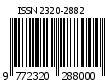
ISSN: 2320-2882 Impact Factor: 7.97 and ISSN APPROVED Journal Starting Year (ESTD) : 2013


ISSN and 7.97 Impact Factor Details
ISSN: 2320-2882 Impact Factor: 7.97 and ISSN APPROVED Journal Starting Year (ESTD) : 2013
DOI Details
CONFERENCE
CONFERENCE MANAGMENT & PUBLICATION CONFERENCE PROPOSAL
RECENT CONFERENCE

CONFERENCE PROPOSAL CONFERENCE PROCEEDINGS
CONFERENCE PROPOSAL CONFERENCE PROCEEDINGS
For Reviewer /Referral (RMS) Earn 500 per paper
Important Links
NEWS & Conference
Digital Library
IJCRT RMS | Earn 500 Per Paper.

Open Access


LICENSE
Indexing Partner
Scholarly open access journals, Peer-reviewed, and Refereed Journals, Impact factor 7.97 (Calculate by google scholar and Semantic Scholar | AI-Powered Research Tool) , Multidisciplinary, Monthly, Indexing in all major database & Metadata, Citation Generator, Digital Object Identifier(DOI)