Important Details
IJCRT - International Peer Reviewed, Open Access Journal, Multidisciplinary, Monthly, Nominal(Low) Fees for Professional Research Services International Journal of Creative Research Thoughts - IJCRT Peer Review Journal, Refereed Journal, Peer Reviewed Journal , Referred Journal and Indexed Journal, Open access, Online and Print Journal,international Journal Open Access, Accepted by Indian and foreign university ,IJCRT Followed Norms, guidelines, requirement, listing criteria and methodology of score/point also applied from: Scopus , Web of Science , UGC Approved , UGC CARE, UGC-CARE .
UGC Approved Journal No: 49023 (18)
UGC approval Link
https://ijcrt.org/ugc%20approval.jpg
All Policy and Approval
Please Like Our Facebook Page | CrossRef DOI and Hard copy of Certificate Provide if required. | www.IJCRT.org | editor@IJCRT.org | IJCRT WhatsApp +91 7990172303
Publication Details:
- Paper Submission : 31-Jul-2026. Call For Paper (Volume 14 | Issue 6 | Month- June 2026)
- Acceptance/Rejection Notification: Within 02-04 Days.
- Paper Publish: Within 02-04 Days after submitting all documents.
-
Submit Your Paper Any time There No deadline.
-
Publication fees : 1570 INR for Indian author & 59$ for foreign International author.
Please Like Our Facebook Page | CrossRef DOI and Hard copy of Certificate Provide if required.
Licence and Indexing
Indexing In Google Scholar, SSRN, ResearcherID-Publons, Semantic Scholar | AI-Powered Research Tool, Microsoft Academic, Academia.edu, arXiv.org, Research Gate, CiteSeerX, ResearcherID Thomson Reuters, Mendeley : reference manager, DocStoc, ISSUU, Scribd, and many more | High Impact Factor: 7.97 | Digital object identifier (DOI) and Hard Copy of certificate Provided.




























Licence
DOI
ISSN Approved impact factor: 7.97 
Creative Common 
Valid as per new UGC Gazette regulations 

INTERNATIONAL JOURNAL OF CREATIVE RESEARCH THOUGHTS - IJCRT (IJCRT.ORG)
International Peer Reviewed & Refereed Journals, Open Access Journal
IJCRT Peer-Reviewed (Refereed) Journal as Per New UGC Rules.
ISSN Approved Journal No: 2320-2882 | Impact factor: 7.97 | ESTD Year: 2013
Call For Paper - Volume 14 | Issue 6 | Month- June 2026
Scholarly open access journals, Peer-reviewed, and Refereed Journals, Impact factor 7.97 (Calculate by google scholar and Semantic Scholar | AI-Powered Research Tool) , Multidisciplinary, Monthly, Indexing in all major database & Metadata, Citation Generator, Digital Object Identifier(CrossRef DOI)
IJCRT WhatsApp Contact
IJCRT Search Xplore - Search all paper by Paper Name , Author Name, and Title
Volume 14 | Issue 2 |
Volume 14 | Issue 2 | Month
Downlaod After Publication 1) Table of content index in PDF
2) Table of content index in HTML 2)Table of content index in HTML
3) Front Page 3) Front Page
4) Back Page 4) Back Page
5) Editor Board Member 5)Editor Board Member
6) OLD Style Issue 6)OLD Style Issue
 |
 |
|---|---|
| IJCRT Journal front page | IJCRT Journal Back Page |
Paper Title: DEVELOPMENT OF IOT BASED HEALTH MONITORING SYSTEM FOR DISABLES USING MICROCONTROLLER
Author Name(s): R.RAJ GOWRI, R. LOGANATHAN, YOGESHVAR. P, RIYAS AHAMED.A, RAHAMATHULLA. K
Published Paper ID: - IJCRT2602139
Register Paper ID - 301234
Publisher Journal Name: IJPUBLICATION, IJCRT
DOI Member ID: 10.6084/m9.doi.one.IJCRT2602139 and DOI :
Author Country : Indian Author, India, 637408 , Rasipuram, 637408 , | Research Area: Science and Technology Published Paper URL: http://ijcrt.org/viewfull.php?&p_id=IJCRT2602139 Published Paper PDF: download.php?file=IJCRT2602139 Published Paper PDF: http://www.ijcrt.org/papers/IJCRT2602139.pdf
Your Paper Publication Details:
Title: DEVELOPMENT OF IOT BASED HEALTH MONITORING SYSTEM FOR DISABLES USING MICROCONTROLLER
DOI (Digital Object Identifier) :
Pubished in Volume: 14 | Issue: 2 | Year: February 2026
Publisher Name : IJCRT | www.ijcrt.org | ISSN : 2320-2882
Subject Area: Science and Technology
Author type: Indian Author
Pubished in Volume: 14
Issue: 2
Pages: b248-b254
Year: February 2026
Downloads: 159
E-ISSN Number: 2320-2882
Abstract
The development of an IOT-based health monitoring system for disabled individuals aims to provide continuous, reliable, and real-time observation of vital health parameters using a microcontroller-based embedded platform. Disabled persons often require constant medical supervision due to limited mobility or underlying health conditions, and conventional healthcare systems may not offer timely assistance during emergencies. This system integrates physiological sensors such as heart rate, body temperature, and ECG sensors with a microcontroller to continuously acquire and process health data. The collected data is transmitted through an IOT communication module, such as Wi-Fi or GSM, to a cloud-based platform where it is securely stored, analyzed, and visualized for remote access by caregivers, family members, or healthcare professionals. Predefined threshold values are used to detect abnormal health conditions, and an automatic alert mechanism is activated to notify concerned personnel through notifications or messages, enabling rapid medical intervention. The proposed system is designed to be low-cost, energy-efficient, and user-friendly, making it suitable for long-term use in home-based healthcare environments. By enabling real-time monitoring and remote supervision, this system enhances patient safety, reduces the need for constant physical presence of caregivers, and significantly improves the quality of life and independence of disabled individuals.
Licence: creative commons attribution 4.0
License
Creative Commons Attribution 4.0 and The Open Definition

Keywords
Arduino Microcontroller, Internet of Things (IOT), Heart Beat Sensor, Temperature Sensor
License
Creative Commons Attribution 4.0 and The Open Definition
Paper Title: AN ANALYSIS ON THE PROTECTION OF THE CHILD AGAINST CHILD PORNOGRAPHY UNDER THE CAMEROONIAN CYBER CRIMINALITY LAW.
Author Name(s): Cacilia Mesonge Kome
Published Paper ID: - IJCRT2602138
Register Paper ID - 301162
Publisher Journal Name: IJPUBLICATION, IJCRT
DOI Member ID: 10.6084/m9.doi.one.IJCRT2602138 and DOI :
Author Country : Foreign Author, Cameroon, Cameroon , Bamenda, Cameroon , | Research Area: Medical Science All Published Paper URL: http://ijcrt.org/viewfull.php?&p_id=IJCRT2602138 Published Paper PDF: download.php?file=IJCRT2602138 Published Paper PDF: http://www.ijcrt.org/papers/IJCRT2602138.pdf
Your Paper Publication Details:
Title: AN ANALYSIS ON THE PROTECTION OF THE CHILD AGAINST CHILD PORNOGRAPHY UNDER THE CAMEROONIAN CYBER CRIMINALITY LAW.
DOI (Digital Object Identifier) :
Pubished in Volume: 14 | Issue: 2 | Year: February 2026
Publisher Name : IJCRT | www.ijcrt.org | ISSN : 2320-2882
Subject Area: Medical Science All
Author type: Foreign Author
Pubished in Volume: 14
Issue: 2
Pages: b237-b247
Year: February 2026
Downloads: 144
E-ISSN Number: 2320-2882
Abstract
The protection of the child against child pornography under Cameroonian cyber criminality law represents a critical and urgent area of legal research, focusing on the measures enacted to combat the proliferation of child pornography within the digital landscape of Cameroon. Child pornography, defined by the United Nations as any visual depiction of sexually explicit conduct involving a minor, constitutes a grave violation of children's rights and dignity. Cyber criminality, or cybercrime, encompasses illegal activities executed through computer networks, highlighting the need for robust cyber law frameworks. Cameroonian cyber criminality law, particularly Law No. 2010/012 of 21 December 2010 on Cybersecurity and Cybercrime, establishes comprehensive legal provisions to address such crimes. This research examines the efficacy and scope of these measures, scrutinizing the legislative tools and enforcement mechanisms designed to suppress child pornography. Key sections such as Article 75 of the aforementioned law explicitly criminalizes the production, distribution, and possession of child pornography, stipulating severe penalties to deter offenders. Through a detailed analysis of these legislative measures, the research aims to elucidate the effectiveness of Cameroonian legal responses in safeguarding children from exploitation in the cyber realm.
Licence: creative commons attribution 4.0
License
Creative Commons Attribution 4.0 and The Open Definition
Keywords
Child, Pornography, cyber criminality Law.
License
Creative Commons Attribution 4.0 and The Open Definition
Paper Title: Interpreting Sustainability in Pre-Modern India: Shivaji's Governance in Marathwada
Author Name(s): Dr. Soni T. L., Dr Smitha R
Published Paper ID: - IJCRT2602137
Register Paper ID - 301161
Publisher Journal Name: IJPUBLICATION, IJCRT
DOI Member ID: 10.6084/m9.doi.one.IJCRT2602137 and DOI : https://doi.org/10.56975/ijcrt.v14i2.301161
Author Country : Indian Author, India, 680 014 , Thrissur, 680 014 , | Research Area: Social Science All Published Paper URL: http://ijcrt.org/viewfull.php?&p_id=IJCRT2602137 Published Paper PDF: download.php?file=IJCRT2602137 Published Paper PDF: http://www.ijcrt.org/papers/IJCRT2602137.pdf
Your Paper Publication Details:
Title: INTERPRETING SUSTAINABILITY IN PRE-MODERN INDIA: SHIVAJI'S GOVERNANCE IN MARATHWADA
DOI (Digital Object Identifier) : https://doi.org/10.56975/ijcrt.v14i2.301161
Pubished in Volume: 14 | Issue: 2 | Year: February 2026
Publisher Name : IJCRT | www.ijcrt.org | ISSN : 2320-2882
Subject Area: Social Science All
Author type: Indian Author
Pubished in Volume: 14
Issue: 2
Pages: b233-b236
Year: February 2026
Downloads: 167
E-ISSN Number: 2320-2882
Abstract
This paper analyses the economic and governance practices of Marathwada under Chhatrapati Shivaji Maharaj in the 17th century, highlighting their role in maintaining regional economic stability. While existing studies focus on military strategy and political power, economic governance has received little attention. Using a qualitative historical-analytical approach, the study examines agriculture and land revenue, water management, handicraft production, forest control, trade, financial practices, and decentralized governance as interrelated aspects of governance. The concept of sustainability is applied heuristically to assess the long-term orientation of these practices without projecting modern frameworks. The analysis shows that flexible income policies, resource control, and support for local economic networks contributed to continuity and resilience in an ecologically constrained region.
Licence: creative commons attribution 4.0
License
Creative Commons Attribution 4.0 and The Open Definition
Keywords
Shivaji Maharaj, Marathwada, economic governance, pre-modern India, agrarian administration, sustainability
License
Creative Commons Attribution 4.0 and The Open Definition
Paper Title: Predicting Employee Engagement: The Synergistic Influence of Psychological Capital and Perceived Social Support
Author Name(s): Mehul D. Mehta, Dr. Chetan J. Lad
Published Paper ID: - IJCRT2602136
Register Paper ID - 301188
Publisher Journal Name: IJPUBLICATION, IJCRT
DOI Member ID: 10.6084/m9.doi.one.IJCRT2602136 and DOI : https://doi.org/10.56975/ijcrt.v14i2.301188
Author Country : Indian Author, India, 393001 , Ankleshwar, 393001 , | Research Area: Management All Published Paper URL: http://ijcrt.org/viewfull.php?&p_id=IJCRT2602136 Published Paper PDF: download.php?file=IJCRT2602136 Published Paper PDF: http://www.ijcrt.org/papers/IJCRT2602136.pdf
Your Paper Publication Details:
Title: PREDICTING EMPLOYEE ENGAGEMENT: THE SYNERGISTIC INFLUENCE OF PSYCHOLOGICAL CAPITAL AND PERCEIVED SOCIAL SUPPORT
DOI (Digital Object Identifier) : https://doi.org/10.56975/ijcrt.v14i2.301188
Pubished in Volume: 14 | Issue: 2 | Year: February 2026
Publisher Name : IJCRT | www.ijcrt.org | ISSN : 2320-2882
Subject Area: Management All
Author type: Indian Author
Pubished in Volume: 14
Issue: 2
Pages: b222-b232
Year: February 2026
Downloads: 164
E-ISSN Number: 2320-2882
Abstract
The current study examines the combined effects of Psychological Capital (PsyCap) and perceived social support on employee engagement in the banking sector in South Gujarat, India. Using the Job Demands-Resources (JD-R) model and Conservation of Resources (COR) theory, this research examines how employees' internal psychological resources (via PsyCap) and external social supports interact to build a committed and engaged workforce. Using a cross-sectional quantitative study design, data were collected through a structured questionnaire from 537 employees working for a mix of public, private, cooperative, and small finance banks. To test the proposed conceptual model, the researcher employed Partial Least Squares Structural Equation Modeling (PLS-SEM), using covariance-based SEM and Confirmatory Factor Analysis (CFA) to assess measurement model issues. All hypothesized relationships were supported empirically; PsyCap had a strong positive direct effect on engagement (? = .327, p < .001). Perceived social support (PSS) partially mediated the relationship between PsyCap and employee engagement, indicating that psychological strength has a greater effect on engagement when there is a corresponding source of social support to draw upon. The predictive power of the structural model is moderate: it explains 49.2% (R2) of the variance in employee engagement and 60.2% (R2) of the variance in social support. From a practical standpoint, the results indicate the importance of integrating PsyCap and PSS as key elements of employee engagement in the banking sector of southern Gujarat.
Licence: creative commons attribution 4.0
License
Creative Commons Attribution 4.0 and The Open Definition
Keywords
Employee Engagement, Psychological Capital, Social Support, PLS-SEM, Bank
License
Creative Commons Attribution 4.0 and The Open Definition
Paper Title: Factors Influencing Sustainable Entrepreneurship under the Prime Minister Employment Generation Programme: A Review of Literature
Author Name(s): ARTI MEENA, Dr. Pinky Kumari
Published Paper ID: - IJCRT2602135
Register Paper ID - 301204
Publisher Journal Name: IJPUBLICATION, IJCRT
DOI Member ID: 10.6084/m9.doi.one.IJCRT2602135 and DOI :
Author Country : Indian Author, India, 110067 , NEW DELHI, 110067 , | Research Area: Commerce All Published Paper URL: http://ijcrt.org/viewfull.php?&p_id=IJCRT2602135 Published Paper PDF: download.php?file=IJCRT2602135 Published Paper PDF: http://www.ijcrt.org/papers/IJCRT2602135.pdf
Your Paper Publication Details:
Title: FACTORS INFLUENCING SUSTAINABLE ENTREPRENEURSHIP UNDER THE PRIME MINISTER EMPLOYMENT GENERATION PROGRAMME: A REVIEW OF LITERATURE
DOI (Digital Object Identifier) :
Pubished in Volume: 14 | Issue: 2 | Year: February 2026
Publisher Name : IJCRT | www.ijcrt.org | ISSN : 2320-2882
Subject Area: Commerce All
Author type: Indian Author
Pubished in Volume: 14
Issue: 2
Pages: b215-b221
Year: February 2026
Downloads: 152
E-ISSN Number: 2320-2882
Abstract
This review synthesises literature on the factors that influence sustainable entrepreneurship among beneficiaries of the Prime Minister Employment Generation Programme (PMEGP). Focusing on economic, institutional, individual, market, regional, social, and environmental determinants, the paper examines how these factors shape enterprise creation, survival, growth, and sustainability in rural India, with implications for PMEGP implementation. The review draws on government reports, programme documents, empirical studies, and conceptual works to identify patterns and recurring barriers such as limited credit access, inadequate training, weak market linkages, and infrastructural shortfalls that constrain long-term sustainability. It also highlights enabling conditions, including targeted subsidies, inclusive outreach, strong institutional coordination, and appropriate capacity-building. The paper concludes with policy recommendations to strengthen PMEGP's sustainability outcomes and proposes priority areas for future empirical research, including longitudinal evaluations, district-level comparative studies, and focused analyses of environmental sustainability within PMEGP-supported enterprises.
Licence: creative commons attribution 4.0
License
Creative Commons Attribution 4.0 and The Open Definition
Keywords
PMEGP, sustainable entrepreneurship, rural enterprises, government employment programmes
License
Creative Commons Attribution 4.0 and The Open Definition
Paper Title: UNMANNED GROUND VEHCILE FOR DEFENCE APPLICATIONS
Author Name(s): DR. J. KIRUBAKARAN, RATHEESH. R, SITHESH. K, SHANMUGARAJA. S
Published Paper ID: - IJCRT2602134
Register Paper ID - 301233
Publisher Journal Name: IJPUBLICATION, IJCRT
DOI Member ID: 10.6084/m9.doi.one.IJCRT2602134 and DOI :
Author Country : Indian Author, India, 637408 , Rasipuram, 637408 , | Research Area: Science and Technology Published Paper URL: http://ijcrt.org/viewfull.php?&p_id=IJCRT2602134 Published Paper PDF: download.php?file=IJCRT2602134 Published Paper PDF: http://www.ijcrt.org/papers/IJCRT2602134.pdf
Your Paper Publication Details:
Title: UNMANNED GROUND VEHCILE FOR DEFENCE APPLICATIONS
DOI (Digital Object Identifier) :
Pubished in Volume: 14 | Issue: 2 | Year: February 2026
Publisher Name : IJCRT | www.ijcrt.org | ISSN : 2320-2882
Subject Area: Science and Technology
Author type: Indian Author
Pubished in Volume: 14
Issue: 2
Pages: b208-b214
Year: February 2026
Downloads: 150
E-ISSN Number: 2320-2882
Abstract
The advancement of autonomous systems has significantly enhanced modern defence technology, enabling safer and more efficient military operations. This project focuses on the design and implementation of an Unmanned Ground Vehicle (UGV) that can operate autonomously in defence and surveillance environments. The proposed system utilizes a Raspberry Pi 3 Model B+ as the central processing unit, integrating ultrasonic sensors, motor drivers, and a Pi camera to achieve real-time environmental monitoring and obstacle detection. Through the implementation of computer vision and image processing techniques using OpenCV, the UGV is capable of identifying paths, avoiding obstacles, and navigating autonomously in dynamic environments. The system also allows for live video streaming, making it suitable for border surveillance, reconnaissance missions, and hazardous area monitoring where human access is limited or risky. Furthermore, the proposed UGV architecture emphasizes modularity and ease of expansion, allowing additional sensors such as GPS, infrared, gas sensors, or weapon detection modules to be integrated in future enhancements. This work lays a strong foundation for further research into advanced artificial intelligence algorithms, swarm robotics, and secure communication systems, contributing toward the development of next-generation autonomous ground systems for defence and security applications.
Licence: creative commons attribution 4.0
License
Creative Commons Attribution 4.0 and The Open Definition
Keywords
Artificial Intelligence, Arduino Microcontroller, Raspberry Pi, GSM, Suspension System
License
Creative Commons Attribution 4.0 and The Open Definition
Paper Title: Sasthi : Eka Pragarya Laukik Debi
Author Name(s): Dr. Mithun Mandal
Published Paper ID: - IJCRT2602133
Register Paper ID - 301208
Publisher Journal Name: IJPUBLICATION, IJCRT
DOI Member ID: 10.6084/m9.doi.one.IJCRT2602133 and DOI :
Author Country : Indian Author, India, - , -, - , | Research Area: Science and Technology Published Paper URL: http://ijcrt.org/viewfull.php?&p_id=IJCRT2602133 Published Paper PDF: download.php?file=IJCRT2602133 Published Paper PDF: http://www.ijcrt.org/papers/IJCRT2602133.pdf
Your Paper Publication Details:
Title: SASTHI : EKA PRAGARYA LAUKIK DEBI
DOI (Digital Object Identifier) :
Pubished in Volume: 14 | Issue: 2 | Year: February 2026
Publisher Name : IJCRT | www.ijcrt.org | ISSN : 2320-2882
Subject Area: Science and Technology
Author type: Indian Author
Pubished in Volume: 14
Issue: 2
Pages: b202-b207
Year: February 2026
Downloads: 130
E-ISSN Number: 2320-2882
Abstract
??????? ????? ????? ?????? ???? ???? ????? ????? ???? ???????? ???????? ???? ???? ???????? ??????????? ????, ???? ????????? ????? ?? ????????? ?????? ?????? ????? ???????? ????????? ?????? ???? ??????? ?????, ????? ??? ??????? ?????-??? ???? ??? ????????? ?????? ????? ????? ????? ??? ???? ?????? ???????? ???????? ?????? ???? ????? ????? ???? ???????? ???????, ??????????? ???? ???? ????? ????? ???? ???? ????????? ????? ????, ???? ??????? ??????? ???????? ???? ?????? ?????? ?????? ???? ??? ??????? ????? ???? ???????? ?????????? ???? ?????????? ??????? ????? ?????? ??????, ????? ???? ?? ??????????? ???? ???????? ?????????? ???? ???????? ?????? ???????? ?????? ??? ??????? ???? ??????? ??????? ??? ?????????? ???? ??????, ???? ???????????? ??????????? ??? ???????? ???, ???????? ????????? ???????
Licence: creative commons attribution 4.0
License
Creative Commons Attribution 4.0 and The Open Definition
Keywords
?????, ????????????, ???? ??????????, ??????????, ??????????, ???????? ???, ???????? ?????????, ????
License
Creative Commons Attribution 4.0 and The Open Definition
Paper Title: INSTITUTIONAL AUTONOMY AND ACADEMIC FREEDOM: PATHWAYS TO EXCELLENCE IN HIGHER EDUCATION
Author Name(s): Dr.P.Indira devi, Dr.Ch.Snehalatha Reddy, Dr.Narendar Kethireddy, Dr.B.Mahipal Reddy
Published Paper ID: - IJCRT2602132
Register Paper ID - 301113
Publisher Journal Name: IJPUBLICATION, IJCRT
DOI Member ID: 10.6084/m9.doi.one.IJCRT2602132 and DOI : https://doi.org/10.56975/ijcrt.v14i2.301113
Author Country : Indian Author, India, 505001 , karimnagar, 505001 , | Research Area: Others area Published Paper URL: http://ijcrt.org/viewfull.php?&p_id=IJCRT2602132 Published Paper PDF: download.php?file=IJCRT2602132 Published Paper PDF: http://www.ijcrt.org/papers/IJCRT2602132.pdf
Your Paper Publication Details:
Title: INSTITUTIONAL AUTONOMY AND ACADEMIC FREEDOM: PATHWAYS TO EXCELLENCE IN HIGHER EDUCATION
DOI (Digital Object Identifier) : https://doi.org/10.56975/ijcrt.v14i2.301113
Pubished in Volume: 14 | Issue: 2 | Year: February 2026
Publisher Name : IJCRT | www.ijcrt.org | ISSN : 2320-2882
Subject Area: Others area
Author type: Indian Author
Pubished in Volume: 14
Issue: 2
Pages: b195-b201
Year: February 2026
Downloads: 219
E-ISSN Number: 2320-2882
Abstract
bstract: Institutional autonomy and academic freedom are widely regarded as essential foundations for the development of effective, innovative, and globally competitive higher education systems. Together, they create an enabling environment for intellectual inquiry, pedagogical innovation, and high-quality research, thereby contributing to academic excellence and societal progress. Institutional autonomy empowers universities and colleges to independently design academic programs, manage administrative processes, and allocate financial resources in alignment with their strategic priorities. Academic freedom, on the other hand, safeguards the rights of faculty and students to engage in critical inquiry, open dialogue, and independent research without fear of external interference or censorship. In recent decades, higher education systems worldwide have experienced growing regulatory oversight, performance-based evaluation, and market-oriented reforms, which have intensified debates regarding the balance between autonomy, accountability, and governance. While regulatory mechanisms are necessary to ensure quality assurance, transparency, and public accountability, excessive control can restrict institutional flexibility and weaken the creative potential of academic communities. This study critically examines the conceptual foundations, historical development, and contemporary policy frameworks related to institutional autonomy and academic freedom, with particular emphasis on the Indian higher education context and relevant global perspectives. Key words: Institutional Autonomy, Academic Freedom, Knowledge Innovation, University Excellence.
Licence: creative commons attribution 4.0
License
Creative Commons Attribution 4.0 and The Open Definition
Keywords
Institutional Autonomy, Academic Freedom, Knowledge Innovation, University Excellence.
License
Creative Commons Attribution 4.0 and The Open Definition
Paper Title: Real-Time AI Threat Detection in Encrypted Traffic Using Deep Learning
Author Name(s): Sharvanthvadivelan
Published Paper ID: - IJCRT2602131
Register Paper ID - 298441
Publisher Journal Name: IJPUBLICATION, IJCRT
DOI Member ID: 10.6084/m9.doi.one.IJCRT2602131 and DOI :
Author Country : Indian Author, India, 641035 , Coimabtore, 641035 , | Research Area: Others area Published Paper URL: http://ijcrt.org/viewfull.php?&p_id=IJCRT2602131 Published Paper PDF: download.php?file=IJCRT2602131 Published Paper PDF: http://www.ijcrt.org/papers/IJCRT2602131.pdf
Your Paper Publication Details:
Title: REAL-TIME AI THREAT DETECTION IN ENCRYPTED TRAFFIC USING DEEP LEARNING
DOI (Digital Object Identifier) :
Pubished in Volume: 14 | Issue: 2 | Year: February 2026
Publisher Name : IJCRT | www.ijcrt.org | ISSN : 2320-2882
Subject Area: Others area
Author type: Indian Author
Pubished in Volume: 14
Issue: 2
Pages: b188-b194
Year: February 2026
Downloads: 181
E-ISSN Number: 2320-2882
Abstract
With more than 85% of today's network traffic encrypted using TLS/SSL, traditional Intrusion Detection Systems (IDS) fail to inspect encrypted packets and detect hidden threats. Attackers increasingly hide malware, botnets, ransomware, and command-and-control traffic inside encrypted channels. This paper presents a Real-Time AI Threat Detection Framework using a hybrid 1D-CNN + BiLSTM deep learning model to identify malicious encrypted traffic without decrypting it. The model analyzes metadata features such as packet lengths, inter-arrival times, TLS handshake behavior, flow statistics, and directional patterns. Experimental results on CIC-IDS-2018 and ISCX VPN datasets show an accuracy of 98.3%, outperforming classical ML models. The proposed system is scalable, privacy-preserving, and suitable for Zero Trust networks.
Licence: creative commons attribution 4.0
License
Creative Commons Attribution 4.0 and The Open Definition
Keywords
Encrypted Traffic Analysis, Deep Learning, Intrusion Detection, CNN-LSTM, Network Security, Real-Time Threat Detection.
License
Creative Commons Attribution 4.0 and The Open Definition
Paper Title: Assessing The Impact Of Water Governance: Women Empowerment And Viksit Bharat
Author Name(s): Priti Singh
Published Paper ID: - IJCRT2602130
Register Paper ID - 301065
Publisher Journal Name: IJPUBLICATION, IJCRT
DOI Member ID: 10.6084/m9.doi.one.IJCRT2602130 and DOI :
Author Country : Indian Author, India, 786611 , Dibrugarh , 786611 , | Research Area: Social Science All Published Paper URL: http://ijcrt.org/viewfull.php?&p_id=IJCRT2602130 Published Paper PDF: download.php?file=IJCRT2602130 Published Paper PDF: http://www.ijcrt.org/papers/IJCRT2602130.pdf
Your Paper Publication Details:
Title: ASSESSING THE IMPACT OF WATER GOVERNANCE: WOMEN EMPOWERMENT AND VIKSIT BHARAT
DOI (Digital Object Identifier) :
Pubished in Volume: 14 | Issue: 2 | Year: February 2026
Publisher Name : IJCRT | www.ijcrt.org | ISSN : 2320-2882
Subject Area: Social Science All
Author type: Indian Author
Pubished in Volume: 14
Issue: 2
Pages: b181-b187
Year: February 2026
Downloads: 130
E-ISSN Number: 2320-2882
Abstract
India aims to become 'Viksit Bharat' - a developed and self-reliant nation by 2047. It envisions creating an equitable and developed society where every individual has equal opportunities and accessibility to resources. By inclusivity, it promotes empowerment of marginalized communities, including women. Whereas water, which is fundamental for living, is still under threat, making effective water governance crucial for sustainable development. To address this, the right to access clean drinking water is protected under the broad framework of the Right to Life guaranteed under Article 21 of the Indian Constitution. Various government programs have been implemented to mitigate the water security challenges. Among them, the Jal Jeevan Mission, launched by the Government of India in 2019, aims to provide functional household tap water connections in every rural household. As there seems to be a gendered division of labour around water, mostly in rural settings which reinforces systemic inequities, making women remain marginalized. The mission not only focuses on the service delivery parameters, but also puts great emphasis on reducing the age-old drudgery of fetching water by women from the remotest villages of India. The initiative has urged women to participate in water governance and take active roles in managing the working of the mission at the community levels. This paper will assess the impact of this flagship programme on inclusive development, with particular emphasis on women empowerment. The study contributes in understanding how a government-led water policy has its impact on bridging gender disparities, which ultimately supports India's broader goal of becoming a developed and self-reliant nation by 2047.
Licence: creative commons attribution 4.0
License
Creative Commons Attribution 4.0 and The Open Definition
Keywords
Water governance, women empowerment, inclusive development, Viksit Bharat.
License
Creative Commons Attribution 4.0 and The Open Definition
Call For Paper June 2026
Call For Papers
June 2026
Volume 14 | Issue 6
Last Date :
31-Jul-2026
Submit Manuscript Online Impact Factor: 7.97 Review Results : Within 02-03 Days Paper Publication : Within 02-03 Days
June 2026
Volume 14 | Issue 6
Last Date :
31-Jul-2026
Submit Manuscript Online Impact Factor: 7.97 Review Results : Within 02-03 Days Paper Publication : Within 02-03 Days
Published Issue Details
For Authors
Forms / Downloads
Other IMP Links
Indexing Partner
Research Area
LICENSE





ISSN and 7.97 Impact Factor Details

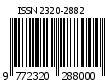
ISSN: 2320-2882 Impact Factor: 7.97 and ISSN APPROVED Journal Starting Year (ESTD) : 2013


ISSN and 7.97 Impact Factor Details
ISSN: 2320-2882 Impact Factor: 7.97 and ISSN APPROVED Journal Starting Year (ESTD) : 2013
DOI Details
CONFERENCE
CONFERENCE MANAGMENT & PUBLICATION CONFERENCE PROPOSAL
RECENT CONFERENCE

CONFERENCE PROPOSAL CONFERENCE PROCEEDINGS
CONFERENCE PROPOSAL CONFERENCE PROCEEDINGS
For Reviewer /Referral (RMS) Earn 500 per paper
Important Links
NEWS & Conference
Digital Library
IJCRT RMS | Earn 500 Per Paper.

Open Access


LICENSE
Indexing Partner
Scholarly open access journals, Peer-reviewed, and Refereed Journals, Impact factor 7.97 (Calculate by google scholar and Semantic Scholar | AI-Powered Research Tool) , Multidisciplinary, Monthly, Indexing in all major database & Metadata, Citation Generator, Digital Object Identifier(DOI)