Important Details
IJCRT - International Peer Reviewed, Open Access Journal, Multidisciplinary, Monthly, Nominal(Low) Fees for Professional Research Services International Journal of Creative Research Thoughts - IJCRT Peer Review Journal, Refereed Journal, Peer Reviewed Journal , Referred Journal and Indexed Journal, Open access, Online and Print Journal,international Journal Open Access, Accepted by Indian and foreign university ,IJCRT Followed Norms, guidelines, requirement, listing criteria and methodology of score/point also applied from: Scopus , Web of Science , UGC Approved , UGC CARE, UGC-CARE .
UGC Approved Journal No: 49023 (18)
UGC approval Link
https://ijcrt.org/ugc%20approval.jpg
All Policy and Approval
Please Like Our Facebook Page | CrossRef DOI and Hard copy of Certificate Provide if required. | www.IJCRT.org | editor@IJCRT.org | IJCRT WhatsApp +91 7990172303
Publication Details:
- Paper Submission : 31-Jul-2026. Call For Paper (Volume 14 | Issue 6 | Month- June 2026)
- Acceptance/Rejection Notification: Within 02-04 Days.
- Paper Publish: Within 02-04 Days after submitting all documents.
-
Submit Your Paper Any time There No deadline.
-
Publication fees : 1570 INR for Indian author & 59$ for foreign International author.
Please Like Our Facebook Page | CrossRef DOI and Hard copy of Certificate Provide if required.
Licence and Indexing
Indexing In Google Scholar, SSRN, ResearcherID-Publons, Semantic Scholar | AI-Powered Research Tool, Microsoft Academic, Academia.edu, arXiv.org, Research Gate, CiteSeerX, ResearcherID Thomson Reuters, Mendeley : reference manager, DocStoc, ISSUU, Scribd, and many more | High Impact Factor: 7.97 | Digital object identifier (DOI) and Hard Copy of certificate Provided.




























Licence
DOI
ISSN Approved impact factor: 7.97 
Creative Common 
Valid as per new UGC Gazette regulations 

INTERNATIONAL JOURNAL OF CREATIVE RESEARCH THOUGHTS - IJCRT (IJCRT.ORG)
International Peer Reviewed & Refereed Journals, Open Access Journal
IJCRT Peer-Reviewed (Refereed) Journal as Per New UGC Rules.
ISSN Approved Journal No: 2320-2882 | Impact factor: 7.97 | ESTD Year: 2013
Call For Paper - Volume 14 | Issue 6 | Month- June 2026
Scholarly open access journals, Peer-reviewed, and Refereed Journals, Impact factor 7.97 (Calculate by google scholar and Semantic Scholar | AI-Powered Research Tool) , Multidisciplinary, Monthly, Indexing in all major database & Metadata, Citation Generator, Digital Object Identifier(CrossRef DOI)
IJCRT WhatsApp Contact
IJCRT Search Xplore - Search all paper by Paper Name , Author Name, and Title
Volume 14 | Issue 2 |
Volume 14 | Issue 2 | Month
Downlaod After Publication 1) Table of content index in PDF
2) Table of content index in HTML 2)Table of content index in HTML
3) Front Page 3) Front Page
4) Back Page 4) Back Page
5) Editor Board Member 5)Editor Board Member
6) OLD Style Issue 6)OLD Style Issue
 |
 |
|---|---|
| IJCRT Journal front page | IJCRT Journal Back Page |
Paper Title: SOLAR POWERED DYNAMIC WIRELESS ELECTRIC VEHICLE CHARGING SYSTEM USING INDUCTIVE POWER TRANSFER TECHNOLOGY
Author Name(s): Mr. Kunal Shirke, Mr. Samarth Dyandyan, Mr. Aditya Chavan, Mr. Sagar D. Dhawale
Published Paper ID: - IJCRTBL02015
Register Paper ID - 301043
Publisher Journal Name: IJPUBLICATION, IJCRT
DOI Member ID: 10.6084/m9.doi.one.IJCRTBL02015 and DOI : https://doi.org/10.56975/ijcrt.v14i2.301043
Author Country : Indian Author, India, - , -, - , | Research Area: Science and Technology Published Paper URL: http://ijcrt.org/viewfull.php?&p_id=IJCRTBL02015 Published Paper PDF: download.php?file=IJCRTBL02015 Published Paper PDF: http://www.ijcrt.org/papers/IJCRTBL02015.pdf
Your Paper Publication Details:
Title: SOLAR POWERED DYNAMIC WIRELESS ELECTRIC VEHICLE CHARGING SYSTEM USING INDUCTIVE POWER TRANSFER TECHNOLOGY
DOI (Digital Object Identifier) : https://doi.org/10.56975/ijcrt.v14i2.301043
Pubished in Volume: 14 | Issue: 2 | Year: February 2026
Publisher Name : IJCRT | www.ijcrt.org | ISSN : 2320-2882
Subject Area: Science and Technology
Author type: Indian Author
Pubished in Volume: 14
Issue: 2
Pages: 73-78
Year: February 2026
Downloads: 151
E-ISSN Number: 2320-2882
Abstract
With growing environmental concerns and the need for sustainable solutions in urban transport, electric vehicles (EVs) are becoming a more admired and environment-friendly alternative to cars that are powered by conventional fuel. Although, the adoption of EVs is still limited by challenges like range anxiety--drivers' concerns about running out of battery power on longer trips--and a lack of accessible charging stations, especially in cities. Addressing these issues requires innovative approaches that make EVs more convenient for everyday use while also supporting clean energy sources. This project proposes a solar-powered dynamic wireless charging (DWC)system for electric vehicles, using inductive power transfer (IPT) technology embedded in road infrastructure. The system enables EVs to charge continuously while driving, reducing range anxiety and improving charging accessibility by eliminating the need for frequent stops. By utilizing solar energy, this solution lessens the dependence on conventional power sources, promoting EV adoption as part of a greener transportation network. Working in collaboration with urban planners and engineers, the project aims to integrate this charging system directly into city roads, turning them into dynamic charging networks and contributing to reduced greenhouse gas emissions. This initiative envisions a future where electric vehicles can recharge seamlessly during travel, supporting a more sustainable and efficient urban transport system.
Licence: creative commons attribution 4.0
License
Creative Commons Attribution 4.0 and The Open Definition

Keywords
Electric Vehicles (EVs), Dynamic Wireless Charging (DWC), Inductive Power Transfer (IPT), Wireless Power transfer (WPT), Electromagnetic Field
License
Creative Commons Attribution 4.0 and The Open Definition
Paper Title: Review on Automated Depression Detection and Social Support System
Author Name(s): Miss. Kanchan Ramdas Shinde, Prof. Dr. Saniya Ansari, Prof. Dr. Sanjay Khonde
Published Paper ID: - IJCRTBL02014
Register Paper ID - 301044
Publisher Journal Name: IJPUBLICATION, IJCRT
DOI Member ID: 10.6084/m9.doi.one.IJCRTBL02014 and DOI : https://doi.org/10.56975/ijcrt.v14i2.301044
Author Country : Indian Author, India, - , -, - , | Research Area: Science and Technology Published Paper URL: http://ijcrt.org/viewfull.php?&p_id=IJCRTBL02014 Published Paper PDF: download.php?file=IJCRTBL02014 Published Paper PDF: http://www.ijcrt.org/papers/IJCRTBL02014.pdf
Your Paper Publication Details:
Title: REVIEW ON AUTOMATED DEPRESSION DETECTION AND SOCIAL SUPPORT SYSTEM
DOI (Digital Object Identifier) : https://doi.org/10.56975/ijcrt.v14i2.301044
Pubished in Volume: 14 | Issue: 2 | Year: February 2026
Publisher Name : IJCRT | www.ijcrt.org | ISSN : 2320-2882
Subject Area: Science and Technology
Author type: Indian Author
Pubished in Volume: 14
Issue: 2
Pages: 67-72
Year: February 2026
Downloads: 149
E-ISSN Number: 2320-2882
Abstract
The Android-Based Depression Detection System Using Natural Language Processing (NLP) takes an innovative approach to mental health, monitoring users' online behaviour for signs of depression using cutting-edge technology. In today's digital world, when people are increasingly turning to online platforms for entertainment, education, and distraction, their interactions with content may reveal subtle details about their mental health. Through normal online behavior's, this Android application aims to detect early indicators of sadness, which frequently show up in user behavior and content selections before they are consciously recognized. The system's purpose is to encourage people to actively seek mental health care by providing a platform for preventive mental health. The application encourages early intervention by producing actionable insights and suggesting mental health resources and support systems, as opposed to waiting until depression symptoms worsen or become apparent. Additionally, anonymized data analysis permits academics and mental health practitioners to collect data for extensive studies and interventions while guaranteeing privacy and confidentiality. By combining user-centric technology with mental health research, the initiative aims to improve individual well-being while also reducing the stigma attached to mental health.
Licence: creative commons attribution 4.0
License
Creative Commons Attribution 4.0 and The Open Definition
Keywords
Natural Language Processing Algorithm (NLP), Depression Detection, Mental Health Monitoring Mental Health Monitoring System, Behavioral Analysis, Sentiment Analysis, Machine Learning, BERT Model.
License
Creative Commons Attribution 4.0 and The Open Definition
Paper Title: "PREPAID ENERGY METER USING GSM AND RASPBERRY PI"
Author Name(s): Mangal Nehe, Omkar S. Gutal, Balraj Singh, Bhavesh Patil
Published Paper ID: - IJCRTBL02013
Register Paper ID - 301045
Publisher Journal Name: IJPUBLICATION, IJCRT
DOI Member ID: 10.6084/m9.doi.one.IJCRTBL02013 and DOI : https://doi.org/10.56975/ijcrt.v14i2.301045
Author Country : Indian Author, India, - , -, - , | Research Area: Science and Technology Published Paper URL: http://ijcrt.org/viewfull.php?&p_id=IJCRTBL02013 Published Paper PDF: download.php?file=IJCRTBL02013 Published Paper PDF: http://www.ijcrt.org/papers/IJCRTBL02013.pdf
Your Paper Publication Details:
Title: "PREPAID ENERGY METER USING GSM AND RASPBERRY PI"
DOI (Digital Object Identifier) : https://doi.org/10.56975/ijcrt.v14i2.301045
Pubished in Volume: 14 | Issue: 2 | Year: February 2026
Publisher Name : IJCRT | www.ijcrt.org | ISSN : 2320-2882
Subject Area: Science and Technology
Author type: Indian Author
Pubished in Volume: 14
Issue: 2
Pages: 63-66
Year: February 2026
Downloads: 139
E-ISSN Number: 2320-2882
Abstract
Prepaid Energy Meter Using GSM and Raspberry Pi. This hardware and software hybrid solution is designed to revolutionize electricity distribution by eliminating overbilling, preventing meter tampering, and addressing electricity theft. With a prepaid model, users must pay for electricity in advance, enabling better energy management and reducing wastage. The system integrates a GSM module for instant communication, sending SMS alerts to users regarding energy consumption, balance updates, and potential theft incidents. If theft is detected, the system notifies both the consumer and utility authorities. This IoT-based smart energy metering solution modernizes traditional energy meters, making them more efficient, secure, and transparent.
Licence: creative commons attribution 4.0
License
Creative Commons Attribution 4.0 and The Open Definition
Keywords
Prepaid Energy Meter Using GSM & Raspberry pi, Prepaid Meter, Raspberry pi Pico w, Energy Optimization, GSM Module, IoT, Smart Metering, Energy Management, SMS Alerts, Energy Theft Detection, Prepaid Billing, Remote Monitoring, Load Disconnection, Digital Meter, Smart Grid, Consumer Awareness
License
Creative Commons Attribution 4.0 and The Open Definition
Paper Title: Automatic Detection of Humps and Potholes
Author Name(s): Prof. Anuradha Salvi, Bharat D. Shingare, Shashank G. Shahane, Atharv D. Mandhare
Published Paper ID: - IJCRTBL02012
Register Paper ID - 301046
Publisher Journal Name: IJPUBLICATION, IJCRT
DOI Member ID: 10.6084/m9.doi.one.IJCRTBL02012 and DOI : https://doi.org/10.56975/ijcrt.v14i2.301046
Author Country : Indian Author, India, - , -, - , | Research Area: Science and Technology Published Paper URL: http://ijcrt.org/viewfull.php?&p_id=IJCRTBL02012 Published Paper PDF: download.php?file=IJCRTBL02012 Published Paper PDF: http://www.ijcrt.org/papers/IJCRTBL02012.pdf
Your Paper Publication Details:
Title: AUTOMATIC DETECTION OF HUMPS AND POTHOLES
DOI (Digital Object Identifier) : https://doi.org/10.56975/ijcrt.v14i2.301046
Pubished in Volume: 14 | Issue: 2 | Year: February 2026
Publisher Name : IJCRT | www.ijcrt.org | ISSN : 2320-2882
Subject Area: Science and Technology
Author type: Indian Author
Pubished in Volume: 14
Issue: 2
Pages: 59-62
Year: February 2026
Downloads: 132
E-ISSN Number: 2320-2882
Abstract
Maintaining Road infrastructure is crucial for transportation safety, yet potholes and humps continue to be main hazards. Traditional manual inspection methods are inefficient and resource-intensive. This paper presents an automated system using Raspberry Pi, Pi Camera, and a machine learning model to detect road irregularities in real time. By leveraging computer vision techniques, the system identifies and classifies potholes and humps, enabling timely alerts to drivers and maintenance teams. The proposed solution is energy-efficient, cost-effective, and user-friendly, making it a valuable asset for smart cities and intelligent transportation networks.
Licence: creative commons attribution 4.0
License
Creative Commons Attribution 4.0 and The Open Definition
Keywords
Pothole detection system, Road monitoring automation, Smart transportation, Raspberry Pi-based anomaly detection, Real-time Road condition tracking, Computer vision in transportation, Energy-efficient monitoring, Cost-effective Road analysis.
License
Creative Commons Attribution 4.0 and The Open Definition
Paper Title: A REVIEW OF MACHINE LEARNING TECHNIQUES APPLIED TO COGNITIVE BEHAVIOURAL THERAPY FOR STRESS MANAGEMENT IN ADULTS
Author Name(s): Rajashri. A. Joshi, Vishakha C. Jadhav, S. N. Helambe
Published Paper ID: - IJCRTBL02011
Register Paper ID - 301047
Publisher Journal Name: IJPUBLICATION, IJCRT
DOI Member ID: 10.6084/m9.doi.one.IJCRTBL02011 and DOI : https://doi.org/10.56975/ijcrt.v14i2.301047
Author Country : Indian Author, India, - , -, - , | Research Area: Science and Technology Published Paper URL: http://ijcrt.org/viewfull.php?&p_id=IJCRTBL02011 Published Paper PDF: download.php?file=IJCRTBL02011 Published Paper PDF: http://www.ijcrt.org/papers/IJCRTBL02011.pdf
Your Paper Publication Details:
Title: A REVIEW OF MACHINE LEARNING TECHNIQUES APPLIED TO COGNITIVE BEHAVIOURAL THERAPY FOR STRESS MANAGEMENT IN ADULTS
DOI (Digital Object Identifier) : https://doi.org/10.56975/ijcrt.v14i2.301047
Pubished in Volume: 14 | Issue: 2 | Year: February 2026
Publisher Name : IJCRT | www.ijcrt.org | ISSN : 2320-2882
Subject Area: Science and Technology
Author type: Indian Author
Pubished in Volume: 14
Issue: 2
Pages: 52-58
Year: February 2026
Downloads: 143
E-ISSN Number: 2320-2882
Abstract
Cognitive Behavioral Therapy (CBT) is a widely used intervention for managing stress, but traditional delivery methods face challenges in accessibility and resource constraints. The integration of Machine Learning (ML) and Artificial Intelligence (AI) into CBT offers innovative solutions to make these interventions more accessible and personalized. This review examines current applications of ML in CBT for adult stress management, exploring key benefits such as treatment personalization, outcome prediction, and process automation. We discuss challenges and future directions for ML-driven CBT, particularly in the context of the ongoing global stress crisis exacerbated by events like the COVID-19 pandemic. This paper synthesizes findings from various studies, highlighting the potential of ML in enhancing the effectiveness and reach of CBT interventions for stress management.
Licence: creative commons attribution 4.0
License
Creative Commons Attribution 4.0 and The Open Definition
Keywords
Cognitive Behavioral Therapy (CBT), Machine Learning (ML), Stress Management, Artificial Intelligence (AI), Mental Health, Adaptive Therapy, Chatbots, wearable Sensors, Natural Language Processing (NLP), Predictive Modelling.
License
Creative Commons Attribution 4.0 and The Open Definition
Paper Title: IOT- Based Potholes and Speed Breaker Detection
Author Name(s): Bhushan Date, Sachin Rathod, Abhishek Wavhal, Prof.Dr.Bhausaheb.E.Shinde
Published Paper ID: - IJCRTBL02010
Register Paper ID - 301048
Publisher Journal Name: IJPUBLICATION, IJCRT
DOI Member ID: 10.6084/m9.doi.one.IJCRTBL02010 and DOI : https://doi.org/10.56975/ijcrt.v14i2.301048
Author Country : Indian Author, India, - , -, - , | Research Area: Science and Technology Published Paper URL: http://ijcrt.org/viewfull.php?&p_id=IJCRTBL02010 Published Paper PDF: download.php?file=IJCRTBL02010 Published Paper PDF: http://www.ijcrt.org/papers/IJCRTBL02010.pdf
Your Paper Publication Details:
Title: IOT- BASED POTHOLES AND SPEED BREAKER DETECTION
DOI (Digital Object Identifier) : https://doi.org/10.56975/ijcrt.v14i2.301048
Pubished in Volume: 14 | Issue: 2 | Year: February 2026
Publisher Name : IJCRT | www.ijcrt.org | ISSN : 2320-2882
Subject Area: Science and Technology
Author type: Indian Author
Pubished in Volume: 14
Issue: 2
Pages: 49-51
Year: February 2026
Downloads: 141
E-ISSN Number: 2320-2882
Abstract
Due to the rise in automobiles, climate change, and population density, there are now an alarmingly large number of potholes in the world. Understanding the physical features of potholes and their surroundings, such as the surfaces they appear on, the size and depth of common potholes, and the kinds of wear and tear that might result in pothole formation, is usually necessary for their identification. It would also require familiarity with technologies like deep learning and machine learning techniques that are frequently used for pothole identification. Poor road conditions are one of the major causes for road accidents. Developing countries in particular are witnessing in- creased accident rates due to these poor road conditions. Potholes, deep ridges, missing pitches, improper speed breakers, poorly constructed manhole covers and slabs all combine to greatly increase the probability of serious accidents thus transforming roads into obstacle courses. In this study we have developed a model to detect unwanted potholes, deep ridges and speed breakers using computer vision and machine learning tools. We have developed a customized dataset (called Bumpy) that we use to train our machine learning algorithms. In this paper we propose a method where we use the Tensorflow pre-trained model to detect the potholes, deep ridges and speed breakers. Our experimental results demonstrate high accuracy although there are many obstacles on the road.
Licence: creative commons attribution 4.0
License
Creative Commons Attribution 4.0 and The Open Definition
Keywords
Pothole Detection , Speed Breaker detection , Machine learning algorithms, Convolutional neural network , Road safety .
License
Creative Commons Attribution 4.0 and The Open Definition
Paper Title: Advanced Automated Cost-Effective Wheelchair for Disable Person
Author Name(s): Nalini Tiwari, Neha Shimpi, Nisha Thakare, Yashita Pachauri
Published Paper ID: - IJCRTBL02009
Register Paper ID - 301049
Publisher Journal Name: IJPUBLICATION, IJCRT
DOI Member ID: 10.6084/m9.doi.one.IJCRTBL02009 and DOI : https://doi.org/10.56975/ijcrt.v14i2.301049
Author Country : Indian Author, India, - , -, - , | Research Area: Science and Technology Published Paper URL: http://ijcrt.org/viewfull.php?&p_id=IJCRTBL02009 Published Paper PDF: download.php?file=IJCRTBL02009 Published Paper PDF: http://www.ijcrt.org/papers/IJCRTBL02009.pdf
Your Paper Publication Details:
Title: ADVANCED AUTOMATED COST-EFFECTIVE WHEELCHAIR FOR DISABLE PERSON
DOI (Digital Object Identifier) : https://doi.org/10.56975/ijcrt.v14i2.301049
Pubished in Volume: 14 | Issue: 2 | Year: February 2026
Publisher Name : IJCRT | www.ijcrt.org | ISSN : 2320-2882
Subject Area: Science and Technology
Author type: Indian Author
Pubished in Volume: 14
Issue: 2
Pages: 44-48
Year: February 2026
Downloads: 139
E-ISSN Number: 2320-2882
Abstract
For people with physical disabilities, improving mobility and independence requires the development of sophisticated, automated, and reasonably priced wheelchairs. Conventional powered and manual wheelchairs frequently have drawbacks in terms of cost, usability, and environmental adaptability. In order to provide better performance at a lower cost, this paper describes the design and development of a new generation of automated wheelchairs that incorporates cutting-edge technologies like robotics, smart sensors, and energy-efficient systems. With automated navigation, obstacle avoidance, and adjustable user control, the suggested wheelchair offers improved usability and terrain adaptability. The goal of this wheelchair is to close the gap between high-tech solutions and affordability by using creative design and effective manufacturing techniques, which will increase accessibility for a larger group of users.
Licence: creative commons attribution 4.0
License
Creative Commons Attribution 4.0 and The Open Definition
Keywords
Arduino Mega, Motor Driver, Bluetooth model, joystick, GPS Module, Ultrasonic sensor
License
Creative Commons Attribution 4.0 and The Open Definition
Paper Title: Advanced System For Fault Detection In Underground Cables Using IOT
Author Name(s): Kalyani Kotgire, Ruchi Haswani, Trushangi Baria
Published Paper ID: - IJCRTBL02008
Register Paper ID - 301051
Publisher Journal Name: IJPUBLICATION, IJCRT
DOI Member ID: 10.6084/m9.doi.one.IJCRTBL02008 and DOI : https://doi.org/10.56975/ijcrt.v14i2.301051
Author Country : Indian Author, India, - , -, - , | Research Area: Science and Technology Published Paper URL: http://ijcrt.org/viewfull.php?&p_id=IJCRTBL02008 Published Paper PDF: download.php?file=IJCRTBL02008 Published Paper PDF: http://www.ijcrt.org/papers/IJCRTBL02008.pdf
Your Paper Publication Details:
Title: ADVANCED SYSTEM FOR FAULT DETECTION IN UNDERGROUND CABLES USING IOT
DOI (Digital Object Identifier) : https://doi.org/10.56975/ijcrt.v14i2.301051
Pubished in Volume: 14 | Issue: 2 | Year: February 2026
Publisher Name : IJCRT | www.ijcrt.org | ISSN : 2320-2882
Subject Area: Science and Technology
Author type: Indian Author
Pubished in Volume: 14
Issue: 2
Pages: 39-43
Year: February 2026
Downloads: 140
E-ISSN Number: 2320-2882
Abstract
In this paper the aims is to develop smart and real time monitoring for detecting and locating faults in underground power cables. Traditional methods of fault detection often involve manual inspection and are time-consuming, leading to prolonged power outages and costly repairs. This system leverages the Internet of Things (IoT) to automate and improve the accuracy of fault detection processes. The proposed solution utilizes a network of IoT-enabled sensors deployed along underground cables to monitor various parameters such as voltage, current, and temperature. In the event of a fault, the system detects anomalies in where advanced algorithms analyse the fault type and severity, providing detailed insights for maintenance crews. The paper aims to enhance the reliability of power distribution networks, reduce downtime, and minimize operational costs associated with manual fault detection. By incorporating IoT technology, this system represents a advancement in the field of electrical fault management, offering a scalable and cost-effective solution for modern power infrastructure.
Licence: creative commons attribution 4.0
License
Creative Commons Attribution 4.0 and The Open Definition
Keywords
Underground, Fault, Detect, Money
License
Creative Commons Attribution 4.0 and The Open Definition
Paper Title: VEHICLE ANTI-THEFT FACIAL DETECTION SYSTEM ALONG WITH ALCOHOL DETECTION AND SAFETY MEASURES
Author Name(s): SHLOK DIPNAIK, ANUSHKA BAKDE, AARTI KUMBHAR
Published Paper ID: - IJCRTBL02007
Register Paper ID - 301052
Publisher Journal Name: IJPUBLICATION, IJCRT
DOI Member ID: 10.6084/m9.doi.one.IJCRTBL02007 and DOI : https://doi.org/10.56975/ijcrt.v14i2.301052
Author Country : Indian Author, India, - , -, - , | Research Area: Science and Technology Published Paper URL: http://ijcrt.org/viewfull.php?&p_id=IJCRTBL02007 Published Paper PDF: download.php?file=IJCRTBL02007 Published Paper PDF: http://www.ijcrt.org/papers/IJCRTBL02007.pdf
Your Paper Publication Details:
Title: VEHICLE ANTI-THEFT FACIAL DETECTION SYSTEM ALONG WITH ALCOHOL DETECTION AND SAFETY MEASURES
DOI (Digital Object Identifier) : https://doi.org/10.56975/ijcrt.v14i2.301052
Pubished in Volume: 14 | Issue: 2 | Year: February 2026
Publisher Name : IJCRT | www.ijcrt.org | ISSN : 2320-2882
Subject Area: Science and Technology
Author type: Indian Author
Pubished in Volume: 14
Issue: 2
Pages: 33-38
Year: February 2026
Downloads: 196
E-ISSN Number: 2320-2882
Abstract
In today's modern world the use of vehicles has become an essential part of our lives. It has not only increased the number of vehicles but also vehicle theft and accidents. This affects owners, and public safety in all countries. Drunk driving and negligence such has avoiding use of seat belts has resulted in increased number of accidents and loss of lives. In order to prevent vehicle theft, latest systems based on innovative technologies must be implemented. This paper introduces the design and implementation of a vehicle anti-theft facial detection system along with alcohol detection and other safety measures. Our vehicle anti-theft facial detection system works on vehicle safety by avoiding unauthorized users to access the vehicle. Only the owner approved user can get the access and unlock the safety door. Further consumption of alcohol of the user is detected through alcohol detector and the system only proceeds further if alcohol is not consumed by the driver. Final step is the mandatory use of seatbelts without which the vehicle won't start. This initiative looks forward to implement this system in vehicles to reduce number of vehicle thefts and accidents in future.
Licence: creative commons attribution 4.0
License
Creative Commons Attribution 4.0 and The Open Definition
Keywords
VEHICLE ANTI-THEFT FACIAL DETECTION SYSTEM ALONG WITH ALCOHOL DETECTION AND SAFETY MEASURES
License
Creative Commons Attribution 4.0 and The Open Definition
Paper Title: Raspberry Pi Based Intelligent Mirror for Facial Recognition
Author Name(s): Ashitosh M. Ugale, Prof. Prajakta Khairnar, Mahesh L. Gund, Poonam G. Pawar, Mrunali S. Oza
Published Paper ID: - IJCRTBL02006
Register Paper ID - 301053
Publisher Journal Name: IJPUBLICATION, IJCRT
DOI Member ID: 10.6084/m9.doi.one.IJCRTBL02006 and DOI : https://doi.org/10.56975/ijcrt.v14i2.301053
Author Country : Indian Author, India, - , -, - , | Research Area: Science and Technology Published Paper URL: http://ijcrt.org/viewfull.php?&p_id=IJCRTBL02006 Published Paper PDF: download.php?file=IJCRTBL02006 Published Paper PDF: http://www.ijcrt.org/papers/IJCRTBL02006.pdf
Your Paper Publication Details:
Title: RASPBERRY PI BASED INTELLIGENT MIRROR FOR FACIAL RECOGNITION
DOI (Digital Object Identifier) : https://doi.org/10.56975/ijcrt.v14i2.301053
Pubished in Volume: 14 | Issue: 2 | Year: February 2026
Publisher Name : IJCRT | www.ijcrt.org | ISSN : 2320-2882
Subject Area: Science and Technology
Author type: Indian Author
Pubished in Volume: 14
Issue: 2
Pages: 29-32
Year: February 2026
Downloads: 134
E-ISSN Number: 2320-2882
Abstract
This paper talks about a smart mirror built using a Raspberry Pi and facial recognition technology. The mirror doesn't just show your reflection--it also gives you useful information like the weather, time, news, and reminders. It uses a Raspberry Pi computer to run the system and OpenCV software to recognize faces in real time. A camera hidden behind the mirror can recognize who is standing in front of it and show personalized content without needing any buttons or touch. This smart mirror is designed to make daily life easier and shows how Internet of Things (IoT) technology can be used at home. The project uses affordable parts and free software to create a helpful, easy-to-use device.
Licence: creative commons attribution 4.0
License
Creative Commons Attribution 4.0 and The Open Definition
Keywords
Smart Mirror, Raspberry Pi, Face Recognition, IoT, Home Automation
License
Creative Commons Attribution 4.0 and The Open Definition
Call For Paper June 2026
Call For Papers
June 2026
Volume 14 | Issue 6
Last Date :
31-Jul-2026
Submit Manuscript Online Impact Factor: 7.97 Review Results : Within 02-03 Days Paper Publication : Within 02-03 Days
June 2026
Volume 14 | Issue 6
Last Date :
31-Jul-2026
Submit Manuscript Online Impact Factor: 7.97 Review Results : Within 02-03 Days Paper Publication : Within 02-03 Days
Published Issue Details
For Authors
Forms / Downloads
Other IMP Links
Indexing Partner
Research Area
LICENSE





ISSN and 7.97 Impact Factor Details

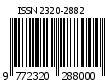
ISSN: 2320-2882 Impact Factor: 7.97 and ISSN APPROVED Journal Starting Year (ESTD) : 2013


ISSN and 7.97 Impact Factor Details
ISSN: 2320-2882 Impact Factor: 7.97 and ISSN APPROVED Journal Starting Year (ESTD) : 2013
DOI Details
CONFERENCE
CONFERENCE MANAGMENT & PUBLICATION CONFERENCE PROPOSAL
RECENT CONFERENCE

CONFERENCE PROPOSAL CONFERENCE PROCEEDINGS
CONFERENCE PROPOSAL CONFERENCE PROCEEDINGS
For Reviewer /Referral (RMS) Earn 500 per paper
Important Links
NEWS & Conference
Digital Library
IJCRT RMS | Earn 500 Per Paper.

Open Access


LICENSE
Indexing Partner
Scholarly open access journals, Peer-reviewed, and Refereed Journals, Impact factor 7.97 (Calculate by google scholar and Semantic Scholar | AI-Powered Research Tool) , Multidisciplinary, Monthly, Indexing in all major database & Metadata, Citation Generator, Digital Object Identifier(DOI)