Important Details
IJCRT - International Peer Reviewed, Open Access Journal, Multidisciplinary, Monthly, Nominal(Low) Fees for Professional Research Services International Journal of Creative Research Thoughts - IJCRT Peer Review Journal, Refereed Journal, Peer Reviewed Journal , Referred Journal and Indexed Journal, Open access, Online and Print Journal,international Journal Open Access, Accepted by Indian and foreign university ,IJCRT Followed Norms, guidelines, requirement, listing criteria and methodology of score/point also applied from: Scopus , Web of Science , UGC Approved , UGC CARE, UGC-CARE .
UGC Approved Journal No: 49023 (18)
UGC approval Link
https://ijcrt.org/ugc%20approval.jpg
All Policy and Approval
Please Like Our Facebook Page | CrossRef DOI and Hard copy of Certificate Provide if required. | www.IJCRT.org | editor@IJCRT.org | IJCRT WhatsApp +91 7990172303
Publication Details:
- Paper Submission : 31-Jul-2026. Call For Paper (Volume 14 | Issue 6 | Month- June 2026)
- Acceptance/Rejection Notification: Within 02-04 Days.
- Paper Publish: Within 02-04 Days after submitting all documents.
-
Submit Your Paper Any time There No deadline.
-
Publication fees : 1570 INR for Indian author & 59$ for foreign International author.
Please Like Our Facebook Page | CrossRef DOI and Hard copy of Certificate Provide if required.
Licence and Indexing
Indexing In Google Scholar, SSRN, ResearcherID-Publons, Semantic Scholar | AI-Powered Research Tool, Microsoft Academic, Academia.edu, arXiv.org, Research Gate, CiteSeerX, ResearcherID Thomson Reuters, Mendeley : reference manager, DocStoc, ISSUU, Scribd, and many more | High Impact Factor: 7.97 | Digital object identifier (DOI) and Hard Copy of certificate Provided.




























Licence
DOI
ISSN Approved impact factor: 7.97 
Creative Common 
Valid as per new UGC Gazette regulations 

INTERNATIONAL JOURNAL OF CREATIVE RESEARCH THOUGHTS - IJCRT (IJCRT.ORG)
International Peer Reviewed & Refereed Journals, Open Access Journal
IJCRT Peer-Reviewed (Refereed) Journal as Per New UGC Rules.
ISSN Approved Journal No: 2320-2882 | Impact factor: 7.97 | ESTD Year: 2013
Call For Paper - Volume 14 | Issue 6 | Month- June 2026
Scholarly open access journals, Peer-reviewed, and Refereed Journals, Impact factor 7.97 (Calculate by google scholar and Semantic Scholar | AI-Powered Research Tool) , Multidisciplinary, Monthly, Indexing in all major database & Metadata, Citation Generator, Digital Object Identifier(CrossRef DOI)
IJCRT WhatsApp Contact
IJCRT Search Xplore - Search all paper by Paper Name , Author Name, and Title
Volume 14 | Issue 2 |
Volume 14 | Issue 2 | Month
Downlaod After Publication 1) Table of content index in PDF
2) Table of content index in HTML 2)Table of content index in HTML
3) Front Page 3) Front Page
4) Back Page 4) Back Page
5) Editor Board Member 5)Editor Board Member
6) OLD Style Issue 6)OLD Style Issue
 |
 |
|---|---|
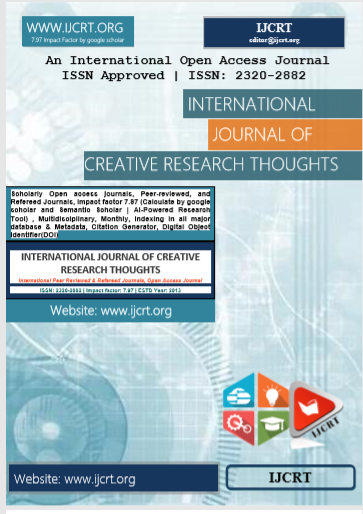
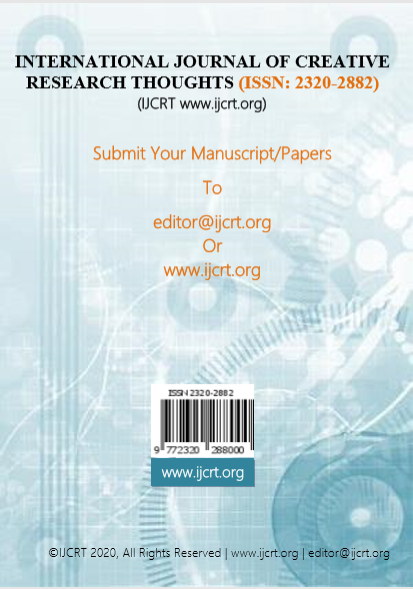
| IJCRT Journal front page | IJCRT Journal Back Page |
Paper Title: Hard Power Rivalry and Soft Power Outreach: Nuclear Strategy and Health Diplomacy in India, China and Japan
Author Name(s): Layba Choudhary, Muskan Thakur, Vidhi Gupta
Published Paper ID: - IJCRT2602714
Register Paper ID - 302110
Publisher Journal Name: IJPUBLICATION, IJCRT
DOI Member ID: 10.6084/m9.doi.one.IJCRT2602714 and DOI :
Author Country : Indian Author, India, 110095 , Delhi, 110095 , | Research Area: Social Science All Published Paper URL: http://ijcrt.org/viewfull.php?&p_id=IJCRT2602714 Published Paper PDF: download.php?file=IJCRT2602714 Published Paper PDF: http://www.ijcrt.org/papers/IJCRT2602714.pdf
Your Paper Publication Details:
Title: HARD POWER RIVALRY AND SOFT POWER OUTREACH: NUCLEAR STRATEGY AND HEALTH DIPLOMACY IN INDIA, CHINA AND JAPAN
DOI (Digital Object Identifier) :
Pubished in Volume: 14 | Issue: 2 | Year: February 2026
Publisher Name : IJCRT | www.ijcrt.org | ISSN : 2320-2882
Subject Area: Social Science All
Author type: Indian Author
Pubished in Volume: 14
Issue: 2
Pages: g202-g212
Year: February 2026
Downloads: 100
E-ISSN Number: 2320-2882
Abstract
This paper investigates how hard power competition and soft power initiatives influence regional diplomacy in Asia, particularly involving India, China, and Japan. It starts by defining neighbourhood diplomacy as the strategic management of relationships with neighbouring states using security, political, and developmental tools. The paper then presents hard power and soft power as complementary strategies rather than oppositional ones. The next section focuses on nuclear strategy as a key element of hard power, which helps shape deterrence relationships, convey credibility, and affect regional perceptions of threats. This is followed by an examination of health diplomacy as a means of soft power, emphasizing its role in building trust, establishing legitimacy, and fostering cooperation through medical aid, vaccine collaborations, and humanitarian efforts. The final part assesses how the combination of deterrence and diplomatic engagement influences neighbourhood relations, arguing that both coercive power and normative actions are critical to shaping regional stability and influence. The study concludes that effective neighbourhood leadership increasingly relies on finding a balance between strategic restraint and the provision of regional public goods.
Licence: creative commons attribution 4.0
License
Creative Commons Attribution 4.0 and The Open Definition

Keywords
Hard Power, Soft Power, Neighbourhood Diplomacy, Nuclear Policy, Health Diplomacy
License
Creative Commons Attribution 4.0 and The Open Definition
Paper Title: Haunted by Memory: Trauma in Shirley Jackson's The Haunting of Hill House and Laura Purcell's The Silent Companions
Author Name(s): Sanskriti Chauhan, Dr Gibu Sabu
Published Paper ID: - IJCRT2602713
Register Paper ID - 302126
Publisher Journal Name: IJPUBLICATION, IJCRT
DOI Member ID: 10.6084/m9.doi.one.IJCRT2602713 and DOI :
Author Country : Indian Author, India, - , -, - , | Research Area: Arts All Published Paper URL: http://ijcrt.org/viewfull.php?&p_id=IJCRT2602713 Published Paper PDF: download.php?file=IJCRT2602713 Published Paper PDF: http://www.ijcrt.org/papers/IJCRT2602713.pdf
Your Paper Publication Details:
Title: HAUNTED BY MEMORY: TRAUMA IN SHIRLEY JACKSON'S THE HAUNTING OF HILL HOUSE AND LAURA PURCELL'S THE SILENT COMPANIONS
DOI (Digital Object Identifier) :
Pubished in Volume: 14 | Issue: 2 | Year: February 2026
Publisher Name : IJCRT | www.ijcrt.org | ISSN : 2320-2882
Subject Area: Arts All
Author type: Indian Author
Pubished in Volume: 14
Issue: 2
Pages: g186-g201
Year: February 2026
Downloads: 81
E-ISSN Number: 2320-2882
Abstract
Haunted by Memory: Trauma in Shirley Jackson's The Haunting of Hill House and Laura Purcell's The Silent Companions
Licence: creative commons attribution 4.0
License
Creative Commons Attribution 4.0 and The Open Definition
Keywords
Haunted by Memory: Trauma in Shirley Jackson's The Haunting of Hill House and Laura Purcell's The Silent Companions
License
Creative Commons Attribution 4.0 and The Open Definition
Paper Title: Blockchain-Enabled Secure And Transparent Digital Voting System Using Smart Contracts
Author Name(s): Yellamelli Sunil, Suravarapu Kushal Kumar, Chukka Charan Kumar, Shaik Sameer, Mr. Y. Durga Prasad
Published Paper ID: - IJCRT2602712
Register Paper ID - 302176
Publisher Journal Name: IJPUBLICATION, IJCRT
DOI Member ID: 10.6084/m9.doi.one.IJCRT2602712 and DOI :
Author Country : Indian Author, India, 534266 , West Godavari, 534266 , | Research Area: Science and Technology Published Paper URL: http://ijcrt.org/viewfull.php?&p_id=IJCRT2602712 Published Paper PDF: download.php?file=IJCRT2602712 Published Paper PDF: http://www.ijcrt.org/papers/IJCRT2602712.pdf
Your Paper Publication Details:
Title: BLOCKCHAIN-ENABLED SECURE AND TRANSPARENT DIGITAL VOTING SYSTEM USING SMART CONTRACTS
DOI (Digital Object Identifier) :
Pubished in Volume: 14 | Issue: 2 | Year: February 2026
Publisher Name : IJCRT | www.ijcrt.org | ISSN : 2320-2882
Subject Area: Science and Technology
Author type: Indian Author
Pubished in Volume: 14
Issue: 2
Pages: g178-g185
Year: February 2026
Downloads: 93
E-ISSN Number: 2320-2882
Abstract
The integrity of democratic elections relies heavily on secure, transparent, and trustworthy voting mechanisms. Conventional voting systems, including paper-based and electronic voting machines, suffer from challenges such as centralized control, limited transparency, and vulnerability to manipulation. These limitations reduce public confidence in electoral outcomes and highlight the need for a secure digital alternative. This paper introduces a blockchain-enabled digital voting system that ensures transparency, security, and decentralization through the use of smart contracts. The proposed approach records votes on an immutable blockchain, preventing unauthorized modifications and enforcing election rules such as voter eligibility and single-vote constraints. Voter privacy is preserved by allowing public verification of transactions without revealing individual identities. The system adopts a hybrid architecture that combines on-chain vote validation with off-chain user interaction to improve scalability and performance. Experimental results indicate enhanced security, reliable vote counting, and improved trust compared to traditional voting systems. CRYPTOBALLOT demonstrates the effectiveness of blockchain technology in enabling secure and transparent digital elections.
Licence: creative commons attribution 4.0
License
Creative Commons Attribution 4.0 and The Open Definition
Keywords
Blockchain-based digital voting; Smart contracts; Decentralized elections; Secure voting systems; Transparency and integrity; Electronic voting.
License
Creative Commons Attribution 4.0 and The Open Definition
Paper Title: Study of the relation between Scientific Knowledge, Aptitude and Environmental Awareness
Author Name(s): Dr. Chandra Mukherjee
Published Paper ID: - IJCRT2602711
Register Paper ID - 302112
Publisher Journal Name: IJPUBLICATION, IJCRT
DOI Member ID: 10.6084/m9.doi.one.IJCRT2602711 and DOI : https://doi.org/10.56975/ijcrt.v14i2.302112
Author Country : Indian Author, India, 700078 , Kokata, 700078 , | Research Area: Social Science All Published Paper URL: http://ijcrt.org/viewfull.php?&p_id=IJCRT2602711 Published Paper PDF: download.php?file=IJCRT2602711 Published Paper PDF: http://www.ijcrt.org/papers/IJCRT2602711.pdf
Your Paper Publication Details:
Title: STUDY OF THE RELATION BETWEEN SCIENTIFIC KNOWLEDGE, APTITUDE AND ENVIRONMENTAL AWARENESS
DOI (Digital Object Identifier) : https://doi.org/10.56975/ijcrt.v14i2.302112
Pubished in Volume: 14 | Issue: 2 | Year: February 2026
Publisher Name : IJCRT | www.ijcrt.org | ISSN : 2320-2882
Subject Area: Social Science All
Author type: Indian Author
Pubished in Volume: 14
Issue: 2
Pages: g143-g177
Year: February 2026
Downloads: 113
E-ISSN Number: 2320-2882
Abstract
The objective of the present study is to ascertain the relationship among scientific knowledge, aptitude and environmental awareness which include environmental awareness for judgement (EAJ) and environmental awareness for action (EAA). Hypotheses states that the environmental awareness is positively and significantly corelated to scientific knowledge and aptitude, i.e. knowledge and aptitude for life science and total test (H1-H4). Scientific knowledge was considered as independent variable and environment awareness was considered as dependant variable simultaneously aptitude is delineated as innate ability to acquire knowledge or to perform any task. Five ninety-three samples of class 11 standard were collected randomly from the districts of North and South 24 Parganas of West Bengal and from the district of Kolkata, undergone the same courses of study and passed out Madhyamik Examination (10+ public examination conducted by the West Bengal Board of Secondary Education. The tool for measuring environmental awareness consists of 48 items (EAA-27 items and EAJ=21 items) developed by Dr. Chakraborty and Mrs. Sengupta in 1999 and scientific knowledge and aptitude test of 100 items (Life Science= 30, Physical Science= 40 items and Mathematics= 30 items), developed by Mrs. C. Mukherjee and Dr. Chakraborty in 1999 used in this study. Descriptive analysis, correlational analysis, and regression analysis were the mode of analysis in this study. In Inter-correlation matrix shows that Environmental awareness was positively and significantly corelated to knowledge and aptitude in Life Science, Physical Science and total test and EAA and EAJ. However, the summary of the results showing the levels of regression by groups of rural male, rural female, urban male urban female and all groups - (rural+urban)+(male+female) on environmental awareness reveals the fact that the knowledge of life science and total scientific knowledge and aptitude test necessarily ensure environmental awareness.
Licence: creative commons attribution 4.0
License
Creative Commons Attribution 4.0 and The Open Definition
Keywords
Keywords : Scientific knowledge, aptitude, environmental awareness judgement, action , Life science, Physical science, Mathematics, descriptive analysis, correlational analysis, regressional analysis
License
Creative Commons Attribution 4.0 and The Open Definition
Paper Title: Smart and Sustainable Fashion: Integrating Digital Security and Transparency in Sustainable Clothing Supply Chains
Author Name(s): Maloth Surender Naik, Gandham Hima Bindu, Bhaskar Teja
Published Paper ID: - IJCRT2602710
Register Paper ID - 302273
Publisher Journal Name: IJPUBLICATION, IJCRT
DOI Member ID: 10.6084/m9.doi.one.IJCRT2602710 and DOI :
Author Country : Indian Author, Germany, 13349 , Berlin, 13349 , | Research Area: Management All Published Paper URL: http://ijcrt.org/viewfull.php?&p_id=IJCRT2602710 Published Paper PDF: download.php?file=IJCRT2602710 Published Paper PDF: http://www.ijcrt.org/papers/IJCRT2602710.pdf
Your Paper Publication Details:
Title: SMART AND SUSTAINABLE FASHION: INTEGRATING DIGITAL SECURITY AND TRANSPARENCY IN SUSTAINABLE CLOTHING SUPPLY CHAINS
DOI (Digital Object Identifier) :
Pubished in Volume: 14 | Issue: 2 | Year: February 2026
Publisher Name : IJCRT | www.ijcrt.org | ISSN : 2320-2882
Subject Area: Management All
Author type: Indian Author
Pubished in Volume: 14
Issue: 2
Pages: g128-g142
Year: February 2026
Downloads: 86
E-ISSN Number: 2320-2882
Abstract
The fashion industry faces growing scrutiny over its environmental and social impacts while simultaneously experiencing rapid digitalisation of its supply chains. Sustainable and circular fashion models are widely promoted, yet consumer scepticism regarding the authenticity of sustainability claims remains high, fuelled by information asymmetries and concerns about greenwashing. This paper develops an integrated conceptual framework that links sustainable fashion practices, digital traceability technologies, and cybersecurity mechanisms to explain how these elements jointly influence transparency and consumer trust in clothing supply chains. Drawing on secondary data from academic literature, industry, and ESG reports, technology case studies, and cybersecurity studies, the analysis synthesises current knowledge on sustainable and circular fashion strategies, digital tracking and authentication tools, and security risks in digital supply networks. The proposed framework argues that secure digital traceability is essential to transform internal sustainability initiatives into credible, externally verifiable information that can reduce information asymmetry and support consumer trust. The paper outlines managerial implications for fashion firms seeking to align sustainability, digital transformation, and security agendas, and identifies directions for future empirical research to test and refine the framework. In particular, managers are advised to prioritise security-by-design, cross-functional governance, and consumer-centric disclosure to build robust, trustworthy, sustainable supply chains.
Licence: creative commons attribution 4.0
License
Creative Commons Attribution 4.0 and The Open Definition
Keywords
Sustainable fashion Circular fashion Smart fashion Supply chain transparency Supply chain traceability Digital product passport Blockchain technology Radio Frequency Identification (RFID) Internet of Things (IoT) Digital supply chains Cybersecurity Information security Data integrity Consumer trust Greenwashing Ethical sourcing Sustainable supply chain management Digital transformation Fashion industry Sustainability framework
License
Creative Commons Attribution 4.0 and The Open Definition
Paper Title: Experimental Investigation on Optimization of Sustainable Materials & Mechanical Properties in M20 Grade Self Compacting
Author Name(s): K. Vamsi Krishna, T.Venkata Sashank, K. Suma Sree, Ch.Rajesh Kumar Varma, M. Suresh, A.Devi Prasad
Published Paper ID: - IJCRT2602709
Register Paper ID - 302183
Publisher Journal Name: IJPUBLICATION, IJCRT
DOI Member ID: 10.6084/m9.doi.one.IJCRT2602709 and DOI :
Author Country : Indian Author, India, - , -, - , | Research Area: Science and Technology Published Paper URL: http://ijcrt.org/viewfull.php?&p_id=IJCRT2602709 Published Paper PDF: download.php?file=IJCRT2602709 Published Paper PDF: http://www.ijcrt.org/papers/IJCRT2602709.pdf
Your Paper Publication Details:
Title: EXPERIMENTAL INVESTIGATION ON OPTIMIZATION OF SUSTAINABLE MATERIALS & MECHANICAL PROPERTIES IN M20 GRADE SELF COMPACTING
DOI (Digital Object Identifier) :
Pubished in Volume: 14 | Issue: 2 | Year: February 2026
Publisher Name : IJCRT | www.ijcrt.org | ISSN : 2320-2882
Subject Area: Science and Technology
Author type: Indian Author
Pubished in Volume: 14
Issue: 2
Pages: g116-g127
Year: February 2026
Downloads: 106
E-ISSN Number: 2320-2882
Abstract
Self-Compacting Concrete (SCC) is an innovative concrete that possesses the ability to flow under its own weight and completely fill form work without the need for mechanical vibration. This project investigates the development of Self-Compacting Concrete of M20 grade by partially replacing cement with fly ash, an industrial by-product, to improve work-ability and promote sustainable construction practices. Fly ash was used as a partial replacement of cement in different proportions, and its influence on the fresh and hardened properties of SCC was studied. The fresh properties of SCC were evaluated using standard tests such as slump flow test, T50 time, V-funnel test, and L-box test to ensure conformity with SCC guidelines. The hardened properties were assessed by conducting compressive strength tests at 7 and 28 days. The experimental results indicate that the inclusion of fly ash enhances the flow-ability, filling ability, and passing ability of SCC while achieving the required strength for M20 grade concrete. An optimum percentage of fly ash replacement was observed to provide a good balance between strength and work-ability. The study concludes that fly ash can be effectively utilized as a partial replacement of cement in Self-Compacting Concrete, resulting in economical, durable, and environmentally friendly concrete suitable for structural applications.
Licence: creative commons attribution 4.0
License
Creative Commons Attribution 4.0 and The Open Definition
Keywords
Self-Compacting Concrete (SCC), Fly Ash, PPC based Cement, Flowability, Superplasticizer
License
Creative Commons Attribution 4.0 and The Open Definition
Paper Title: Women's Empowerment, Financial Inclusion, and Inclusive Banking Systems: A Bibliometric Review of Global Research Trends
Author Name(s): Aiswarya Cherian, Dr. Arun Kumar. T.T
Published Paper ID: - IJCRT2602708
Register Paper ID - 302026
Publisher Journal Name: IJPUBLICATION, IJCRT
DOI Member ID: 10.6084/m9.doi.one.IJCRT2602708 and DOI : https://doi.org/10.56975/ijcrt.v14i2.302026
Author Country : Indian Author, India, 673592 , Sulthan bathery , Wayanad, 673592 , | Research Area: Commerce All Published Paper URL: http://ijcrt.org/viewfull.php?&p_id=IJCRT2602708 Published Paper PDF: download.php?file=IJCRT2602708 Published Paper PDF: http://www.ijcrt.org/papers/IJCRT2602708.pdf
Your Paper Publication Details:
Title: WOMEN'S EMPOWERMENT, FINANCIAL INCLUSION, AND INCLUSIVE BANKING SYSTEMS: A BIBLIOMETRIC REVIEW OF GLOBAL RESEARCH TRENDS
DOI (Digital Object Identifier) : https://doi.org/10.56975/ijcrt.v14i2.302026
Pubished in Volume: 14 | Issue: 2 | Year: February 2026
Publisher Name : IJCRT | www.ijcrt.org | ISSN : 2320-2882
Subject Area: Commerce All
Author type: Indian Author
Pubished in Volume: 14
Issue: 2
Pages: g99-g115
Year: February 2026
Downloads: 102
E-ISSN Number: 2320-2882
Abstract
Women's empowerment through financial inclusion has emerged as a critical development priority, particularly in emerging and developing economies. Despite the expanding body of literature, research remains fragmented across conceptual, institutional, and regional dimensions. This study conducts a comprehensive bibliometric analysis of 871 publications indexed in the Scopus database from 2000 to 2025 to map the intellectual structure, thematic evolution, and collaborative patterns in the field. Using co-citation, keyword co-occurrence, thematic mapping, and collaboration network analyses, the study identifies poverty alleviation and financial inclusion as dominant motor themes, while empowerment-related constructs remain conceptually broad. Findings reveal a clear transition from microfinance-centered research toward digital financial inclusion, gender equality, and sustainability-oriented frameworks aligned with the Sustainable Development Goals. India emerges as the leading contributor, reflecting the context-driven nature of the research domain. The analysis highlights significant gaps, particularly in longitudinal assessments, digital gender divides, and the role of small finance and niche banks in sustaining empowerment outcomes. The study provides an integrated knowledge framework to guide future research, policy formulation, and inclusive banking strategies.
Licence: creative commons attribution 4.0
License
Creative Commons Attribution 4.0 and The Open Definition
Keywords
Women's Empowerment; Financial Inclusion; Inclusive Banking; Microfinance; Small Finance Banks; Digital Financial Inclusion; Poverty Alleviation; Gender Equality; Bibliometric Analysis; Co-citation Analysis; Thematic Evolution.
License
Creative Commons Attribution 4.0 and The Open Definition
Paper Title: Behavioral Problem of Preschool Children Due To Smart Phone Usage - A Systematic Review
Author Name(s): Pratiksha Dwivedi, Ms. Biradar Gayatri, Dr V Kavitha Kiran
Published Paper ID: - IJCRT2602707
Register Paper ID - 302040
Publisher Journal Name: IJPUBLICATION, IJCRT
DOI Member ID: 10.6084/m9.doi.one.IJCRT2602707 and DOI :
Author Country : Indian Author, India, 500004 , Hyderabad, 500004 , | Research Area: Medical Science All Published Paper URL: http://ijcrt.org/viewfull.php?&p_id=IJCRT2602707 Published Paper PDF: download.php?file=IJCRT2602707 Published Paper PDF: http://www.ijcrt.org/papers/IJCRT2602707.pdf
Your Paper Publication Details:
Title: BEHAVIORAL PROBLEM OF PRESCHOOL CHILDREN DUE TO SMART PHONE USAGE - A SYSTEMATIC REVIEW
DOI (Digital Object Identifier) :
Pubished in Volume: 14 | Issue: 2 | Year: February 2026
Publisher Name : IJCRT | www.ijcrt.org | ISSN : 2320-2882
Subject Area: Medical Science All
Author type: Indian Author
Pubished in Volume: 14
Issue: 2
Pages: g93-g98
Year: February 2026
Downloads: 82
E-ISSN Number: 2320-2882
Abstract
Children aged from 3 to 5, also known as preschool children, are in a developmental stage where abilities like cognitive, social, emotional, etc., will be developed. This study aims to reveal the impact of smartphone usage on the preschool children's behavior. In recent years it is noticed that usage of smartphones is increasing at a rapid speed in every age group, including the preschool age group. Due to excess use, children are becoming hyperactive, attention deficient, and irritable, and factors like parental phone usage, lack of supervision, and lack of limitation are providing fuel to this. Various research provides knowledge on the problems that are seen in the development of preschool children due to smartphone usage. From this perspective the current review study mostly focuses on the studies that revealed the behavioral problem that is seen among preschool children due to smartphone use. Studies revealed that higher screen time is associated with language delays, behavioral problems, and poor sleep in the preschool children. Parental interaction also contributed to the problematic use of children. These findings reinforced the importance of consistent parental monitoring and a controlled digital habit.
Licence: creative commons attribution 4.0
License
Creative Commons Attribution 4.0 and The Open Definition
Keywords
Preschool Children, Behavioral Problem, Smart phone usage
License
Creative Commons Attribution 4.0 and The Open Definition
Paper Title: Ethical Consumption and Brand Loyalty: A Study on Global Green Marketing Initiatives
Author Name(s): DEVEN MANOJ NAGAR, RISHABHKUMAR MISHRA
Published Paper ID: - IJCRT2602706
Register Paper ID - 302263
Publisher Journal Name: IJPUBLICATION, IJCRT
DOI Member ID: 10.6084/m9.doi.one.IJCRT2602706 and DOI :
Author Country : Indian Author, India, 390004 , VADODARA, 390004 , | Research Area: Management All Published Paper URL: http://ijcrt.org/viewfull.php?&p_id=IJCRT2602706 Published Paper PDF: download.php?file=IJCRT2602706 Published Paper PDF: http://www.ijcrt.org/papers/IJCRT2602706.pdf
Your Paper Publication Details:
Title: ETHICAL CONSUMPTION AND BRAND LOYALTY: A STUDY ON GLOBAL GREEN MARKETING INITIATIVES
DOI (Digital Object Identifier) :
Pubished in Volume: 14 | Issue: 2 | Year: February 2026
Publisher Name : IJCRT | www.ijcrt.org | ISSN : 2320-2882
Subject Area: Management All
Author type: Indian Author
Pubished in Volume: 14
Issue: 2
Pages: g82-g92
Year: February 2026
Downloads: 88
E-ISSN Number: 2320-2882
Abstract
This research paper, named "Ethical Consumption and Brand Loyalty: A Study on Global Green Marketing Initiatives," focuses on the rising significance of sustainability in contemporary marketing and its impact on the behaviour of consumers and their loyalty to brands. With the rising awareness among consumers about environmental concerns like climate change, pollution, and depletion of natural resources, they are slowly embracing the concept of ethical consumption. Ethical consumption is the practice of buying products and services that are produced and marketed responsibly. The primary aim of the research is to examine the impact of green marketing campaigns conducted by organizations on the perception and loyalty of consumers toward brands. The research will also investigate whether consumers are genuinely supporting eco-friendly brands or whether their purchasing behaviour is driven by price and convenience. The study relies solely on the secondary research methodology. The data was gathered from the academic journals, research papers, sustainability reports of multinational corporations and Indian companies. The information gathered was analysed to understand the global and Indian trends related to ethical consumption and sustainable branding practices. The results show that ethical consumption is on the rise, particularly among young consumers like Millennials and Generation Z. Consumers display a positive attitude towards environmentally responsible brands and tend to form an emotional attachment and trust with such brands. However, the study also points out the gap between consumer intention and actual purchasing behaviour. Consumers tend to show concern for the environment, but they fail to purchase environmentally responsible products because of their high costs and lack of availability in the market, as well as a lack of trust in corporate environmental claims. In the Indian scenario, ethical consumption is slowly taking shape but is still in its nascent stage. Consumers in urban areas are increasingly becoming aware, but affordability is an important criterion that impacts their buying decisions. The paper concludes that the most important elements that link green marketing campaigns to brand loyalty are trust, transparency, and authenticity. Those organizations that are genuinely working towards sustainable practices, such as green packaging, sustainable sourcing, and environmentally transparent reporting, are more likely to be successful in fostering long-term consumer relationships. On the other hand, greenwashing can have a negative impact on brand reputation. In general, the study indicates that ethical consumption is not a passing trend but a paradigm shift in consumer behaviour. Companies that can incorporate sustainability into their operations and communicate their efforts transparently can gain a competitive advantage and improve their brand image and loyalty.
Licence: creative commons attribution 4.0
License
Creative Commons Attribution 4.0 and The Open Definition
Keywords
Ethical Consumption, Green Marketing, Brand Loyalty, Sustainable Development
License
Creative Commons Attribution 4.0 and The Open Definition
Paper Title: A study of Mathematical interest of class 8th students studying in parishadiya upper primary schools in Pilibhit district
Author Name(s): Megha Agrawal, Darvesh Kumar, Mahendra Kumar Singh,
Published Paper ID: - IJCRT2602705
Register Paper ID - 302004
Publisher Journal Name: IJPUBLICATION, IJCRT
DOI Member ID: 10.6084/m9.doi.one.IJCRT2602705 and DOI :
Author Country : Indian Author, India, 262201 , Pilibhit, Uttar Pradesh, 262201 , | Research Area: Mathematics All Published Paper URL: http://ijcrt.org/viewfull.php?&p_id=IJCRT2602705 Published Paper PDF: download.php?file=IJCRT2602705 Published Paper PDF: http://www.ijcrt.org/papers/IJCRT2602705.pdf
Your Paper Publication Details:
Title: A STUDY OF MATHEMATICAL INTEREST OF CLASS 8TH STUDENTS STUDYING IN PARISHADIYA UPPER PRIMARY SCHOOLS IN PILIBHIT DISTRICT
DOI (Digital Object Identifier) :
Pubished in Volume: 14 | Issue: 2 | Year: February 2026
Publisher Name : IJCRT | www.ijcrt.org | ISSN : 2320-2882
Subject Area: Mathematics All
Author type: Indian Author
Pubished in Volume: 14
Issue: 2
Pages: g78-g81
Year: February 2026
Downloads: 81
E-ISSN Number: 2320-2882
Abstract
Mathematics has a very important role in modern education and it also plays a crucial role to develop logical thinking, problem solving skills and the ability to analyze situations. One of the key factors that influence how students engage with mathematics is their level of interest. This interest can significantly affect how long they stay involved with the subject, their academic performance and their decisions about future careers, especially in science, technology, engineering and mathematical fields. The purpose of this study was to compare the levels of interest in mathematics among class 8th students with respect to their gender. The data for the present study has been collected from 100 students (50 boys and 50 girls) using simple random sampling technique. For the collection of data Mathematical Interest Inventory by Dubey was used to measure the mathematical interest. For the analysis of data t-test was applied to find out the significant difference between two groups i.e. boys and girls.
Licence: creative commons attribution 4.0
License
Creative Commons Attribution 4.0 and The Open Definition
Call For Paper June 2026
Call For Papers
June 2026
Volume 14 | Issue 6
Last Date :
31-Jul-2026
Submit Manuscript Online Impact Factor: 7.97 Review Results : Within 02-03 Days Paper Publication : Within 02-03 Days
June 2026
Volume 14 | Issue 6
Last Date :
31-Jul-2026
Submit Manuscript Online Impact Factor: 7.97 Review Results : Within 02-03 Days Paper Publication : Within 02-03 Days
Published Issue Details
For Authors
Forms / Downloads
Other IMP Links
Indexing Partner
Research Area
LICENSE





ISSN and 7.97 Impact Factor Details

ISSN: 2320-2882 Impact Factor: 7.97 and ISSN APPROVED Journal Starting Year (ESTD) : 2013


ISSN and 7.97 Impact Factor Details
ISSN: 2320-2882 Impact Factor: 7.97 and ISSN APPROVED Journal Starting Year (ESTD) : 2013
DOI Details
CONFERENCE
CONFERENCE MANAGMENT & PUBLICATION CONFERENCE PROPOSAL
RECENT CONFERENCE

CONFERENCE PROPOSAL CONFERENCE PROCEEDINGS
CONFERENCE PROPOSAL CONFERENCE PROCEEDINGS
For Reviewer /Referral (RMS) Earn 500 per paper
Important Links
NEWS & Conference
Digital Library
IJCRT RMS | Earn 500 Per Paper.

Open Access


LICENSE
Indexing Partner
Scholarly open access journals, Peer-reviewed, and Refereed Journals, Impact factor 7.97 (Calculate by google scholar and Semantic Scholar | AI-Powered Research Tool) , Multidisciplinary, Monthly, Indexing in all major database & Metadata, Citation Generator, Digital Object Identifier(DOI)